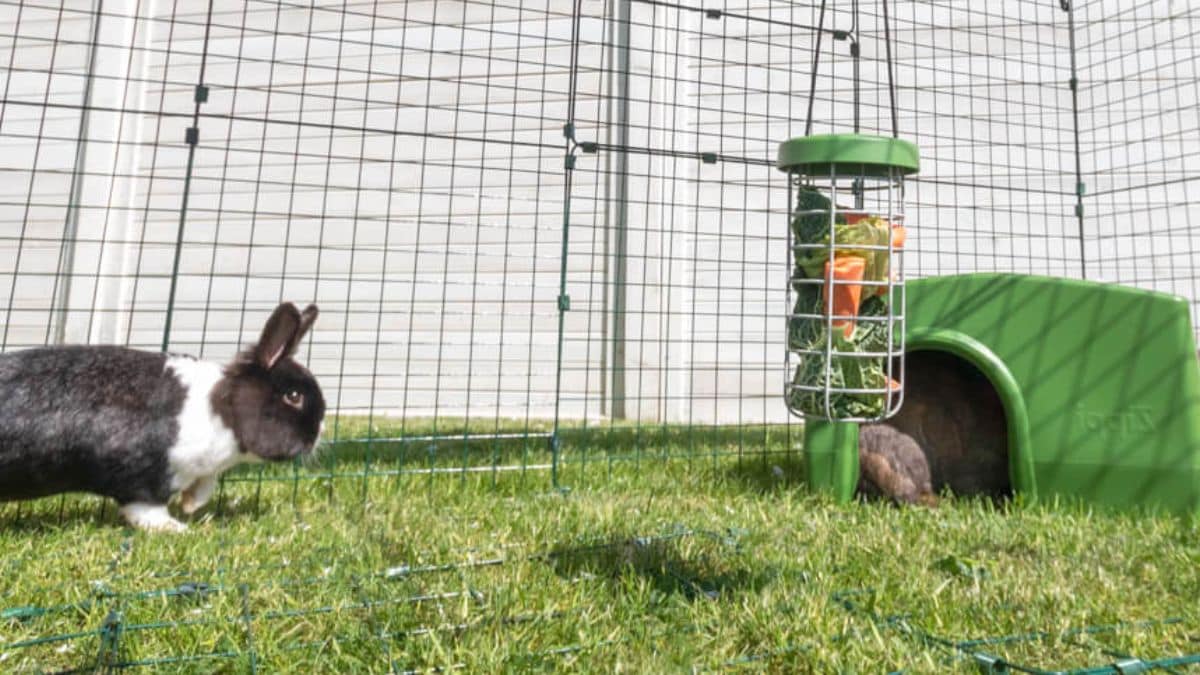
How to create a safe, enriching space your bunny will actually enjoy using.
A playpen isn’t just a convenience — it’s your rabbit’s safe space to play, relax, and be a bunny. But not all pens are created equal. A poorly set-up pen can leave your rabbit bored or stressed, while a well-designed one can encourage natural behaviour, exercise, and calm confidence.
To set up a rabbit playpen they’ll love, you’ll need the right size, flooring, shelter, toys, and layout — all designed with rabbit instincts in mind. It should be secure, stimulating, and allow your bunny to hop, stretch, dig, and hide comfortably.
In this guide, we’ll cover exactly what to include (and avoid), where to place it, and how to make it a space your rabbit genuinely looks forward to spending time in.
Why Playpens Are So Important for Rabbits
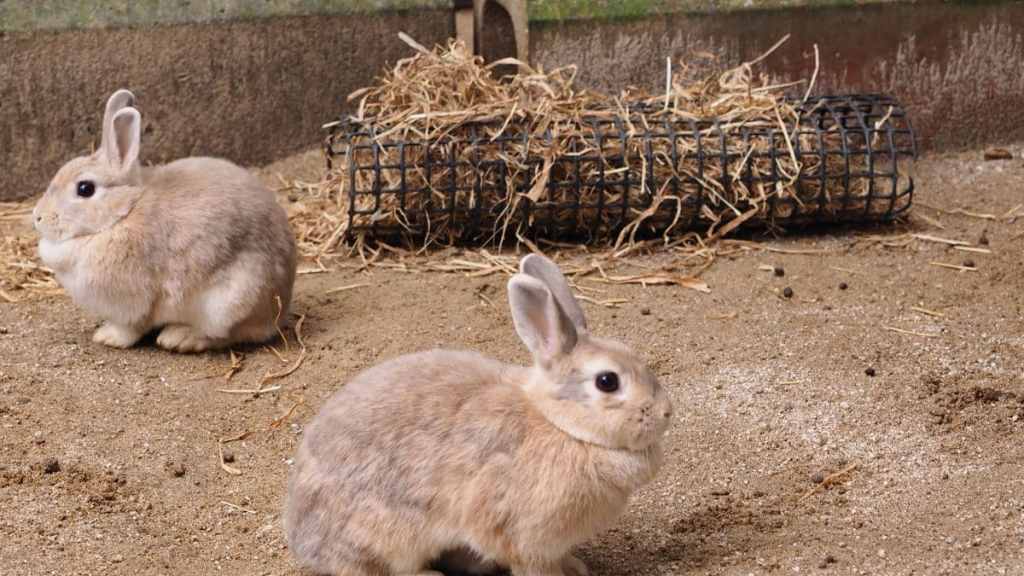
Whether your rabbit lives free-roam, in an outdoor hutch, or in a cage indoors, a playpen gives them a designated area for exercise, stimulation, and safety. It helps prevent boredom, reduces destructive behaviour, and gives your rabbit choice and control over their environment.
A well-set-up playpen allows for:

Quick Tip
A playpen isn’t a replacement for exercise — it is the exercise space. It should be large enough for your rabbit to live in, not just visit.
Choosing the Right Playpen for Your Rabbit
Size: How big should it be?
The minimum space recommended by the RSPCA and RWAF is 3m x 2m x 1m high, but bigger is always better — especially if your rabbit will be spending long periods inside it.
- Small/medium breeds: 3m x 2m minimum
- Large/giant breeds: 4m x 2m or more
- Height should allow standing and full stretch — at least 1m to prevent jumping out
If you don’t have that much space permanently, make it expandable or ensure your rabbit has regular access to a larger, secure area.
Indoor vs outdoor pens
- Indoor pens: Best for free-roam bunnies who need a base zone or part-time enclosure. Look for metal puppy pens, modular C&C grids, or tall barriers with sturdy clips.
- Outdoor pens: Must be fox-proof, waterproof, and ideally attached to a hutch or shelter. Look for heavy-duty mesh with secure locks and dig-proof bases.
Where to Place Your Rabbit’s Playpen
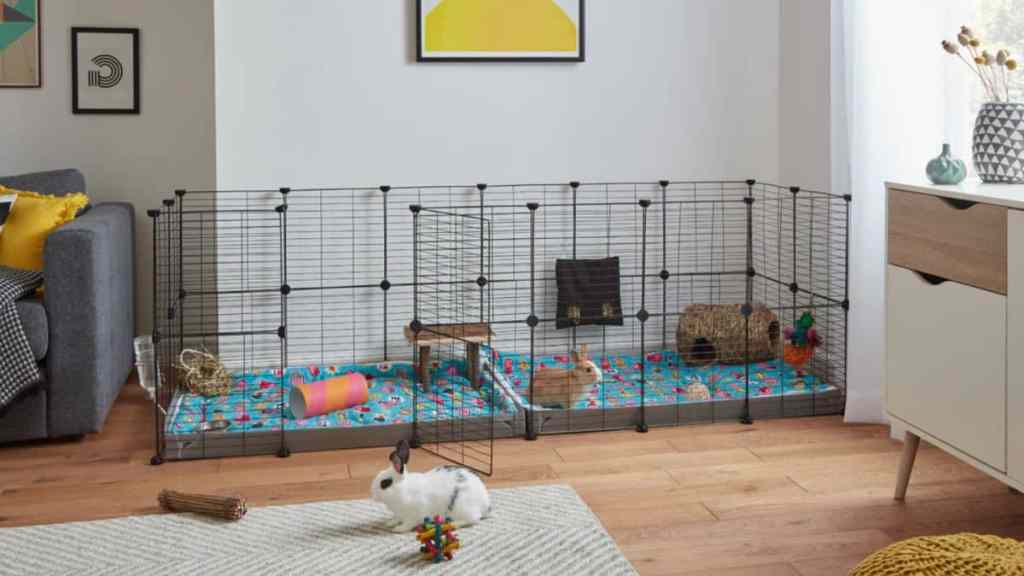
Location makes a big difference. Your rabbit should feel safe but not isolated.
Indoor placement:
Outdoor placement:
Quick Tip
Rabbits are social but easily overwhelmed — so choose a low-stress zone with predictable surroundings.
What to Include Inside the Playpen
This is where the fun begins! Think of the playpen as your rabbit’s bedroom and gym combined — it should offer comfort, activity, and enrichment.
🛏️ A hideaway or shelter
Rabbits need a place to retreat and feel safe. Include:
- A cardboard box with two entrances
- A small animal tunnel
- A wooden hide or crate
Place it in a corner to give your rabbit a clear “safe zone” where they won’t be disturbed.
🥕 Hay station
Rabbits eat constantly — and hay should always be available. Combine hay and litter in one area using:
- A litter tray filled with hay
- A hay bag or rack above the tray
- Place it opposite the shelter to encourage movement
Quick Tip
Rabbits love to munch while they poo. This setup encourages litter training and keeps things tidy.
🧸 Toys and enrichment
Rotate these weekly to prevent boredom. Include:
- Willow or apple wood chews
- Cardboard tubes stuffed with hay
- Dig boxes (filled with soil, shredded paper, or safe forage)
- Puzzle feeders or treat balls
- Tunnels and ramps
Avoid plastic baby toys or anything with sharp edges or loose parts.
🌿 Flooring
The floor should be safe, supportive, and easy to clean. Avoid wire mesh (which can cause sore hocks), tile, or slippery surfaces.
Good options:
- Vet bedding
- Carpet tiles
- Grass mats or fleece
- Rubber-backed rugs (no fray)
If you’re using your pen outside, be sure the floor can’t be dug through — slabs, mesh under soil, or a raised base work well.
Things to Avoid in a Rabbit Playpen

Even well-meaning setups can go wrong. Here’s what to skip:
Adapting the Pen Over Time
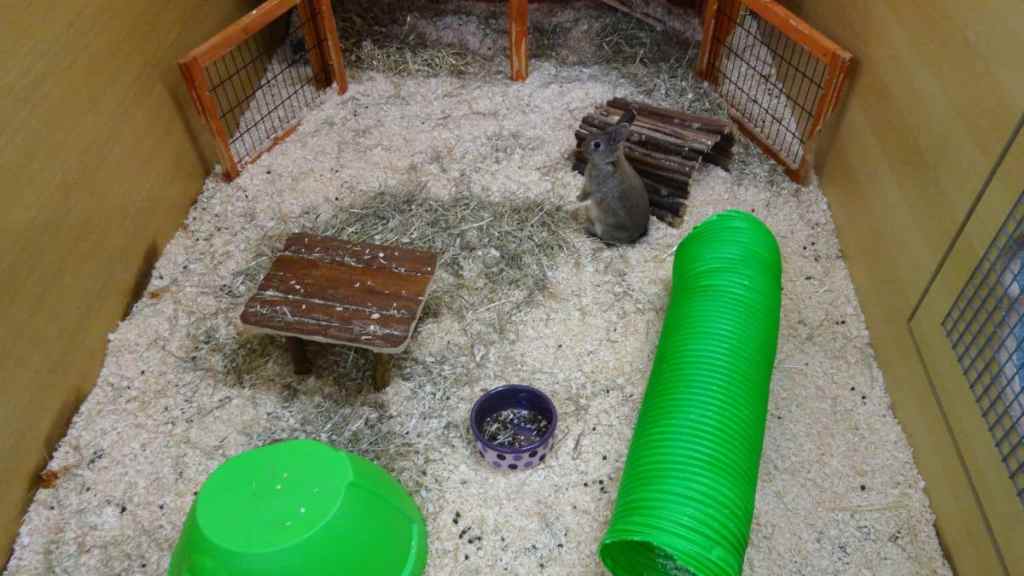
Rabbits thrive on routine — but they also love novelty. Update their space with seasonal enrichments:
- Fresh forage in spring/summer (safe herbs, branches, dandelions)
- Dig boxes in winter
- Rotated hiding spots, changed layouts, or cardboard castles
- Tunnels made from hay bales (supervised use only)
You can also create “multi-level” interest by adding low ramps or platforms — but always make sure they’re stable and have soft landings.
Bonded Rabbits and Shared Playpens
If you have a bonded pair (or trio), they’ll use the playpen as a shared space. Make sure it includes:
- Multiple hides with two exits
- Enough space to avoid squabbles
- Shared hay and water areas
Quick Tip
Always bond rabbits fully before placing them together in a pen. Never use a pen to “see how they get on” — it can trigger fights.
Rabbit Playpen Setup – Essentials Checklist
|
Essentials ✅ |
Top Tips 💡 |
|
3m x 2m minimum space |
Bigger is better – especially for large breeds |
|
Shelter or hide box |
Include two exits for comfort and security |
|
Hay & litter area |
Combine feeding and toileting for easy and hygiene |
|
Enrichment toys |
Rotate weekly to prevent boredom |
|
Soft, non-slip flooring |
Avoid mesh, tile, or laminate |
|
Daily access and attention |
Playpens need supervision and interaction – not isolation |
Final Thoughts
A rabbit playpen isn’t just practical — it’s an essential part of your rabbit’s wellbeing. Set it up right, and it becomes a safe haven for rest, play, and natural behaviour. Get it wrong, and it can lead to boredom, stress, and health problems.
The best playpens are large, interesting, and laid out with love. Think like a rabbit: Where would I hide? What would I chew? Can I stretch out and binky here?
When in doubt, bigger is better, and variety is everything. Your rabbit doesn’t need fancy gear — just thoughtfulness, safety, and space to thrive.