When it comes to training your dog, consistency isn’t just helpful—it’s everything. Whether you’re teaching recall, tackling reactivity, or simply trying to stop your dog from jumping up at guests, the key to long-term success lies in being clear, calm, and consistent.
But consistency is easier said than done. Most training fails not because owners don’t try—but because their dogs are receiving mixed messages, moving goalposts, or unclear rewards.
In this guide, we’ll walk you through the 5 golden rules of consistent training—rules that build trust, improve results, and help your dog learn faster. Whether you’re raising a puppy or retraining an adult rescue, these are the foundations of behaviour that sticks.
Quick Answer: What Are the 5 Golden Rules of Dog Training?
For faster learning and better behaviour, every UK dog owner should follow these 5 golden rules:
1. Be consistent with commands and cues.
2. Reinforce the behaviour you do want.
3. Reward quickly and clearly.
4. Stay calm and neutral.
5. Practice little and often in the right environment.
1. Be Consistent With Commands and Cues

Dogs learn through repetition and pattern recognition—not language or logic. So if one day you say “Down,” another day “Off,” and next week “Get down,” your dog doesn’t hear synonyms—they hear confusion.
The same goes for hand gestures, tone of voice, and rules. If you allow something one day (like jumping on the sofa), then correct it the next, your dog’s trust in the pattern starts to unravel.
This inconsistency is one of the most common reasons training fails. Your dog isn’t ignoring you—they simply don’t understand what you want anymore.
How to apply it ✅:
- Choose one verbal cue per behaviour—and stick to it
- Make sure everyone in the house uses the same commands
- Don’t change the rules depending on your mood or the situation
- Keep body language consistent (e.g. hand signals, posture, tone)

Quick Tip
If you want your dog to be reliable, your cues need to be too.
2. Reinforce the Behaviour You Do Want
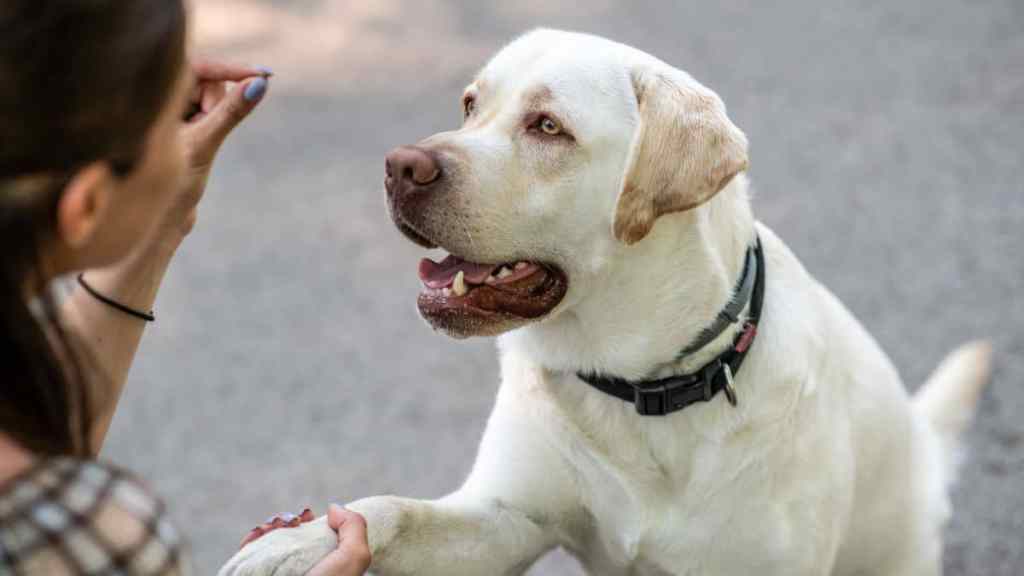
Most of us focus too much on what we don’t want our dogs to do: “Stop jumping.” “Don’t bark.” “Get off.” But dogs don’t learn well through negatives. They learn through positive reinforcement—being rewarded for doing something right.
If your dog sits quietly while guests arrive and gets ignored, but jumps up and gets loads of attention (even negative), guess which behaviour gets repeated?
Dogs repeat what works. So the key isn’t just correcting unwanted behaviour—it’s actively rewarding the behaviour you want to see more of.
How to apply it ✅:
- Catch your dog being good—reward calmness, eye contact, polite behaviour
- Reinforce desirable behaviours immediately (more on that in Rule 3)
- Don’t wait for bad behaviour to react—shape the good stuff proactively
- Think of it like this: every time your dog doesn’t jump, bark, or pull, that’s a rewardable moment
Quick Tip
Stop saying “No” all the time—start saying “Yes” to the behaviour you do want instead.
3. Reward Quickly and Clearly
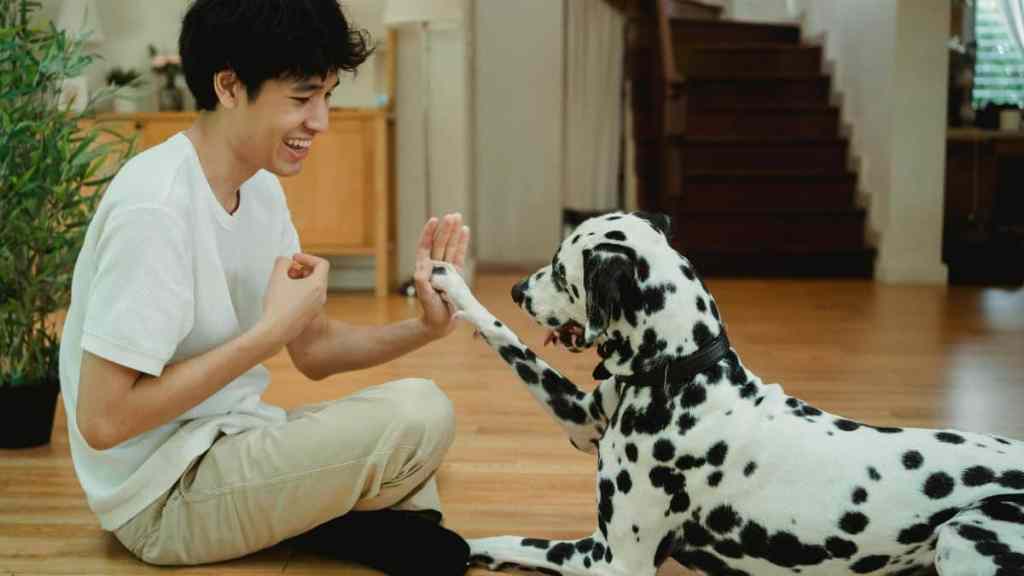
Timing is everything in dog training. If you reward too late—even by a couple of seconds—your dog may not connect the treat or praise with the behaviour you’re trying to reinforce. That disconnect can lead to confusion, frustration, and slower learning.
Dogs live in the moment. So when they sit on cue, come when called, or walk nicely beside you, your feedback needs to be instant and unmissable.
Whether you’re using treats, toys, praise, or a marker word like “Yes!”, the reward needs to land the second your dog gets it right. The faster and clearer your reward, the faster your dog learns.
How to apply it ✅:
- Use a marker word (like “Yes!” or a clicker) to capture the exact moment your dog gets it right
- Follow up with a reward immediately after the marker
- Keep treats in easy reach during training—don’t fumble and delay
- Be mindful of what your dog actually values (not all dogs care about praise alone)
Quick Tip
The quicker your feedback, the stronger the learning connection. Don’t let a good moment go unnoticed.
4. Stay Calm and Neutral (Even When You’re Frustrated)

Training a dog can test your patience—especially when they seem to ignore you, regress, or repeat behaviours you thought were fixed. But here’s the truth: your emotional state matters just as much as your commands.
Dogs are experts at picking up on energy, tone, and body language. If you sound irritated, shout their name, or huff with frustration, they feel the tension—but they don’t understand why you’re upset. Worse still, they may associate you with unpredictability instead of safety and guidance.
Raising your voice, yanking the lead, or using harsh corrections doesn’t teach them what you want—it just makes training feel confusing or stressful.
How to apply it ✅:
- If you’re feeling tense, pause the session—even for a minute
- Use a calm, even tone—firm, but not angry
- Remember: training isn’t about dominance, it’s about communication and trust
- If a behaviour isn’t working, rewind the difficulty instead of escalating your reaction
Quick Tip
Your dog needs a calm teacher—not a frustrated one. Progress happens when trust stays intact.
5. Practise Little and Often in the Right Environment

Training your dog once a week for an hour won’t get results. But 5 minutes a day, in the right environment, can change everything.
Dogs don’t generalise well—they need repetition in different places, with different distractions, to truly learn. Practising in the garden isn’t the same as mastering it in the park. And doing one perfect “sit” doesn’t mean they’ll remember it tomorrow.
Consistency means building behaviour gradually, reliably, and regularly—not cramming it all into one high-stress session.
How to apply it ✅:
- Aim for short, focused sessions—5 to 10 minutes is perfect
- Train when your dog is alert but not overstimulated
- Start in low-distraction spaces, then gradually add challenges
- Revisit and reinforce commands over time—even after they’ve “learned” them
Quick Tip
Training isn’t an event—it’s a habit. Make it part of daily life, and you’ll see lasting results.
Final Thoughts
Consistency is the quiet magic behind every well-trained dog. It’s not about being perfect or strict—it’s about showing up the same way, every day, with patience, clarity, and kindness.
These five golden rules form the foundation of effective, frustration-free dog training. Stick to them, and you’ll build a dog who listens, trusts, and thrives—no shouting, no guesswork, no drama.