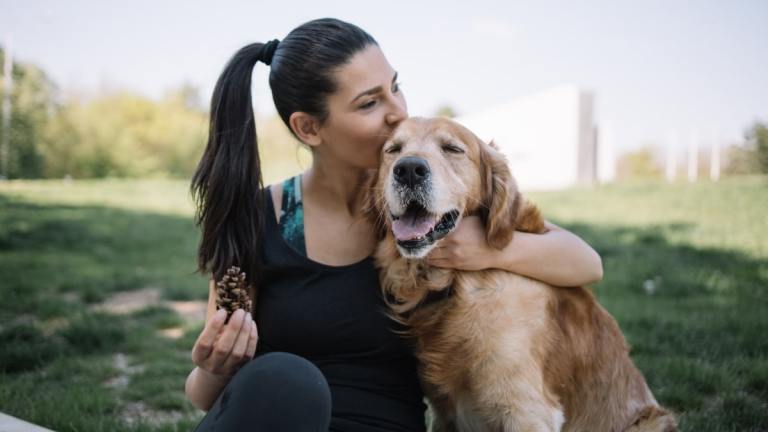
Rainy days can feel like a nightmare for dog owners — especially when you have a high-energy pup bouncing off the walls. Without their usual outdoor walks, runs, and adventures, your dog can quickly become restless, bored, and even destructive.
But don’t worry. There are plenty of creative ways to burn off energy indoors — both mentally and physically. Whether you live in a flat, have a garden, or just want to keep the mud at bay, this guide covers UK-friendly indoor activities to help tire out your dog when it’s pouring outside.
1. Scent Games and Nose Work
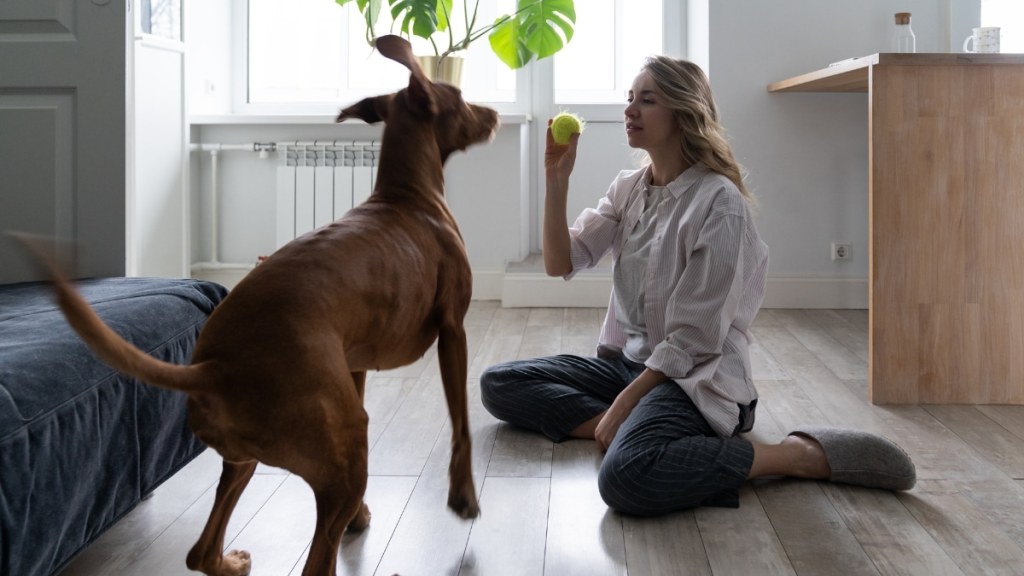
For dogs, the world is experienced primarily through smell. Engaging their nose in games and challenges taps into their natural instincts and offers one of the most effective ways to mentally tire them out — especially when physical exercise is limited. It’s often said that ten minutes of sniffing can be as tiring as a thirty-minute walk, and that’s a great rule to remember when you’re stuck inside.
Start simple. Hide a few treats around a room and encourage your dog to find them. As they become more confident, you can increase the complexity by introducing boxes, bags, or more elaborate scent trails. Dogs love the challenge, and you’ll likely notice they settle far quicker afterwards.
Activities to Try:
- Find the Treat: Hide treats around a room and let your dog sniff them out one by one.
- Box Search Game: Use delivery boxes filled with scrunched-up paper or towels and place treats or toys inside.
- Scent Trails: Drag a smelly treat around the house and reward your dog when they find it.
Why It Works: Dogs are natural hunters. Using scent to locate food satisfies this instinct, lowers stress levels, and encourages calmness — even in the most hyper pups.

Quick Tip
Don’t make it too difficult at first — let your dog build confidence with easy wins.
2. Indoor Obedience and Trick Training
Training is often overlooked on rainy days, but it’s one of the best tools at your disposal. Working on obedience or new tricks challenges your dog mentally, provides structure, and gives them a sense of accomplishment. It’s also a brilliant opportunity to strengthen the bond between you and your dog.
You don’t need a full training plan — just five to ten minutes a few times per day. The key is to keep it fun and engaging. Focus on short, achievable goals. Even teaching a simple trick like ‘spin’ or ‘touch’ can leave your dog feeling satisfied and relaxed.
What to Train:
- Basic commands (sit, down, stay, come)
- Intermediate tricks (paw, spin, touch, bow)
- Advanced skills (go to bed, find an item, tidy up toys)
- Nose targeting and shaping behaviours
Why It Works: Training taps into your dog’s desire to learn and work alongside you. Mental effort like this is ideal when physical outlets are limited.
Quick Tip
Use high-value treats like cooked chicken or cheese for better engagement.
3. Tug of War and Interactive Play
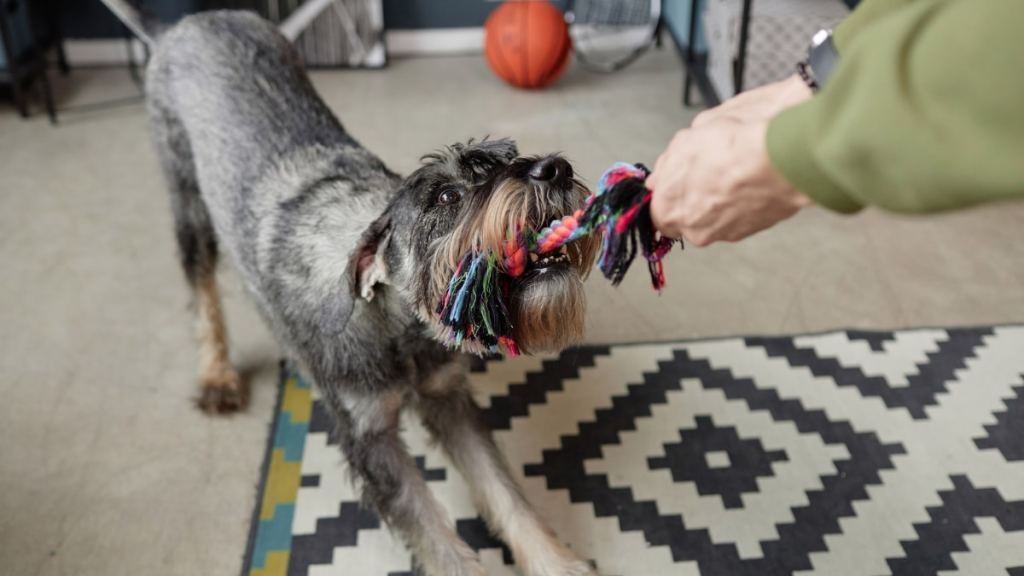
Tug is a brilliant indoor game when handled with structure. It’s not just about strength — it’s about control, cooperation, and confidence. While some owners worry it encourages aggression, studies show that when played with rules, tug can actually promote impulse control and strengthen your bond with your dog.
Always use a designated toy and introduce clear cues like “take it” and “drop it.” If your dog becomes overstimulated, pause the game and allow them to calm before resuming. Letting your dog win from time to time builds confidence and keeps the game engaging.
Safe Play Guidelines:
- Use a proper tug toy (something soft but strong)
- Teach your dog a “drop it” cue to avoid overstimulation
- Let your dog win sometimes — it builds confidence
- Keep sessions short and positive
Why It Works: Physical outlet meets structured bonding. It’s ideal for dogs that struggle to sit still or get fidgety with too little movement.
Quick Tip
If your dog gets over-excited, use breaks and reset with calm behaviour.
4. DIY Indoor Agility and Obstacle Courses
Turn your living space into a makeshift agility course to challenge your dog both physically and mentally. It’s easier than it sounds — household items like chairs, blankets, cushions, and broomsticks are all you need to create fun obstacles. Not only does this provide physical exertion, but it also boosts confidence and focus as your dog navigates the course.
Take your time guiding your dog through each part of the setup, using treats or a toy to lure them. Praise and reward for effort, and avoid forcing them into anything they seem unsure about. Keep things low-impact and soft underfoot to avoid injury.
What You Can Use:
- Dining chairs and broomsticks for low jumps
- Cushions, blankets, and mats for different textures
- Boxes and tunnels for crawling or weaving
- Tape arrows on the floor to guide movement
Why It Works: Agility engages your dog’s body and mind, teaching them problem-solving skills in a fun, low-stakes environment.
Quick Tip
Always supervise and ensure it’s safe. Avoid anything unstable or slippery.
5. Enrichment Feeding: Puzzle Toys, Kongs and Lick Mats

Meal and treat times are a great opportunity to turn a boring routine into something exciting and rewarding. Enrichment feeders challenge your dog to think, work, and slow down — ideal for rainy days when they’re more prone to boredom.
You can buy specially designed puzzle feeders, or you can make your own by hiding treats inside a rolled-up towel, using muffin tins covered with tennis balls, or stuffing a Kong and freezing it. Lick mats are also fantastic for encouraging slow, calming activity — just make sure to use dog-safe toppings.
Enrichment Tools to Try:
- Lick mats smeared with xylitol-free peanut butter or yoghurt
- Kongs stuffed with a mix of wet food, veg, and treats — then frozen
- Snuffle mats for dry food hunting
- Interactive feeders or puzzle toys that require problem-solving
Why It Works: Enrichment helps redirect energy into a calming, satisfying task, and can reduce behavioural problems caused by boredom.
Quick Tip
Rotate toys to keep things fresh. Dogs quickly get bored with the same enrichment every day.
6. Short Urban or Covered Sniff Walks
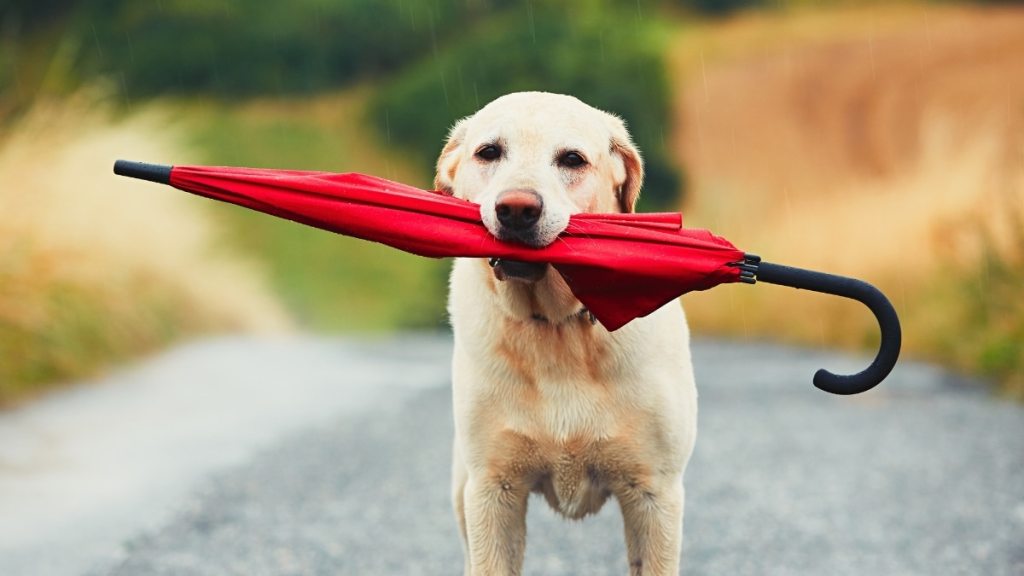
You don’t have to stay inside all day. In fact, sometimes a 10-minute sniff walk is all your dog needs to reset. While a muddy trek across fields may not appeal, many urban environments offer sheltered options where your dog can still stretch their legs and engage their senses.
Covered markets, arcades, garden centres and even quiet car parks can all offer a change of scene. Take a pocketful of treats and allow your dog to lead the pace — remember, it’s not about distance, it’s about quality sniffing.
Why It Works: A brief walk with the freedom to sniff satisfies your dog’s need for stimulation and routine, helping avoid frustration.
7. Treadmill Training (Advanced Only)
Yes — it’s possible to teach a dog to walk on a treadmill. While it’s not something every owner will want or need to do, for dogs with very high exercise needs or during long stretches of bad weather, it can be a useful addition. The key is slow, positive introduction and close supervision.
Begin by letting your dog explore the treadmill while it’s switched off. Reward calm behaviour and build confidence gradually. Once they’re comfortable, you can start at the lowest speed and increase slowly over time — always observing their body language.
Important Guidelines:
- Start with the treadmill OFF and let your dog get used to stepping on it
- Use treats and praise to build positive associations
- Begin at the slowest speed and never leave your dog unattended
Why It Works: While not for everyone, treadmill walking mimics the rhythm of a walk and provides reliable physical outlet when the weather won’t cooperate.
Quick Tip
This works best with dogs that are already confident and well-socialised. If your dog is anxious or fearful, skip this option.
Final Thoughts
Rainy days don’t mean sacrificing your dog’s wellbeing. High-energy dogs especially need outlets — or that pent-up energy might find its way into unwanted behaviours. From scent work and enrichment feeding to creative indoor games, there are so many ways to give your dog a fulfilling, tiring, and fun day inside.
The key? Mix it up, keep things positive, and listen to what your dog enjoys. Whether it’s tug time or treat hunts, there’s always a way to make even the soggiest UK afternoon a little brighter — for both of you.
Ready to get started? Clear a bit of space, gather some treats, and let the indoor fun begin.