Imagine a dog that can scale sheer cliffs, fold its ears shut, and bend its neck backwards to touch its spine. Sounds like something out of a sci-fi movie, right? Well, this extraordinary dog actually exists—meet the Norwegian Lundehund!
Originally bred in Norway to hunt puffins, the Lundehund has evolved into one of the most unique and rare dog breeds in the world. From its six toes on each foot to its super-flexible joints, this breed is unlike any other.
Let’s dive into the fascinating history and quirky physical traits that make the Lundehund truly one of a kind.
A Puffin Hunter Like No Other

The Norwegian Lundehund was specifically bred for one purpose: hunting puffins. These seabirds nest in narrow crevices along Norway’s steep cliffs, making them nearly impossible to catch. To retrieve them, hunters needed a small, agile, and ultra-flexible dog—enter the Lundehund.
What Makes the Lundehund a Perfect Puffin Hunter?
Dobermann started selectively breeding dogs with the best traits for guarding, speed, and obedience. While the exact mix remains unknown, most experts believe the following breeds played a role:

Quick Fact
Lundehunds were once essential for survival in coastal Norway—puffins were a vital food source, and their feathers were used for insulation!
Why Does the Lundehund Have Six Toes?

Unlike most dogs, which have four toes per foot, the Lundehund has six fully functional toes on each paw. This is due to a genetic condition called polydactyly, which has been selectively bred into the breed for centuries.
Each foot includes:
- Two extra toes, complete with bones and pads.
- A wide, stable paw for climbing rocky surfaces.
- Greater balance and agility, making them natural rock climbers.
Quick Fact
Polydactyly is extremely rare in dogs, and the Lundehund is the only breed in the world where it is a standard trait!
The Lundehund’s Unique Flexibility
One of the most fascinating traits of the Norwegian Lundehund is its extreme flexibility. Unlike other dogs, this breed has:
- A spine that bends backward – They can tilt their head so far back that it touches their own spine!
- Super-flexible shoulders – They can move their front legs out to the side at a 90-degree angle.
- Foldable ears – They can completely close their ears to keep out water and dirt.
This makes them perfectly suited to squeezing into tight rock crevices where puffins hide.
Quick Fact
The Lundehund is sometimes called a “cat-like dog” due to its flexibility and ability to climb.
The Near-Extinction of the Lundehund
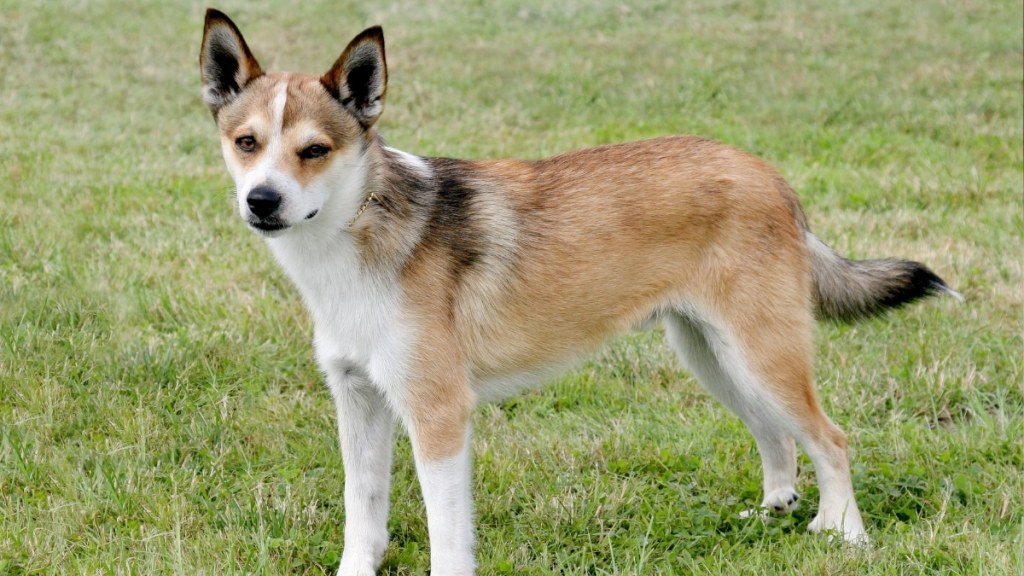
Despite their incredible abilities, Lundehunds nearly went extinct—twice!
By the 1960s, only six Lundehunds remained. A dedicated breeding programme was launched to save them, and while the breed is still rare today, numbers have slowly recovered.
Quick Fact
Even now, the Lundehund remains one of the rarest dog breeds in the world!
FAQs About the Norwegian Lundehund
Final Thoughts
The Norwegian Lundehund is a true marvel of evolution and selective breeding. With six toes, extreme flexibility, and a rich history, it remains one of the most unique and fascinating dog breeds in the world. Though rare, those lucky enough to own a Lundehund get to experience a living piece of history—a dog designed for adventure, agility, and survival.
🐾 What do you think about the Lundehund? Would you ever own one? Let us know in the comments!