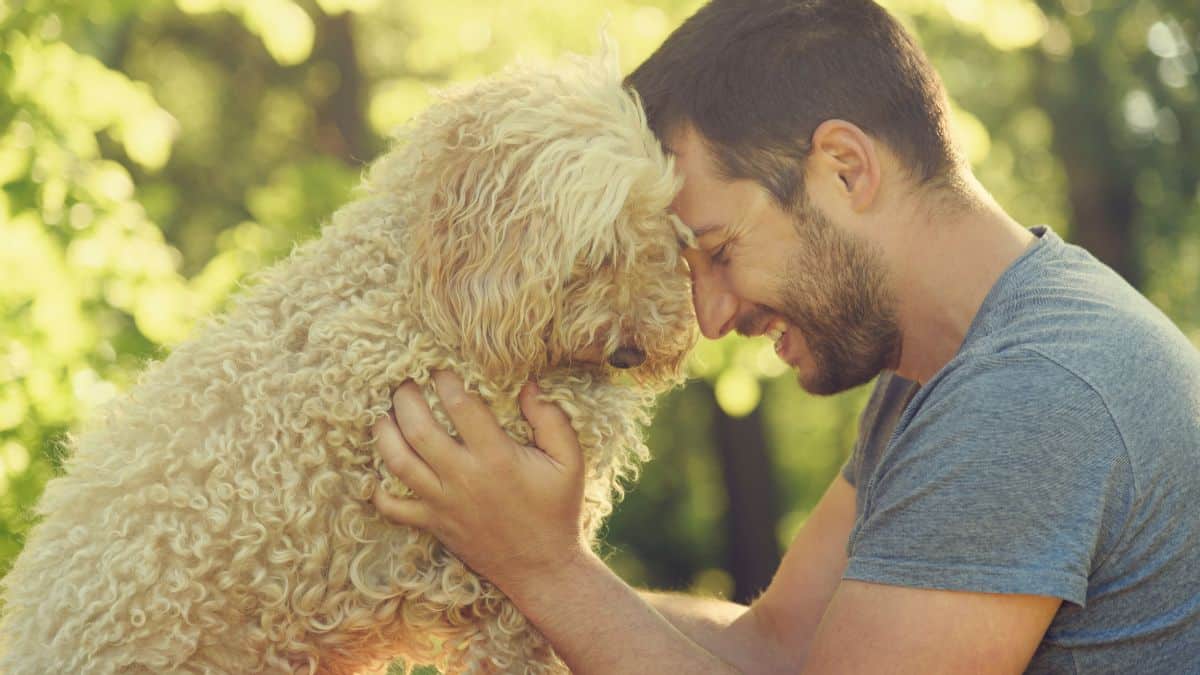
The science behind the soothing power of canine companionship
Whether it’s a wagging tail at the door after a rough day, or a quiet, steady presence curled beside you on the sofa, dogs have an uncanny way of knowing when something’s wrong — and making it feel just a little bit more manageable. They don’t offer advice. They don’t try to fix things. But for millions of people in the UK, dogs are a daily lifeline when it comes to anxiety, low moods, and stress.
In this guide, we explore the science and real-life experience behind why dogs are so good at comforting humans — and how their simple presence can make a powerful difference, whether you live with diagnosed anxiety or just get stuck in your own head sometimes.
Whether you’re wondering if a dog could help your mental health, or you’re already a proud dog parent looking to understand your bond more deeply — you’re in the right place.
Quick Answer: Do dogs help with anxiety and stress?
Yes — dogs help reduce anxiety, stress, and low moods through their calming presence, playful energy, and strong emotional connection with humans. Whether they’re curled at your feet, wagging with joy at walk time, or resting their head in your lap, dogs provide everyday emotional support simply by being themselves.
Dogs Don’t Try to Help — They Just Do

Dogs don’t offer pep talks, and they won’t suggest a mindfulness app — but they often do something even better. Without knowing it, dogs instinctively offer a sense of calm, consistency, and safety that many people struggling with anxiety or stress find incredibly soothing.
Their routines provide gentle structure. Their body language is quiet and grounding. And most importantly, their affection is never conditional — they don’t need you to be happy, productive, or “on form.” They just need you to be you. And that, on hard days, is everything.
The Natural Ways Dogs Help with Anxiety and Stress
From subtle behaviours to full-body wiggles of joy, dogs possess a quiet genius when it comes to easing anxiety and low moods. They don’t follow a script. They don’t give advice. But they offer a kind of emotional support that feels instinctive, reliable — and deeply human.
Here’s how dogs naturally support our mental wellbeing, simply by being who they are:
1. They’re brilliant at living in the moment
Dogs are mindfulness in motion. They don’t dwell on yesterday’s argument or worry about tomorrow’s meeting. They’re dialled into now — the smell in the air, the sound of your voice, the comfort of the sofa. That grounded presence helps pull us out of spiralling thoughts and back into our bodies. When your dog is watching a butterfly like it’s the most important thing in the world, it reminds you to breathe — and be.
2. They love without judgement
Your dog doesn’t care if you’re in pyjamas at 3pm or if your to-do list hasn’t moved since Monday. They’re still overjoyed to see you. That constant, non-judgemental love is a powerful antidote to shame, guilt, and self-criticism — common side effects of stress and low mood. When everything else feels uncertain, your dog’s joy at your existence is unshakeable.
3. They provide physical comfort

There’s something uniquely calming about the weight of a dog’s head on your lap. Physical touch triggers the release of oxytocin — the bonding hormone — which reduces cortisol (the stress hormone). Whether they curl up beside you, rest a paw on your arm, or gently nuzzle your hand, their presence brings real physiological relief, often without needing a word.
4. They encourage gentle routine
Even when life feels chaotic, dogs still need walks, meals, playtime, and snuggles. That dependable rhythm can help structure your day when motivation is low or anxiety is high. Instead of a strict schedule, dogs create gentle anchors — moments that encourage you to get outside, move your body, or simply be present. It’s not just good for them. It’s quietly healing for you too.

Quick Tip
Watch what your dog does when you’re sad or stressed. Many dogs naturally alter their behaviour — becoming quieter, more attentive, or staying close — even without being told. It’s not training. It’s instinct.
Scientific Reasons Dogs Make Us Feel Better

There’s more than just comfort in your dog curling up beside you — there’s hard science too. The emotional lift you feel from being around your dog isn’t imagined; it’s physiological, and it can begin within minutes of interaction.
Research has shown that simply being near a dog can trigger a cascade of positive chemical changes in your body:
This cocktail of hormones and brain chemicals helps explain why dogs are increasingly used in therapeutic environments — from hospitals and trauma centres to schools and care homes.
How Dogs Read Our Emotions (Even When We Don’t Speak)

Dogs have evolved alongside humans for tens of thousands of years — and with that cohabitation has come a remarkable sensitivity to our emotional states.
Without needing language, dogs can pick up on micro-signals that reveal how we’re feeling. These include:
And they don’t just notice these things — they respond to them. A 2020 study in showed that dogs not only recognise emotional expressions in humans but adjust their behaviour accordingly.
Feeling anxious? Your dog might become still and observant. Feeling flat? They may try to coax you into play. Feeling overwhelmed? You’ll likely find them closer than usual — leaning in, lying near, or keeping gentle eye contact.
This ability to mirror and react to our emotions — without trying to fix us — is one of the most quietly powerful things about living with a dog. They don’t need us to explain. They just get it.
Playfulness and Joy: A Dog’s Natural Antidote to Low Mood

When low mood sets in, the world can feel heavy — even routine moments can seem effortful or dull. But dogs don’t operate in that space. Their default state is simple joy: a wagging tail when you reach for your shoes, a clumsy tumble mid-play, or a delighted yip when the lead comes out. They live for the little things — and that joy is infectious.
Dogs don’t need conditions to be “just right” before inviting fun. The ball can be soggy, the weather miserable, the floor cluttered — and they’ll still try to get you involved. This spontaneous, unfiltered enthusiasm helps snap us out of mental loops, nudging us back into the present.
More importantly, their playfulness isn’t performative or forced. It’s real. They’re not trying to distract you — they’re inviting you to share in something uncomplicated, silly, and safe. And in the middle of a tough day, that can feel like a lifeline.
Even watching a dog be joyfully ridiculous — rolling in the grass, zooming around the garden, or chasing their tail — can pull a quiet smile from a place you thought was empty. It’s not just uplifting. It’s grounding. You’re reminded that happiness doesn’t always have to be loud or big or planned. Sometimes, it just looks like a dog and a squeaky toy.
Companionship That’s Always Consistent
Mental health often comes with a rollercoaster of internal narratives — feeling like a burden one day, misunderstood the next. Dogs cut through all of that. Their loyalty isn’t conditional. Their affection doesn’t depend on how productive you were, what mood you’re in, or how well you’re holding things together. It’s steady — and it’s real.
A dog’s companionship is powerful because it’s:
Even on days when human interaction feels too much — when your phone stays face-down and social energy is gone — your dog is there. Not demanding, not disappointed. Just close by, offering the kind of wordless companionship that says, “I’m here if you need me.”
It’s not dramatic or loud. It’s the daily, dependable rhythm of a creature who never wavers — and in a world full of ups and downs, that constancy can feel like the most grounding gift of all.
Dogs in Action: Therapy, Support, and Natural Comfort

In the UK, therapy and support dogs aren’t just heartwarming additions — they’re working animals with powerful impact. You’ll find them in:
- Hospitals and hospices – offering comfort to patients during moments of pain or fear.
- Care homes – helping to reduce isolation and spark memory in those with dementia.
- Schools and universities – easing anxiety in students, especially during exams or transitions.
- Courtrooms and trauma centres – grounding people in distressing or high-stakes situations.
But here’s the beauty of it: you don’t need an official vest or badge for a dog to make a difference.
Your own dog — even if they’re a bit scruffy, stubborn, or prone to rolling in puddles — can be your therapy dog in practice, if not in paperwork. Their comfort doesn’t come from training manuals. It comes from proximity, presence, and the unshakable sense that someone’s in your corner.
Because it’s not about perfection — it’s about presence.
Summary Table: How Dogs Help with Anxiety, Stress and Low Mood
|
Dog Behaviour |
Emotional Effect |
Why It Helps |
|---|---|---|
|
Calm, consistent presence |
Reduces loneliness and uncertainty |
Offers grounding stability without emotional demands |
|
Physical closeness (touch, leaning) |
Lowers the body’s stress response |
Releases calming hormones like oxytocin and serotonin |
|
Playfulness and silliness |
Breaks cycles of anxious thinking |
Invites lightness and joy through spontaneous, positive action |
|
Living in the moment |
Grounds you in the here and now |
Reduces ruminating thoughts and mental spirals |
|
Instinctive emotional awareness |
Responds when you’re struggling |
Offers non-verbal support and a sense of being emotionally seen |
Final Thoughts
Dogs don’t need to understand what stress or anxiety is to help — they just do. They’re not trying to fix anything or offer advice. They’re simply there. And somehow, that’s enough.
They sit close when you’re feeling low. They nudge your hand when you’ve gone quiet. They stay near on the days when you’d rather not talk at all. No questions, no pressure — just quiet, gentle company.
That’s what makes them so special. Dogs don’t need to know what’s wrong to show up. They’re consistent, loyal, and full of love — even on your worst days. Especially on your worst days.
In a world that can feel overwhelming, their presence is grounding. They remind us of the power of routine, connection, and unconditional love. Sometimes, the most healing thing in the world is a dog curled beside you — reminding you that you’re safe, loved, and not alone.