Training your dog should be rewarding—but let’s face it, it can also be confusing, frustrating, and a bit of a mess if you don’t know what you’re doing.
The good news? You’re not alone. The bad news? Many of the most common dog training mistakes are so subtle, you might not even realise you’re making them.
Whether you’re raising a puppy or retraining an older rescue, these 10 training slip-ups can stall progress, create bad habits, or accidentally teach your dog the opposite of what you want. From poor timing to inconsistent cues, we’re unpacking the worst offenders—and exactly how to fix them.
Quick Answer: What Are the Worst Dog Training Mistakes?
The Top 10 Worst Dog Training Mistakes
Let’s break them down…
1. Repeating Commands Over and Over
“Sit… sit… SIT…!”
Sound familiar?
It’s one of the most common traps: owners repeat a cue when their dog doesn’t respond, thinking it’ll help them learn. But in reality, it teaches your dog that the word doesn’t mean anything until the third or fourth time—or until you shout it.
Dogs learn by association and pattern. If “Sit” becomes background noise, it loses its meaning—and your dog starts waiting for the real command: your rising frustration.
Why it’s a problem 🚫:
- Weakens the command
- Slows down response time
- Teaches your dog to ignore the first cue
What to do instead ✅:
- Say the command once
- If they don’t respond, reset the situation—get their attention, change position, or lure them into the behaviour
- Practise in low-distraction environments first to build responsiveness
- Reinforce every correct response quickly and clearly
2. Training When You’re Frustrated
You had a long day, your dog just chewed the post again, and now you’re trying to do a training session with clenched teeth and a sharp tone. We’ve all been there—but here’s the deal: your emotional state changes the entire session, whether you realise it or not.
Dogs are incredibly sensitive to your tone, body language, and energy. If you’re tense, they’ll be tense. If you’re frustrated, they’ll either mirror it—or shut down completely. That means training becomes harder, slower, and more stressful for everyone involved.
Even worse, when we’re in a bad mood, we’re more likely to raise our voices, push too hard, or punish mistakes that aren’t actually disobedience—just confusion.
Why it’s a problem 🚫:
- Breaks trust and confidence
- Can make your dog anxious around cues
- Reinforces the idea that training = tension
What to do instead ✅:
- Only train when you’re calm, clear-headed, and patient
- If things go sideways, end on a win (even a small one) and try again later
- Remember: it’s better to skip a session than to damage your progress with a bad one
- Think of yourself as the calm anchor in the storm—your dog learns best when you’re steady
3. Being Inconsistent With Commands, Rules, or Rewards

Dogs thrive on routine and predictability. If one day you allow your dog on the sofa, and the next you tell them off for it—how are they supposed to know what’s right? The same goes for commands. “Down,” “Off,” and “Get down” might all mean the same thing to you, but to your dog, they’re completely different sounds.
Inconsistent training is one of the biggest reasons dogs don’t respond to cues reliably. It doesn’t mean they’re being stubborn—it means the rules keep changing.
And inconsistency doesn’t just come from you. If different people in the household are using different commands, expectations, or tones, your dog’s left trying to decode a very messy language.
Why it’s a problem 🚫:
- Confuses your dog and delays learning
- Causes anxiety around “rules”
- Undermines progress even if you’re training daily
What to do instead ✅:
- Pick one word per command (e.g. “Sit,” “Down,” “Leave it”) and stick to it
- Create household consistency: everyone should use the same cues and expectations
- Keep your reinforcement consistent—if you reward a behaviour one day but not the next, the behaviour will weaken
- Think of training like a language: the clearer the grammar, the faster your dog becomes fluent
4. Using Punishment Instead of Redirection
When your dog does something wrong—like chewing the sofa, barking at the postie, or jumping up at guests—it’s tempting to snap, scold, or punish. And while it might stop the behaviour in the moment, it teaches your dog nothing useful in the long run.
Worse still, harsh punishments can damage your bond, create anxiety, or lead to fear-based behaviours. Your dog learns to avoid you, not the behaviour.
Dogs don’t need to be dominated or shamed—they need to be shown what to do instead. That’s where redirection comes in: replacing unwanted behaviour with something positive, then reinforcing that choice.
Why it’s a problem 🚫:
- Punishment often creates fear, not understanding
- Doesn’t teach a better alternative
- Can suppress behaviour temporarily—but not solve the cause
- Damages trust and motivation
What to do instead ✅:
- Interrupt calmly, then redirect to a better behaviour (e.g. chew toy instead of table leg)
- Reward the alternative behaviour generously
- Use management tools (baby gates, leads, crates) to prevent the behaviour in the first place
- Focus on teaching, not correcting—your dog will respond better
5. Poor Timing When Rewarding or Correcting

Timing is everything in dog training. You can have the best treats in the world and the clearest cues—but if you reward a behaviour even two seconds too late, your dog might associate it with something completely different. The same goes for corrections (which, if used, must also be well-timed and calm—not emotional or reactive).
Dogs learn in the moment, not in hindsight. A reward that comes too late confuses the message. A correction that follows an unrelated behaviour (like them sitting politely after barking) just teaches them that sitting gets them told off.
This is one of the most common reasons dogs “don’t get it”—because the moment you’re reinforcing isn’t the moment they’re learning.
Why it’s a problem 🚫:
- Confuses your dog about which behaviour earned the reward (or correction)
- Reinforces the wrong actions
- Slows down training significantly
- Can damage trust if used harshly or unfairly
What to do instead ✅:
- Use a marker word (like “Yes!”) or a clicker to capture the exact moment they do it right
- Follow that marker with a reward immediately
- Keep treats accessible during training—don’t leave your dog waiting while you fumble in your coat pocket
- If using a correction (e.g. removing attention), make sure it happens as the behaviour starts, not after they’ve stopped

Quick Tip
Practise your timing like a reflex. Fast, consistent rewards = faster learning.
6. Ignoring Bad Behaviour… or Accidentally Rewarding It
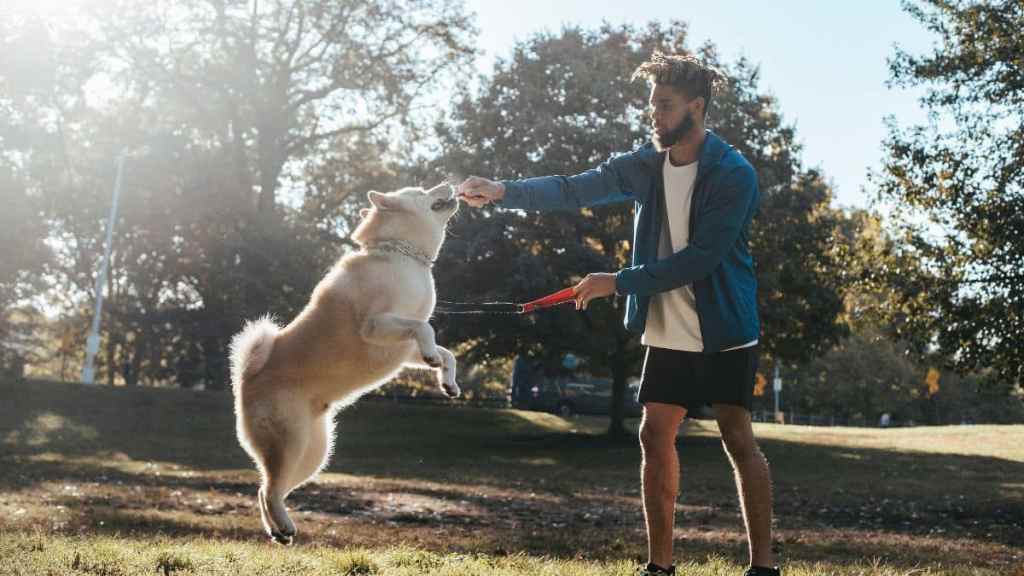
Many owners are told to “ignore bad behaviour,” and sometimes that advice works—but only in very specific cases. In reality, a lot of unwanted behaviours (like barking, jumping, pawing, or whining) are being reinforced by accident, even if you think you’re not encouraging them.
Here’s how it happens:
- Your dog jumps up and you say “No!”—but you’ve just given them attention.
- They bark at you for dinner and you eventually give in—congrats, they’ve just trained you.
- They paw at your lap and you absentmindedly stroke them while watching telly.
Dogs are always learning. Even eye contact or a chuckle can be a reward. So if you’re not actively managing what gets attention, you might be teaching behaviours you don’t want—without even realising it.
Why it’s a problem 🚫:
- Reinforces nuisance behaviours (especially attention-seeking ones)
- Makes habits harder to break over time
- Sends mixed signals—rewarding the wrong thing
What to do instead ✅:
- Ask yourself: What is my dog getting out of this behaviour?
- Ignore calmly when appropriate—but always pair it with rewarding an alternative
- Don’t just say “no”—teach “do this instead”
- Make sure unwanted behaviours never pay off (no food, fun, or attention)
Quick Tip
Dog barks for a walk? Don’t clip the lead until they’re quiet and sitting. Otherwise, they’ll bark every time.
7. Rushing the Process
We all want a well-behaved dog, fast. But dogs don’t learn on our schedule—and pushing them to progress too quickly can undo all your hard work. One day they’ve nailed recall in the garden, and the next you’re calling them across a dog park and wondering why they’ve vanished into the bushes.
Training isn’t a race. It’s a step-by-step process, and skipping those steps can leave your dog confused, overwhelmed, or set up to fail. Think of it like building a house—you can’t jump to the roof before the foundations are solid.
Dogs need gradual proofing. Just because they’ve learned a command at home doesn’t mean they understand it in public, around distractions, or when excited.
Why it’s a problem 🚫:
- Leads to inconsistent results
- Damages your dog’s confidence
- Makes cues unreliable in real-world settings
- Often results in frustration on both sides
What to do instead ✅:
- Take your time—master each stage before moving on
- Practise in calm, familiar places first
- Slowly add one distraction or challenge at a time (e.g. new location, other dogs, longer distances)
- Celebrate small wins—consistency now means freedom later
8. Training in Busy, Overstimulating Environments Too Soon
You wouldn’t learn to drive by heading straight onto the M6 at rush hour—and your dog shouldn’t be expected to learn basic cues at a packed park with squirrels, kids, and off-lead dogs flying around.
Yet that’s exactly what many owners do: they try to practise recall, leash manners, or “leave it” in chaotic settings before the dog has mastered those skills at home. The result? Frustration, failure, and a dog who seems “stubborn” when really, they’re just overstimulated.
Dogs need to build focus and impulse control in calm, controlled environments first. Otherwise, you’re setting them up to fail—and associating cues with stress instead of success.
Why it’s a problem 🚫:
- Overwhelms your dog’s brain (especially puppies or reactive dogs)
- Creates negative associations with training
- Teaches them that cues don’t apply when things are exciting
What to do instead ✅:
- Start in a quiet room or garden
- Gradually work your way up to more stimulating environments (front garden → quiet park → busier area)
- Keep sessions short and successful—even just one correct “sit” in a new place is a win
- Know your dog’s threshold, and don’t train past it
Quick Tip
If your dog won’t take a treat in a certain environment, they’re too stressed to learn. Dial it back.
9. Using Their Name Only When You’re Telling Them Off
Your dog’s name should be a beacon—it should mean “Look at me! Good things are coming!” But if you only say it when you’re annoyed (“Bailey, no!” or “Milo, what have you done?!”), it becomes a warning instead of an invitation.
Over time, dogs start to associate their name with tension, frustration, or being told off. That means when you really need them to come back at the park or listen in a busy moment… they might hesitate—or ignore you entirely.
Why it’s a problem 🚫:
- Weakens recall
- Damages engagement
- Creates anxiety around hearing their name
What to do instead ✅:
- Use their name regularly in positive, upbeat contexts
- Pair it with good things: praise, treats, walks, toys, cuddles
- Avoid saying their name when correcting behaviour—use a neutral interrupter like “Ah-ah” or “Oi” (if you must)
Quick Tip
Try this: say their name in a happy voice, and reward them just for looking at you. It rebuilds a strong association in seconds.
10. Expecting Human Logic from a Dog Brain

Dogs are incredibly smart—but they don’t think like us. They don’t plot revenge, feel guilty about chewing your slippers, or understand complex cause-and-effect logic. Yet many owners unintentionally treat their dog like a furry human—and that’s where communication breaks down.
You might assume your dog “knows better,” is being “naughty on purpose,” or should behave based on past mistakes. But dogs live in the present moment. If they get things wrong, it’s usually down to confusion, stress, or lack of clarity—not defiance.
Training fails when we expect dogs to understand rules they’ve never been taught properly, or when we punish them for behaviour they don’t understand as “wrong.”
Why it’s a problem 🚫:
- Creates unrealistic expectations
- Damages the human–dog relationship
- Leads to frustration and misplaced blame
- Prevents effective, empathetic training
What to do instead ✅:
- Remind yourself: your dog isn’t being “bad”—they’re being a dog
- Focus on teaching what you do want instead of scolding what you don’t
- Be patient, consistent, and compassionate—it’s your job to guide, not judge
- Learn to think like a dog: clear, immediate, and reward-focused
Final Thoughts
Training isn’t just about teaching your dog—it’s about unlearning our own bad habits too. Most of these mistakes are made with love, but they can seriously get in the way of progress.
By avoiding these common pitfalls, you’re not just building better behaviour—you’re creating a calmer, more connected bond with your dog. One based on trust, clarity, and a whole lot of tail wags.