Working from home with a cat can be equal parts cosy and chaotic. One moment they’re curled up purring peacefully on your lap, the next they’re marching across your keyboard mid-meeting or yowling just as you unmute.
Whether you’re new to remote work or trying to establish a better routine, sharing your home office with a cat brings unique challenges — and unexpected joys. The good news? With a few thoughtful tweaks, you can strike the perfect balance between feline companionship and professional productivity.
Quick Answer: How do you manage working from home with a cat?
To work successfully from home with a cat, create a clear routine, offer enrichment to reduce attention-seeking, and set up cosy zones that meet their needs without hijacking your desk. Gentle boundaries, playtime breaks, and positive reinforcement can prevent disruptive behaviours like Zoom bombing, constant meowing, or laptop invasions.
Why cats love to “help” when you work from home

From their perspective, you’re home — so why aren’t you giving them your full attention?
Cats are creatures of habit and curiosity. If your working-from-home routine isn’t clear to them, they’ll often seek interaction in the most inconvenient ways. Common behaviours include:

Quick Tip
Cats aren’t trying to be annoying — they’re just responding to the space and routine around them. With structure and enrichment, most settle beautifully into home-working life.
Creating cat-friendly boundaries (without being unkind)
Cats don’t respond well to scolding or being shooed. Instead, use gentle guidance, consistency, and clear environmental cues to teach them where they’re welcome — and where they’re not.
1. Set up a workstation that works for you and them
- Keep your main workspace clutter-free, especially if your cat is likely to hop up.
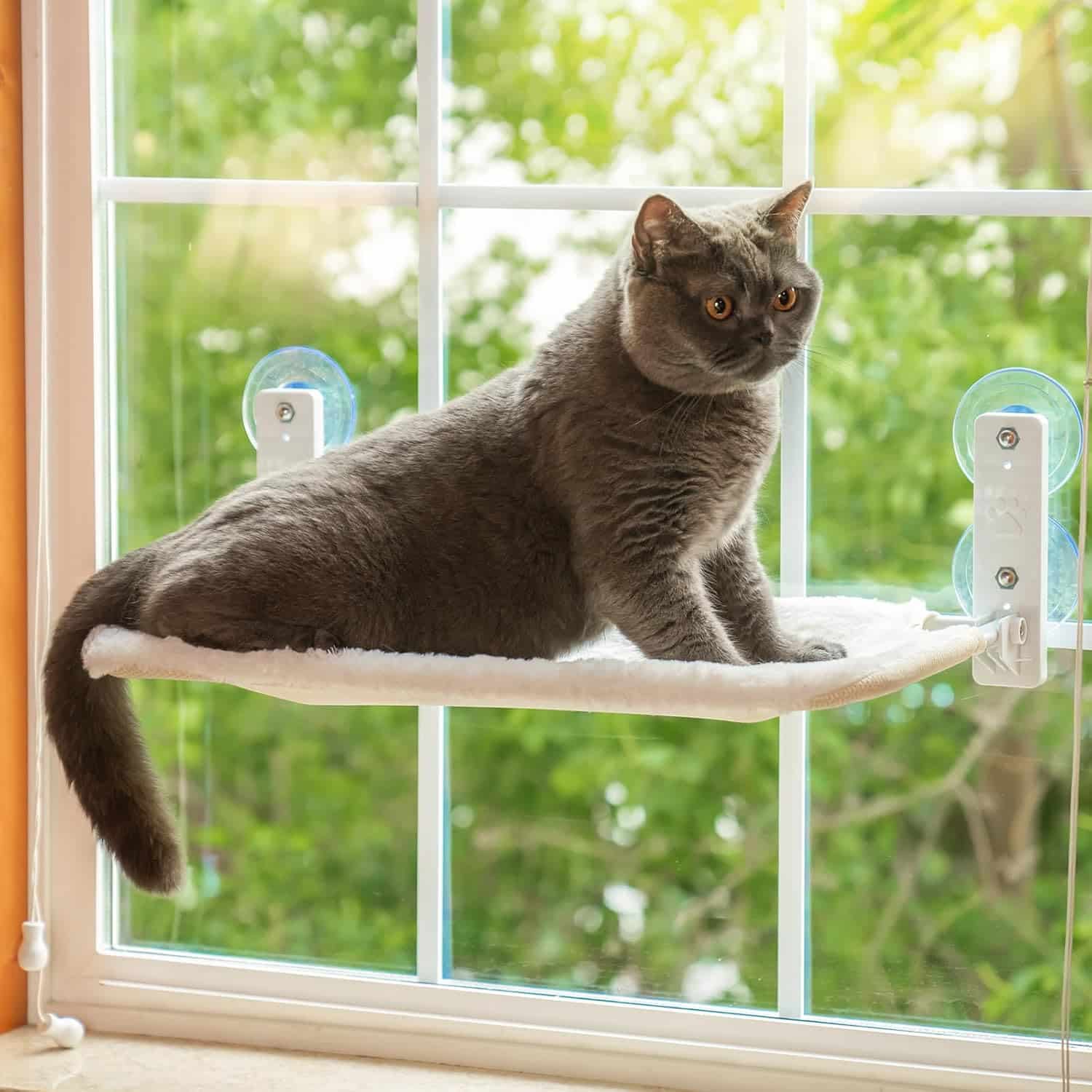
- Offer an alternative comfy spot nearby (like a window perch such as the MEWOOFUN Cat Window Hammock, a heated mat, or cosy box).
- Try placing a cat bed on your desk, but off to one side. Many cats are happy to be near you without being on your keyboard.
Quick Tip
For a stylish solution, a soft raised bed like a cat hammock shelf can give them a dedicated space with a view.
2. Use doors, pens or room dividers
If your cat is extra disruptive during meetings, use a baby gate, closed door, or pet pen to create a temporary boundary — but don’t isolate them for long. Gradually extend alone time with treats and toys to build independence.
If your cat cries or scratches at closed doors, consider leaving calming music on and offering puzzle feeders or scent enrichment to reduce anxiety.
3. Reward the behaviour you want
Cats respond well to positive reinforcement. The moment they settle quietly or use their “approved” spot, reward with a treat, chin scratch or soft praise. Over time, they’ll associate calm behaviour with good things.
Managing Zoom calls, noisy meows, and camera bombs
Ah yes — the classic moment your cat decides to leap across your screen just as your manager appears.
Tips to avoid feline interruptions mid-meeting:
- Feed or play with your cat before important calls to tire them out
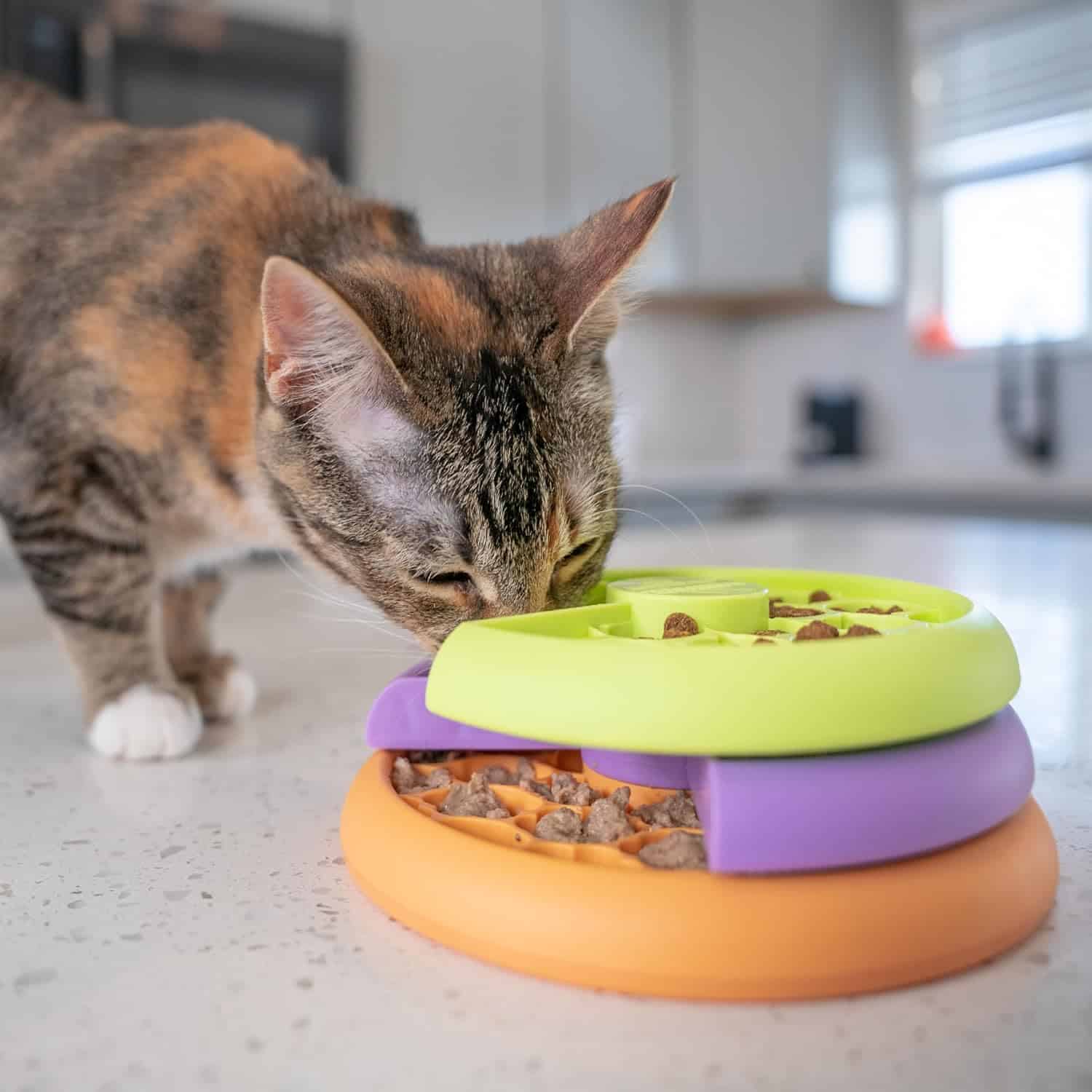
- Give them a treat puzzle or lick mat like the Catstages Lickin’ Layers Cat Puzzle to keep them occupied
- Shut the door and offer a warm bed or perch on the other side
- Use a lap blanket if your cat insists on joining — it signals when it’s OK to sit with you
Quick Tip
If your cat always interrupts at the same time, they may have learned this gets a reaction. Stay calm, gently remove them, and redirect to a pre-prepared activity spot.
Structuring your day for both productivity and cat care
Cats are crepuscular (most active at dawn and dusk), but they still need stimulation during the day — especially if you’re home and not engaging with them.
Build a basic work-from-home cat routine:
- Morning play session (10–15 minutes before work starts)
- Breakfast in a puzzle feeder or slow bowl
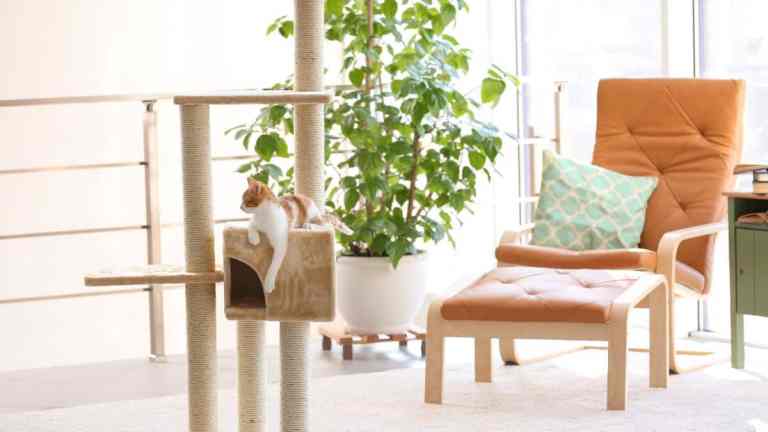
- Settle them in a cosy window seat, heated bed, or cat tree
- Schedule a midday interactive session (wand toy, fetch, or chase)
- Use short breaks for gentle fuss, brushing, or a treat
- End your workday with another play and feed session to avoid evening chaos
Cats thrive on predictability. If you stick to a rhythm, they’ll naturally begin to mirror your routine.
Enrichment ideas for cats while you work

Keeping your cat entertained and mentally stimulated reduces boredom, attention-seeking, and naughty behaviour.
Try these low-effort enrichment options:
Quick Tip
Enrichment doesn’t have to be expensive — even a cardboard box with holes punched in it can be a hit.
What if your cat won’t leave you alone?

Some cats become extra clingy when you start working from home. Others get under-stimulated and act out. Here’s how to handle it:
For clingy cats:
- Offer a lap blanket to signal when it’s okay to cuddle
- Encourage independence with treat hunts or time in another room
- Gently ignore attention-seeking (don’t reward the meows)
- Try calming pheromone diffusers (like Feliway Optimum)
For high-energy or mischievous cats:
- Increase playtime with interactive toys like feather wands or laser pointers
- Use timed feeders or puzzles to give them “jobs”
- Provide access to climbing spots, like cat trees or shelves
- Rotate toys to keep things fresh
Working from home with kittens or senior cats
Kittens
Young kittens need more supervision and structured stimulation. They’re curious, playful, and prone to zoomies at the worst times.
- Offer regular play sessions and naps
- Kitten-proof your office (no wires, toxic plants, or tiny gaps)
- Expect interruptions and plan key meetings around their calmer periods
Senior cats
Older cats often sleep most of the day, but they still need engagement and comfort.
- Provide warm beds and easy-access perches
- Keep to a gentle routine
- Watch for signs of discomfort, especially arthritis, which can affect mobility
Working from home with multiple cats
Two or more cats means more personalities, more space sharing, and sometimes more drama.
- Ensure each cat has their own safe spot, food bowl, and litter tray
- Be mindful of territory and tension — especially near your desk
- Use vertical space (like shelves or trees) to give cats places to separate
- Schedule group play, but give each cat individual attention, too
Cats aren’t always best friends — peaceful coexistence is still a win.
Can cats tell when you’re working?

Cats are intuitive. Over time, they often learn the signs that you’re “busy” — typing, headphones in, not engaging.
By reinforcing boundaries gently and sticking to a consistent routine, your cat can absolutely learn that Zoom time is not playtime, and that attention will come later.
Quick Tip
Cats pick up on your stress. If you’re anxious or constantly shooing them away, they’re more likely to act out. Calm consistency is key.
Final Thoughts
Working from home with cats isn’t just possible — it can be wonderfully rewarding. With the right set-up, your feline can become the purring co-worker you never knew you needed.
Yes, there’ll be interruptions. There may be tail-in-face moments and rogue meows on conference calls. But with a bit of planning, some well-placed treats, and a warm spot by the window, you can share your workspace in harmony.
What’s more, many cat owners find that having a pet nearby boosts their mood, lowers stress, and brings structure to long workdays. Cats don’t care about deadlines or inboxes — they remind you to stretch, take breaks, and enjoy the moment. That purring presence beside your desk? It’s not a distraction — it’s a little dose of wellbeing.
🐾 Respect their needs. Set kind boundaries. Offer enrichment, routine, and love. And make space for a few snuggly breaks — your cat (and your stress levels) will thank you.