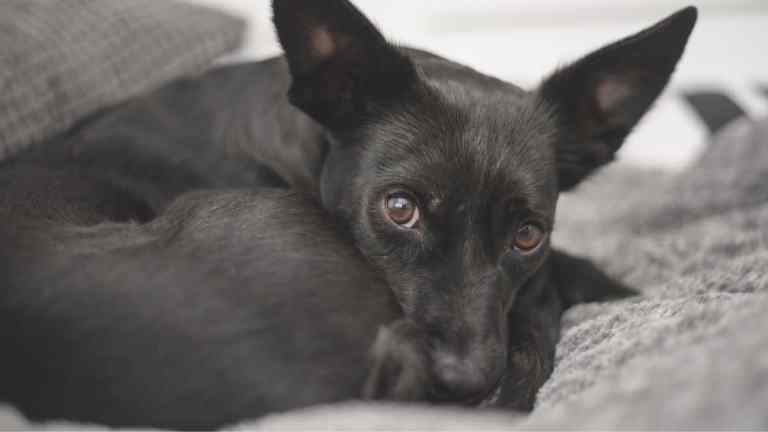
Dogs use their mouths to explore the world, and a little paw licking is completely normal. But what if your dog constantly licks their paws to the point where they’re red, swollen, or even bleeding? Excessive paw licking can indicate underlying health issues ranging from allergies and infections to anxiety and pain.
This guide will help you understand why dogs lick their paws, how to determine if it’s a medical or behavioural problem, and what treatment options are available. We’ll also cover when it’s time to seek veterinary care and how to prevent this issue from happening in the first place.
Is It Normal for Dogs to Lick Their Paws?
A certain amount of paw licking is completely normal. Dogs clean themselves regularly, and they may lick their paws after walking on dirty surfaces or after meals. Some dogs also lick their paws as a soothing behaviour before sleeping.
However, if your dog’s licking becomes obsessive or excessive, it’s a red flag. Signs that your dog’s paw licking is a problem include:
- Raw or red skin between their toes
- Hair loss or bald patches on the paws
- Swelling or inflammation
- Limping or licking one paw more than the others
- A bad smell coming from the paws (indicating infection)
If you notice any of these symptoms, it’s time to investigate the cause and seek treatment.
Common Causes of Excessive Paw Licking in Dogs
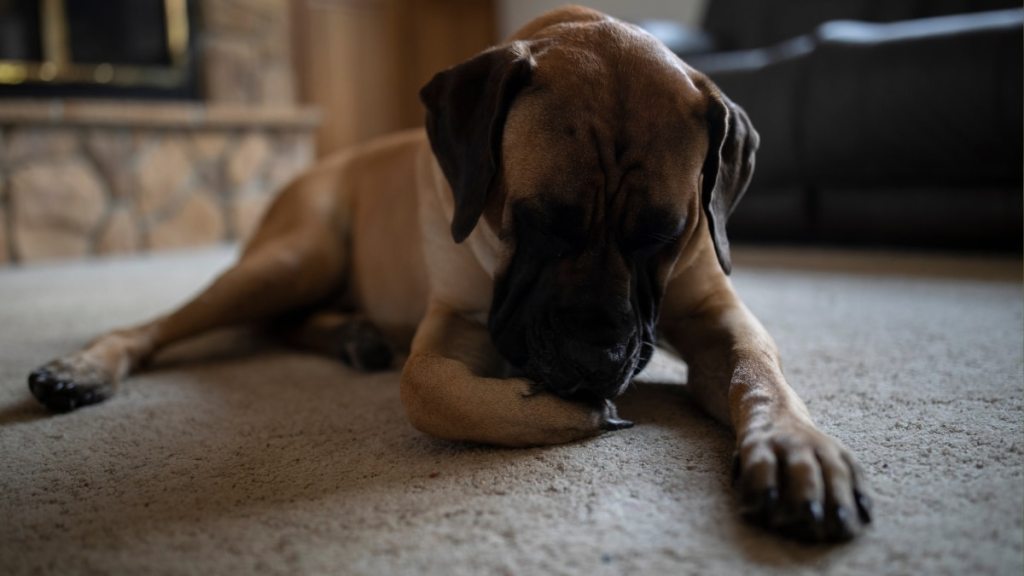
Dogs may lick their paws excessively due to medical, environmental, or psychological reasons. Here’s a deeper look into some of the most common causes:
Allergies
Allergies are one of the most common reasons dogs excessively lick their paws. Dogs can suffer from food allergies, environmental allergies (pollen, dust mites, mould), or contact allergies (grass, cleaning products, synthetic fabrics).
When a dog has allergies, their immune system overreacts to a substance, triggering itchy, inflamed skin. Because their paws come into contact with allergens, they often become irritated first.
👉 How to tell if it’s allergies:
- Your dog licks all four paws instead of just one
- They also have itchy ears, watery eyes, or skin redness
- Symptoms flare up seasonally (if it’s pollen-related)
Treatment: Managing allergies may involve hypoallergenic diets, antihistamines, or vet-prescribed allergy medications like Apoquel or Cytopoint.
Bacterial & Yeast Infections
If your dog’s paws smell funky or musty, a bacterial or yeast infection might be the culprit. Dogs with moist paws (especially breeds with skin folds like Bulldogs) are prone to yeast overgrowth.
Signs of infection include:
- Red, swollen paws
- Brownish or rust-coloured fur staining
- A strong odour (often described as “corn chips” or “cheese-like”)
Treatment: Vets usually prescribe anti-fungal creams, medicated shampoos, or antibiotics to clear up infections.
Pain or Injury
If your dog suddenly starts licking one paw, it could indicate pain or an injury. Common injuries include:
- Cuts or scrapes from sharp objects
- Burns from hot pavement in summer
- Foreign objects like thorns or splinters
- Arthritis or joint pain in older dogs
👉 How to check: Gently examine the paw for cuts, swelling, or foreign bodies. If your dog resists or yelps, there may be a deeper issue like arthritis.
Treatment: Minor cuts can be cleaned at home, but severe pain or swelling requires a vet visit to rule out fractures or infections.
Anxiety & Boredom
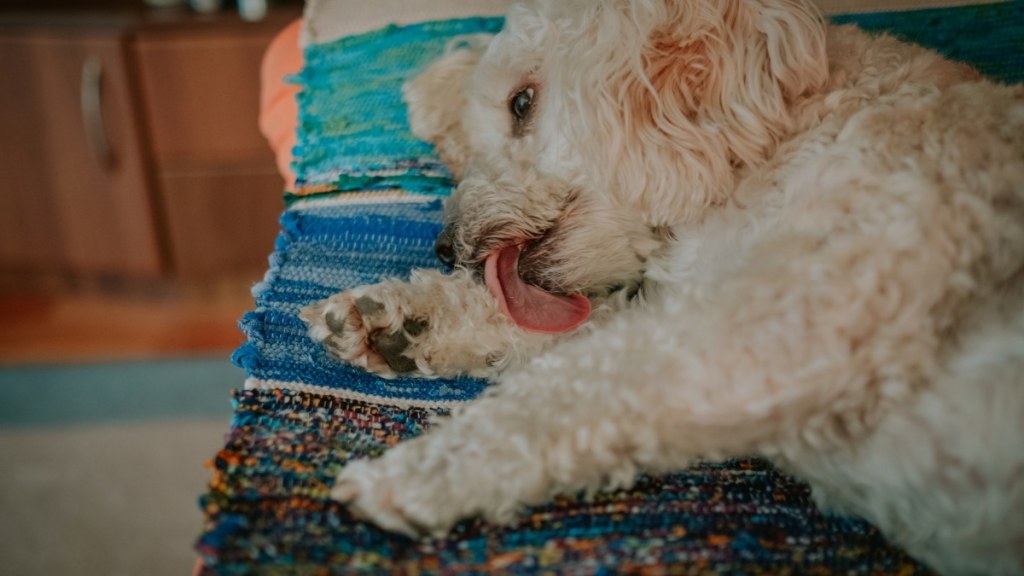
Some dogs lick their paws as a coping mechanism when they’re stressed, anxious, or bored. This is especially common in:
- Dogs with separation anxiety
- High-energy breeds that lack stimulation
- Rescue dogs with a history of neglect
Excessive licking in these cases is similar to nail-biting in humans—it’s a repetitive behaviour that provides comfort.
Treatment: Increasing exercise, interactive toys, and calming supplements can help reduce stress-related licking.
Health Risks of Chronic Paw Licking
If left untreated, excessive licking can lead to serious health issues such as:
- Lick Granulomas: Thick, raised sores that develop from repetitive licking
- Open wounds & secondary infections
- Long-term hair loss & skin damage
Early intervention is key to preventing permanent skin changes.
Vet-Recommended Treatments & Remedies
Depending on the cause, treatment may include:
Always consult a vet before trying home remedies, as some conditions require prescription medication.
How to Prevent Excessive Paw Licking in Dogs

Prevention is always better than cure. Here’s how you can keep your dog’s paws healthy and irritation-free:
- Wipe their paws after outdoor walks to remove allergens
- Use dog-safe moisturisers to prevent dry, cracked paws
- Keep their nails trimmed to avoid pressure-related licking
- Monitor their diet for possible food triggers
When to See a Vet
🚨 Seek veterinary care if your dog:
- Licks their paws non-stop and won’t stop even when distracted
- Develops open sores, swelling, or bleeding
- Starts limping or favouring a paw
- Shows other symptoms like vomiting or ear infections

Quick Tip
If in doubt, it’s always better to get a professional opinion to rule out serious conditions.
Final Thoughts
Paw licking is normal in dogs—but excessive licking is a sign of an underlying problem. Whether it’s allergies, pain, or boredom, identifying the cause early prevents long-term damage. If you’re unsure why your dog won’t stop licking their paws, a quick vet visit can provide clarity and the right treatment plan.
Has your dog ever had this issue? Let us know in the comments! And for more expert pet advice, follow FluffPost! 🐾