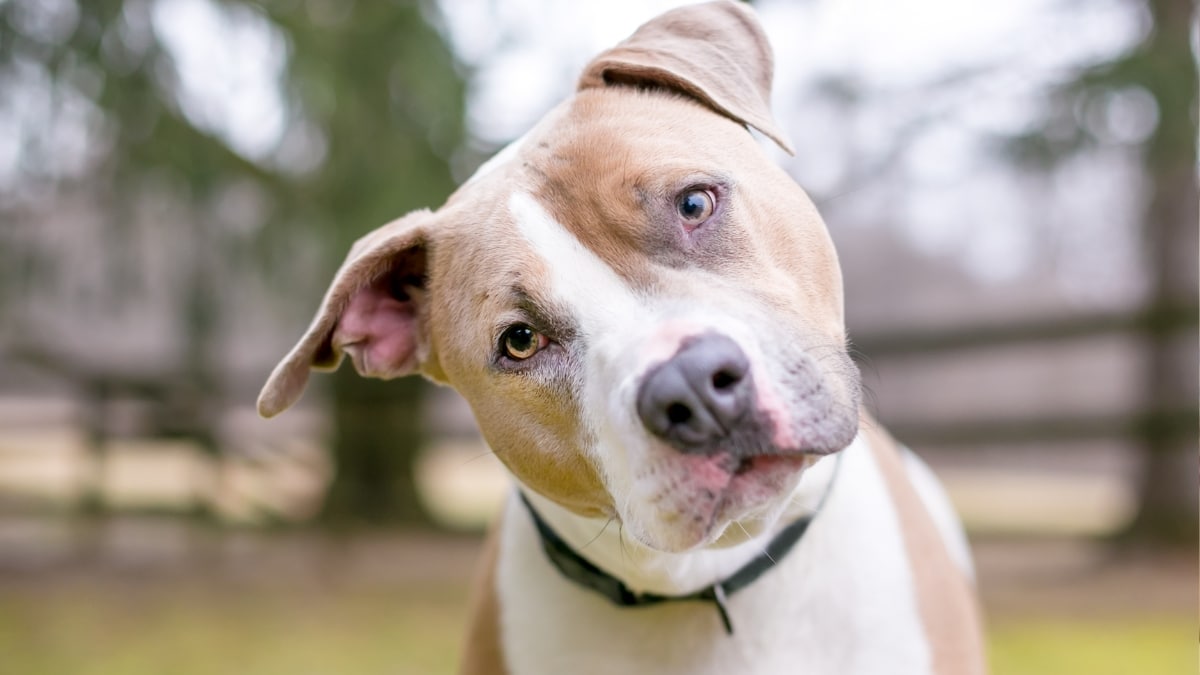
Few things are as heart-melting as a dog tilting its head in curiosity. It’s a behaviour that dog owners love, often interpreting it as a sign of intelligence, attentiveness, or sheer cuteness. But what actually causes dogs to tilt their heads? Is it a reaction to sound, a way to express emotion, or is there a deeper scientific reason behind it?
In this article, we explore the real reasons why dogs tilt their heads, backed by scientific research and expert insights.
The Role of Hearing: Does a Head Tilt Improve Sound Perception?
One of the most widely accepted explanations for head tilting is that it helps dogs better understand and locate sounds. Unlike human ears, which are positioned on the sides of our heads for direct stereo sound perception, a dog’s ear anatomy is different. Their ears are designed to pick up sounds from various angles, but tilting their heads may allow them to fine-tune their hearing and pinpoint exactly where a noise is coming from.
A study conducted by Dr. Stanley Coren, a professor of psychology and canine researcher, suggests that head tilting may be a natural response when dogs hear unfamiliar or high-pitched sounds. By tilting their heads, they may be adjusting their ear position to better capture the sound waves and interpret them more accurately. This would explain why dogs often tilt their heads when they hear certain words or sounds they don’t immediately recognise.
Further research in animal behaviour has shown that dogs are highly attuned to human speech and intonation. Some experts believe that head tilting helps dogs identify tonal variations in words, making it easier for them to understand commands or recognise familiar voices. Since dogs rely heavily on vocal cues, tilting their heads could be their way of fine-tuning their hearing to focus on particular sounds while filtering out background noise.
Vision and Muzzle Shape: A Matter of Perspective?
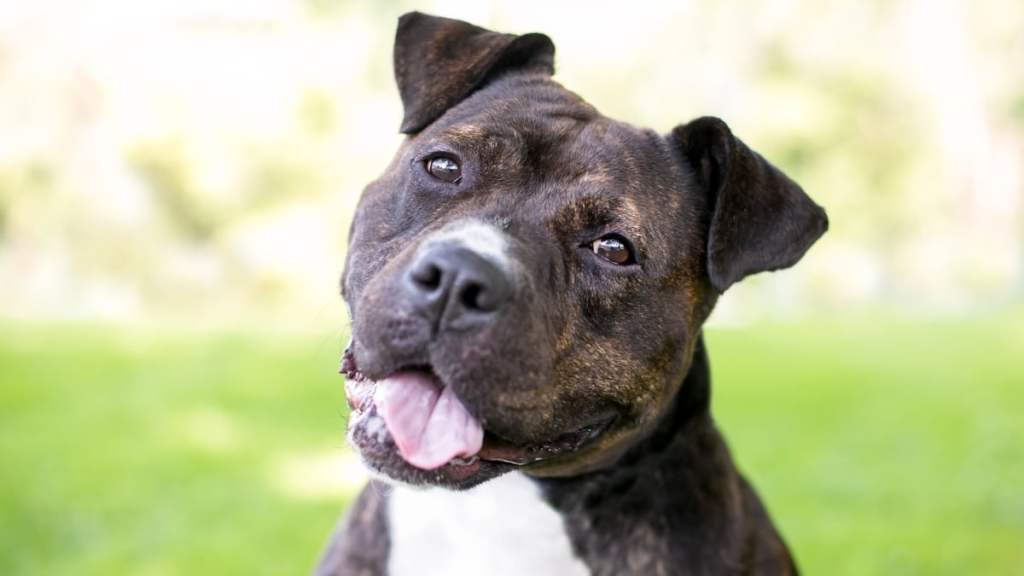
Another possible explanation is that head tilting is related to a dog’s field of vision. Dogs with longer muzzles—such as Golden Retrievers, Collies, and German Shepherds—may experience an obstructed view when looking at people’s faces. Tilting their heads could help them get a clearer line of sight and read facial expressions more accurately.
Dr. Coren conducted an informal survey where he found that dogs with longer muzzles were more likely to tilt their heads compared to flat-faced breeds like Pugs or Bulldogs. This suggests that head tilting may, in some cases, be an adaptive behaviour to improve visual communication with humans.
Facial recognition is essential in human-dog interactions. Dogs have been shown to recognise human emotions through facial expressions, and a clearer line of sight might make it easier for them to interpret these cues. This could explain why some dogs tilt their heads when being spoken to—it allows them to observe their owner’s expressions more effectively.
Canine Communication: Showing Empathy and Engagement
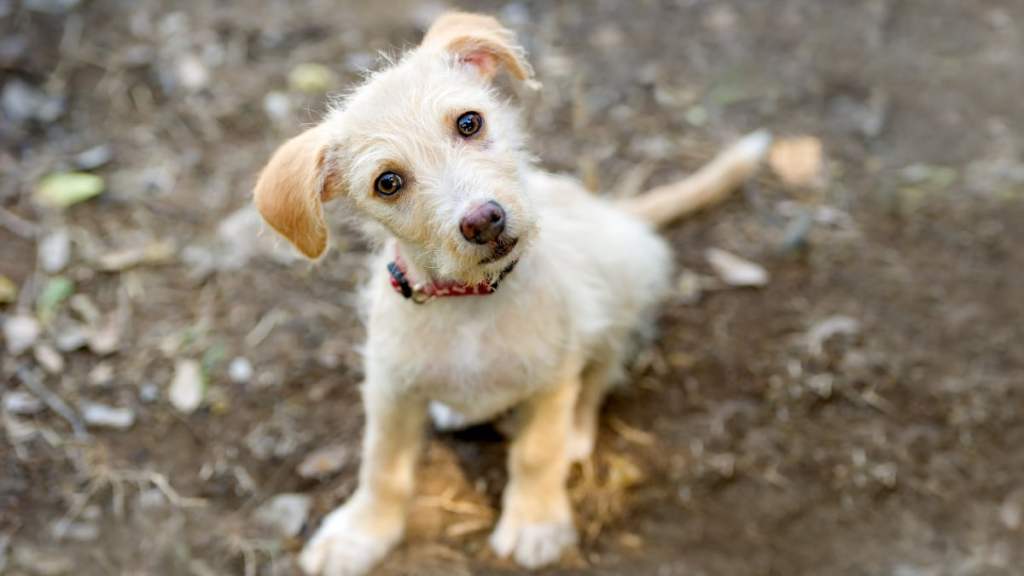
Dogs are highly social animals that thrive on interaction with humans. Some behaviourists believe that head tilting is a form of non-verbal communication. When a dog tilts its head, it may be signalling to its owner that it is paying close attention.
Since dogs are skilled at reading human body language and vocal tones, they may use head tilting to encourage further interaction. Owners often reward this behaviour—whether intentionally or not—by reacting positively, reinforcing the tilt as a way for dogs to gain attention or treats.
Moreover, some dogs may tilt their heads as a sign of empathy and social bonding. Research suggests that dogs are capable of mirroring human emotions and responding to changes in tone and body language. When a dog tilts its head, it may be displaying an attempt to connect with its owner and show interest in the interaction.
Emotional and Cognitive Factors: Do Smarter Dogs Tilt Their Heads More?
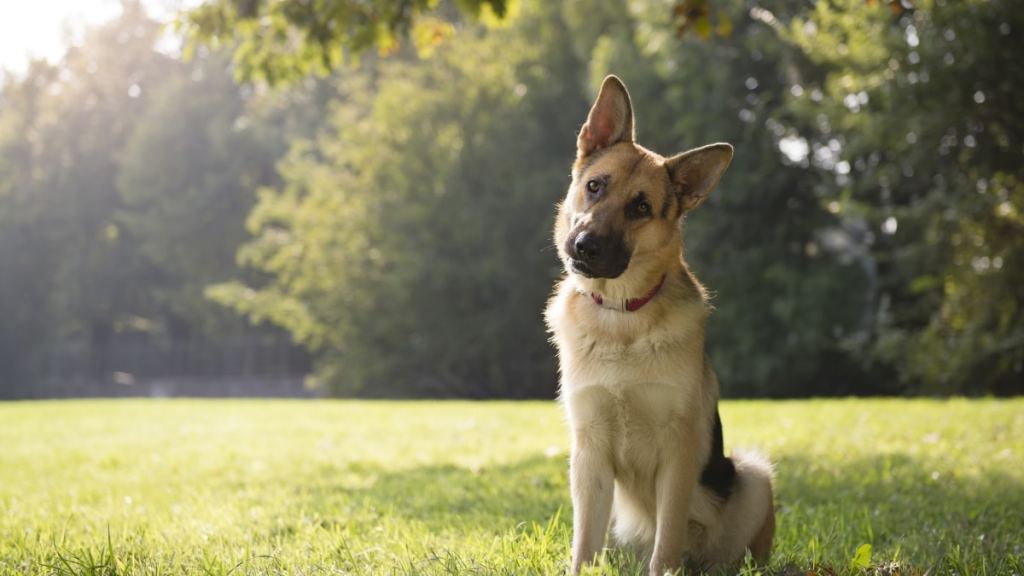
Some experts speculate that head tilting could be linked to intelligence and cognitive processing. A 2021 study published in Animal Cognition found that dogs classified as “gifted word learners”—those that could memorise multiple toy names—tilted their heads significantly more when responding to commands.
This suggests that head tilting may be associated with processing complex information, especially when trying to interpret human speech. However, this does not mean that dogs who don’t tilt their heads are less intelligent—just that some may naturally use this behaviour as part of their learning strategy.
Additionally, dogs with a higher degree of curiosity and problem-solving skills may be more inclined to tilt their heads when presented with a puzzling or novel situation. This could be their way of focusing and processing what is happening around them, similar to how humans might furrow their brows when concentrating.
Can Medical Issues Cause Excessive Head Tilting?

While head tilting is generally a harmless and cute behaviour, excessive or sudden tilting could be a sign of an underlying health issue. Dogs with the following conditions may exhibit persistent head tilting:
- Ear Infections: If a dog tilts its head frequently and shakes its ears, it could be experiencing discomfort due to an ear infection. Bacterial or yeast infections can lead to inflammation and pain, causing the dog to favour one side.
- Vestibular Disease: This condition affects a dog’s balance system, causing them to tilt their heads uncontrollably. Vestibular syndrome is more common in senior dogs and can cause symptoms such as dizziness, loss of coordination, and nausea.
- Neurological Issues: Head tilting, coupled with disorientation or stumbling, may indicate a more serious condition affecting the brain, such as a tumour, stroke, or inflammation of the central nervous system.
If your dog suddenly starts tilting its head excessively, especially if accompanied by loss of balance or ear scratching, a vet visit is recommended to rule out medical concerns.
Final Thoughts
Head tilting in dogs remains one of the most charming and intriguing behaviours they exhibit. While the exact reason behind it varies from dog to dog, it is likely a combination of sound localisation, visual enhancement, social engagement, and cognitive processing. Regardless of the cause, it’s a behaviour that brings joy to dog owners and strengthens the bond between humans and their furry companions.
Whether your dog tilts its head out of curiosity, intelligence, or simply to see you better, it’s a wonderful behaviour that enhances communication and connection. So, the next time your dog tilts its head at you, take a moment to appreciate the adorable quirk and, perhaps, reward them with a well-deserved belly rub or treat!