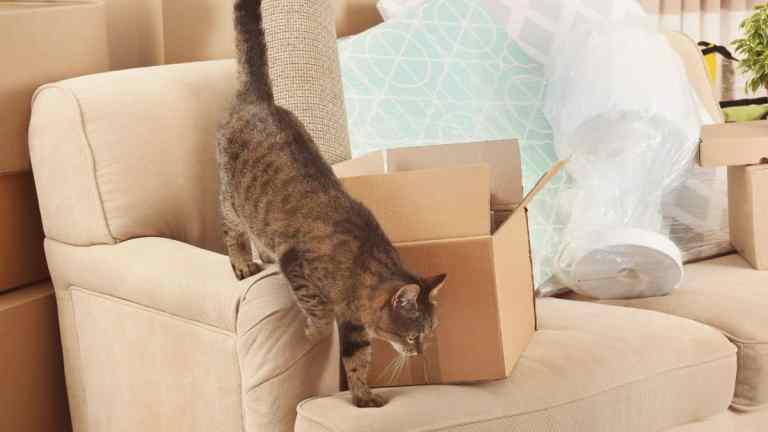
You finally splurge on the fancy cat bed — and your cat dives into the cardboard box it came in instead. Classic. But this isn’t just feline cheekiness or random behaviour. There’s real science behind why cats love cardboard boxes — and it goes much deeper than you might think.
Quick Answer: Why do cats love cardboard boxes?
Cats are naturally drawn to cardboard boxes because they offer security, warmth, stress relief, and mental stimulation. Enclosed spaces help cats feel safe, while the texture and scent of cardboard tap into their instincts to hide, hunt, and nest. It’s the perfect combination of comfort and enrichment — all in one box.
Why cardboard boxes feel so right to cats

A cardboard box might look like rubbish to us, but to your cat, it’s everything they instinctively crave: a safe hiding spot, a warm bed, a stress-relieving sanctuary, and a ready-made playground. It’s no coincidence that cats love enclosed spaces — especially cardboard. The appeal goes far beyond quirky behaviour.
When you break it down, cardboard boxes meet your cat’s needs in five key areas: security, temperature, stress relief, sensory stimulation, and control. And that’s why they keep choosing the packaging over the product.
1. Boxes make cats feel safe and secure
Cats are both predators and prey — a dual role that shapes much of their behaviour. In the wild, they rely on stealth and cover to hunt, but they also need shelter from larger threats. Indoors, a cardboard box mimics this need for an enclosed, elevated advantage.
Boxes allow cats to:
For your cat, a box isn’t “just a box” — it’s a private hideaway where they call the shots.

Quick Tip
For nervous or newly adopted cats, placing a box in a quiet corner offers immediate comfort and helps build confidence.
2. Cardboard traps heat — and cats adore warmth
It’s no secret that cats are heat-seekers. Whether they’re draped over radiators, snoozing in sunbeams, or claiming your warm laptop as their throne, they’re hardwired to conserve warmth.
Cardboard’s soft, fibrous walls:
- Retain body heat and create a cosy microclimate
- Offer a den-like space that mimics natural nesting behaviours
- Provide warmth without active effort — perfect for energy-saving felines
In feline terms, a cardboard box is a warm, enclosed hug — no wonder they climb in and don’t want to leave.
3. Boxes help cats cope with stress
Stress in cats is often invisible until it becomes a problem. But giving them choice and control over their space can reduce anxiety dramatically — and that’s exactly what boxes do.
Research backs it up: a study from Utrecht University found that shelter cats provided with boxes adapted faster, were less anxious, and showed fewer behavioural stress signals than those without. The reason? Boxes provide consistency, predictability, and comfort — three things cats crave when their environment feels uncertain.
Boxes are especially helpful during:
- House moves or renovations
- Introduction of new pets
- Loud environments or changes in routine
Quick Tip
Instead of forcing a scared cat out from under the bed, offer a clean, open box nearby. It gives them a semi-private spot where they still feel safe — but remain visible and reachable.
Boxes offer perfect play opportunities

A cardboard box isn’t just a safe place to hide — it’s a multi-sensory playground that brings out the wild side in even the laziest house cat. To a feline, a box is a jungle gym, a hunting blind, and a puzzle toy all in one. It offers endless opportunities for physical activity and mental enrichment, both of which are essential for a cat’s wellbeing.
When your cat:
- Jumps in and out of boxes, they’re working on balance, coordination, and muscle tone.
- Hides and pounces, they’re practising the ambush techniques they’d use to catch prey in the wild.
- Scratches or chews the edges, they’re engaging their teeth and claws in healthy, natural behaviour.
These micro-movements aren’t just cute — they help reduce boredom, prevent destructive behaviour, and provide a safe outlet for your cat’s instinct to hunt, stalk, and strike.
Quick Tip
Try cutting holes in different sides of a cardboard box to create peekaboo tunnels. It turns a basic box into a DIY puzzle toy — and encourages curiosity and play.
Why enrichment matters
Cats, especially indoor ones, need regular mental stimulation to stay healthy and happy. Boredom in cats can lead to anxiety, weight gain, over-grooming, and even aggression. That’s where boxes shine — they don’t just entertain, they activate.
Cardboard boxes can:
And unlike a flashy toy that loses appeal after a few days, boxes are adaptable. Your cat can modify them — chewing, flattening, jumping on, or even flipping them over. It’s this ability to reshape the environment that keeps boxes exciting again and again.
Why cardboard (specifically) is so appealing

Sure, cats love bags, baskets, drawers — even the laundry pile. But there’s something uniquely magical about cardboard. It’s not just the shape of the box that’s irresistible — it’s the material itself.
Cardboard checks all the boxes (pun intended) for feline satisfaction. It’s warm, scratchable, familiar-smelling, and endlessly customisable. In short, it feels more like nature — and more like theirs.
Here’s what makes cardboard a standout:
Texture cats love to sink their claws into
The soft, fibrous texture of cardboard mimics bark, dry grass, or fallen leaves — all natural materials cats would interact with outdoors. Scratching and chewing are normal behaviours, and cardboard provides the perfect outlet without damaging furniture.
- Satisfies the need to scratch
- Encourages claw conditioning and scent marking
- Feels satisfying under paws and teeth
Cardboard holds scent — and cats are all about smell
Cats have 200 million scent receptors in their nose. Smell isn’t just how they understand the world — it’s how they own it.
- Cardboard absorbs and holds your cat’s scent, creating a comforting, familiar zone
- You can even rub a blanket, toy, or your hand inside the box to help it smell “safe” right away
- Unlike plastic or metal, cardboard smells warm, earthy, and neutral — not clinical or foreign
It’s editable — and cats love to customise
Some cats chew the edges. Some flatten the roof. Some tunnel through one side. The joy of cardboard is that it’s changeable — and cats love to leave their mark.
Where a plastic carrier stays static and stiff, a cardboard box becomes a living part of your cat’s world. They get to:
- Shape it
- Modify it
- Destroy it (and feel great doing it)
For a species that thrives on routine but still seeks stimulation, cardboard is the perfect in-between — predictable, but never boring.
Do all cats love boxes?
Most cats go wild for a good box — but not every cat is equally obsessed. Like humans, cats have individual personalities, preferences, and comfort zones. While the majority will curl up, scratch, or hide inside a cardboard box without hesitation, some cats ignore them completely — or even avoid them.
So, what makes the difference?
Personality plays a role
Shy or cautious cats often cling to boxes as a source of safety, especially in new or unpredictable environments. More confident, outgoing cats might prefer higher perches or more open spaces where they can survey the room.
- Nervous or anxious cats may use boxes for comfort, especially during loud noises or unfamiliar situations.
- Bold or high-energy cats might see a box more as a launchpad or toy than a cosy retreat.
- Independent cats may choose to rest somewhere less enclosed, depending on their mood.
Age matters too
Younger cats and kittens tend to explore and play with boxes enthusiastically — jumping in and out, ambushing toys, and gnawing at corners. Older cats, especially those with joint stiffness or mobility issues, may prefer low, shallow boxes that are easier to climb into for a peaceful nap.
- Kittens = playful box explorers
- Adults = balance of rest and ambush play
- Seniors = box-as-bed, not box-as-battlefield
Previous experiences shape preferences
Rescue cats or those from unstable backgrounds may form strong emotional attachments to enclosed, safe spaces — and boxes are often the first thing they claim. On the flip side, cats who’ve had negative experiences in confined spaces (e.g. stressful vet visits) may be wary of boxes until they build trust in their environment.
Quick Tip
Try offering different box types — open-topped, deep “burrow-style,” or even boxes placed on their side. Let your cat choose their favourite setup, and avoid placing boxes in high-traffic areas unless your cat is extremely social.
How to Make Your Cat’s Dream Cardboard Hideaway
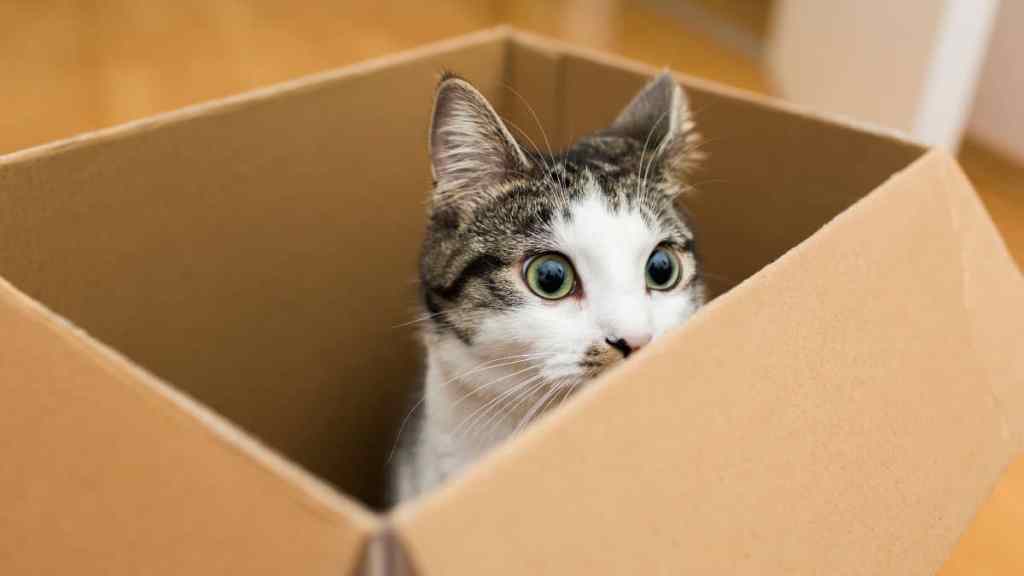
You don’t need fancy furniture or expensive “cat caves” to win feline approval. In fact, with just a cardboard box and a bit of care, you can create the ultimate cat sanctuary — one that ticks all their boxes for comfort, scent, warmth, and security.
Here’s how to turn everyday cardboard into a DIY cat hideaway your furry overlord will actually use:
📦 Start with the right box
- Choose thick, sturdy cardboard — avoid boxes that feel flimsy or collapse easily.
- Make sure it’s clean and free from tape, staples, or food residue.
- Medium to large boxes work best for most cats, but trial and error will tell you what your cat prefers.
✂️ Add entry and exit points
Cats love options — especially when it comes to escaping. Cut out one or two holes for entrances. For playful cats, try:
- One side hole and one top “peek-out” opening
- Tunnel-style cut-outs for crawling or ambushing
- Flaps left halfway on for hide-and-seek effect
Quick Tip
Always cut rounded corners on the openings — sharp edges or corners can catch whiskers or feel uncomfortable.
🛏️ Line it for comfort
Add a soft layer inside to turn the box into a proper rest zone:
- An old towel, fleece blanket, or worn t-shirt (bonus if it smells like you)
- A thin cushion or padded mat if your cat prefers plushy nesting spots
The goal is to make it inviting — not fussy.
🕯️ Make it smell like home
Scent is everything to a cat. To make a new box instantly feel familiar:
- Rub a toy or blanket your cat already loves inside the box
- Use your hands to spread your cat’s scent from their existing bed or perch
- Avoid strong cleaning sprays or artificial scents — they can be off-putting
📍 Place it thoughtfully
Even the best cat box in the world won’t be used if it’s in the wrong place. Find a spot that’s:
- Quiet, but not isolated
- Away from heavy foot traffic
- Near a favourite window, perch, or radiator if possible
- Raised slightly off the ground if your cat likes vertical space
Some cats prefer boxes tucked behind furniture for true den-like privacy, while others enjoy watching the room from the shadows. Let your cat show you what they like best.
Quick Tip
Feeling creative? Stack boxes to build multi-level hideouts or create cardboard tunnels using duct tape and scissors. You’ll have built a full-blown cardboard castle before you know it — and your cat will think they’re royalty.
Safety Notes for Cardboard Play

Cardboard boxes are one of the safest, most affordable forms of enrichment for cats — but there are still a few things to keep in mind to keep playtime fun and injury-free.
Before giving your cat a box, always check for:
- Staples or tape: Remove sharp edges, sticky patches, and plastic tape to avoid injuries or ingestion.
- Toxic residues: Avoid boxes that previously held cleaning products, oily food, or chemicals.
- Strong smells: Scented packaging or perfumed liners can be off-putting or even stressful to scent-sensitive cats. Stick to plain cardboard whenever possible.
- Stability: If stacking or building a multi-box fort, make sure it’s balanced and secure — especially for kittens or climbers.
Keep it fresh
Boxes wear down over time — and that’s part of the appeal! Scratching, biting, and flattening is fun for cats, but once a box becomes soggy, unstable, or torn, it’s time to swap it out.
- Replace boxes regularly for hygiene and excitement
- Offer a mix of new and “well-loved” boxes if space allows
- Rotate box setups to keep your cat curious and engaged
When used mindfully, cardboard play is one of the easiest ways to enrich your cat’s environment — and support their natural instincts to scratch, burrow, rest, and explore safely.
Summary Table: Why Cats Love Cardboard Boxes
|
Reason |
Why It Matters |
|---|---|
|
Security |
Boxes offer enclosed, safe spaces to hide, observe, and rest without feeling exposed. |
|
Warmth |
Cardboard traps body heat, creating a cosy microclimate cats instinctively seek. |
|
Stress Relief |
Enclosed spaces reduce anxiety, especially in unfamiliar or overstimulating environments. |
|
Enrichment & Play |
Jumping, scratching, chewing, and pouncing all support natural hunting behaviours. |
|
Sensory Appeal |
Satisfying texture under paws, holds scent well, and allows cats to mark their territory. |
Final Thoughts
When your cat ignores their five-star cat bed to curl up in a crumpled Amazon box, they’re not being stubborn — they’re being instinctive.
Cardboard boxes meet your cat’s core needs in the simplest, most satisfying way: they’re warm, private, scent-friendly, easy to reshape, and great fun to play with. They reduce stress, encourage exploration, and offer hours of comfort and enrichment — all for free.
So next time you unpack a parcel, don’t recycle the box too quickly. With a few snips, a soft lining, and the right spot, you’ll have created your cat’s new favourite place in the house.