Let’s be honest: brushing your dog’s teeth probably isn’t top of your to-do list. Between walkies, feeding, playtime and the occasional muddy bath, dental care often gets pushed aside. But here’s the thing — vets agree that brushing your dog’s teeth is one of the most important things you can do for their long-term health.
Just like humans, dogs are prone to plaque, tartar, gum disease, and tooth loss. But unlike us, they can’t book a hygienist or floss after dinner. And by the time bad breath becomes noticeable, dental disease is often already advanced.
So… should you brush your dog’s teeth? The short answer is yes — and here’s everything vets want you to know.
Quick Answer: Should you brush your dog’s teeth?
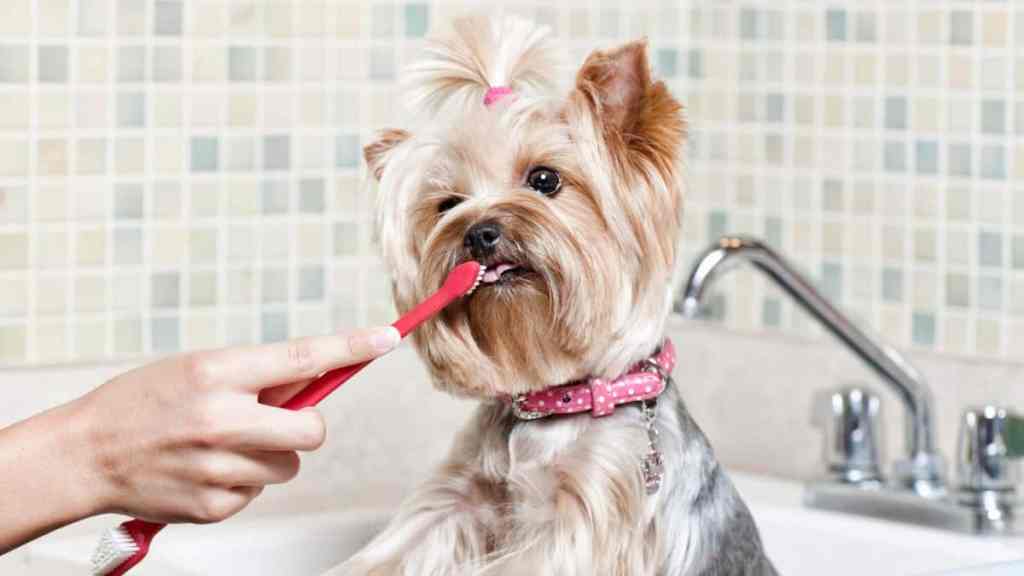
Yes — brushing your dog’s teeth daily is the gold standard for preventing dental disease, just like it is in humans. Even brushing a few times a week helps reduce plaque, freshens breath, and can delay or prevent costly dental treatment. Vets recommend using dog-specific toothpaste and introducing brushing gradually in a calm, positive way.
Why dental care matters for dogs (even young ones)

Canine dental disease is one of the most common issues seen by UK vets. According to the British Veterinary Dental Association, over 80% of dogs show signs of dental disease by age three.
Poor dental health doesn’t just cause bad breath — it can lead to:
What’s more, many dogs hide signs of discomfort, meaning issues go unnoticed until they’re severe.

Quick Tip
If your dog has yellow or brown build-up, red gums, or bad breath — it’s time to start brushing (and possibly book a vet check).
What vets say about brushing your dog’s teeth
Ask any UK vet and you’ll hear the same advice: daily brushing is best, and the earlier you start, the better.
Key points vets want owners to know:
How to brush your dog’s teeth: a step-by-step guide
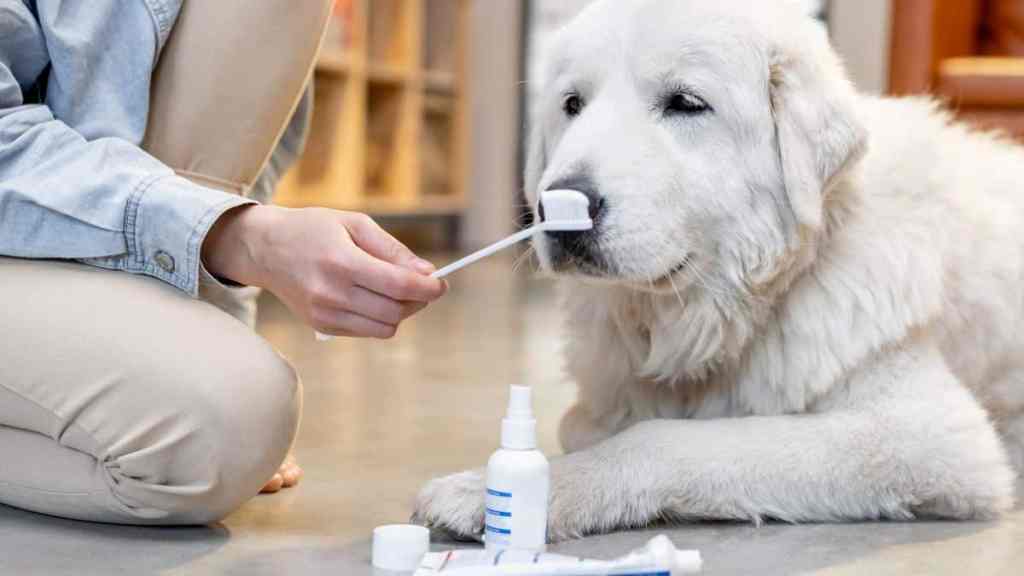
It’s never too late to start — even senior dogs can learn to tolerate brushing with gentle handling and positive reinforcement.
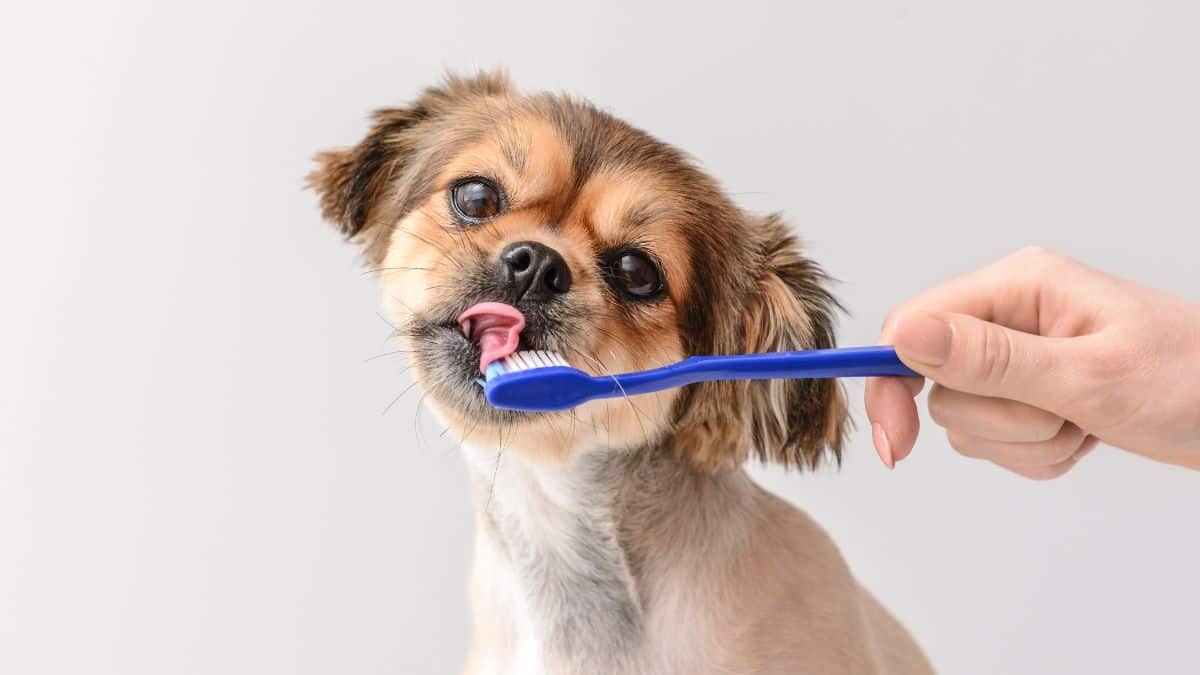
🪥 Step-by-step: Brushing your dog’s teeth
1. Choose the right kit
- Use a dog-specific enzymatic toothpaste (chicken or beef flavours are often a hit)
- Select a toothbrush suited to your dog’s size — finger brushes work well for small dogs or beginners
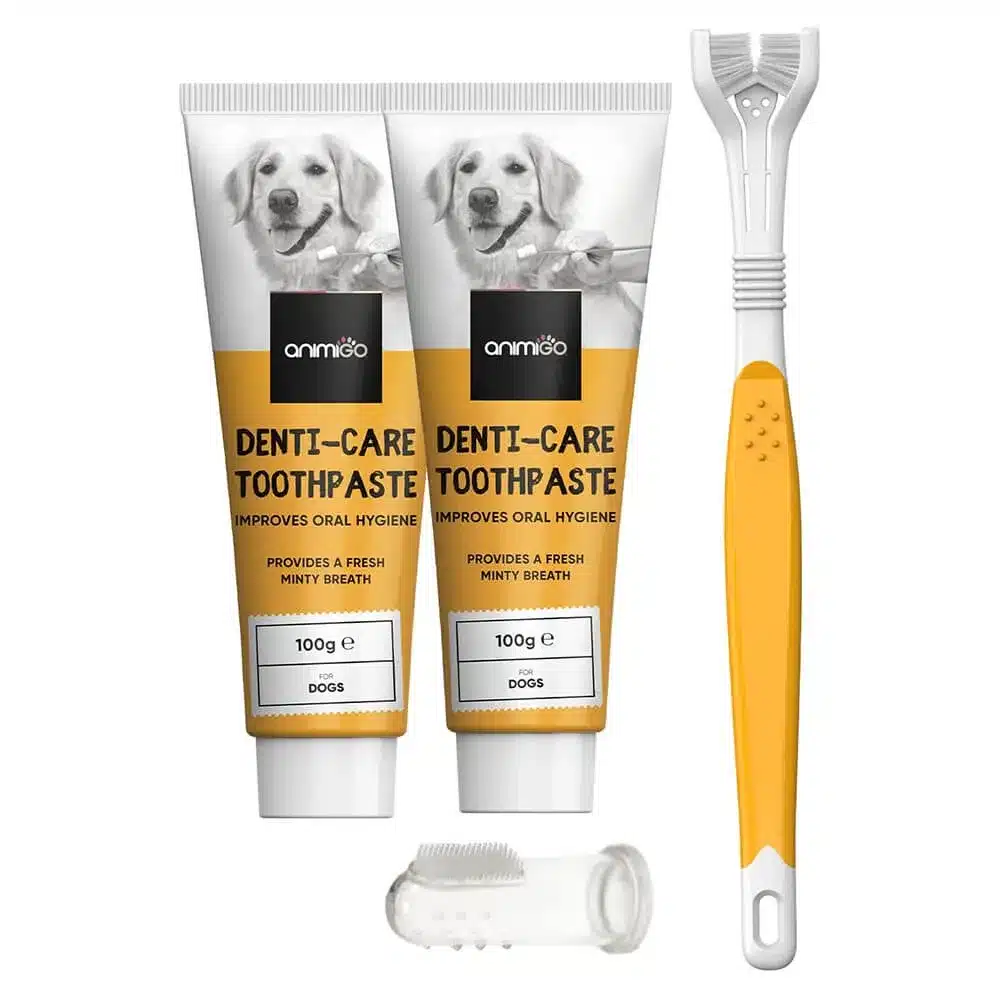
- A ready-to-use set like the Animigo Denti-Care Kit is ideal if you’re just starting out, as it includes everything you need in one bundle
2. Get your dog comfortable
- Pick a calm, quiet time — after a walk or in the evening
- Start by handling their mouth gently over a few sessions
3. Introduce the taste
- Let them lick the toothpaste off your finger — make it a treat!
4. Start with the front teeth
- Use circular motions
- Gradually build up to brushing the molars (the back teeth tend to accumulate the most plaque)
5. Go slowly and keep sessions short
- Even 30–60 seconds is a great start
- Reward with praise, fuss, or a treat after each session
Quick Tip
Aim for daily brushing, but even a few times a week makes a difference. Make it part of your dog’s routine — like a quick brush after dinner.
What if your dog hates it?

Not all dogs take to brushing immediately. If your dog wriggles, growls or pulls away, go back a step and work on building trust. Never force their mouth open or pin them down.
Try these alternatives while you work on brushing:
- Dental gels: Applied with a finger, these help break down plaque
- Dental powders: Sprinkled onto food, they promote oral health
- Water additives: Added to drinking water to help reduce bacteria — a popular option like the Bugalugs Breath Freshener makes it easy to support oral hygiene without lifting a brush
- Natural chews: Raw carrots, dehydrated meat chews, or dental sticks — choose options like the Bugalugs Dental Sticks, which are designed to support oral hygiene and freshen breath with dog-safe ingredients
Quick Tip
Always monitor chews to avoid choking and avoid hard chews that could fracture teeth (like antlers or bones).
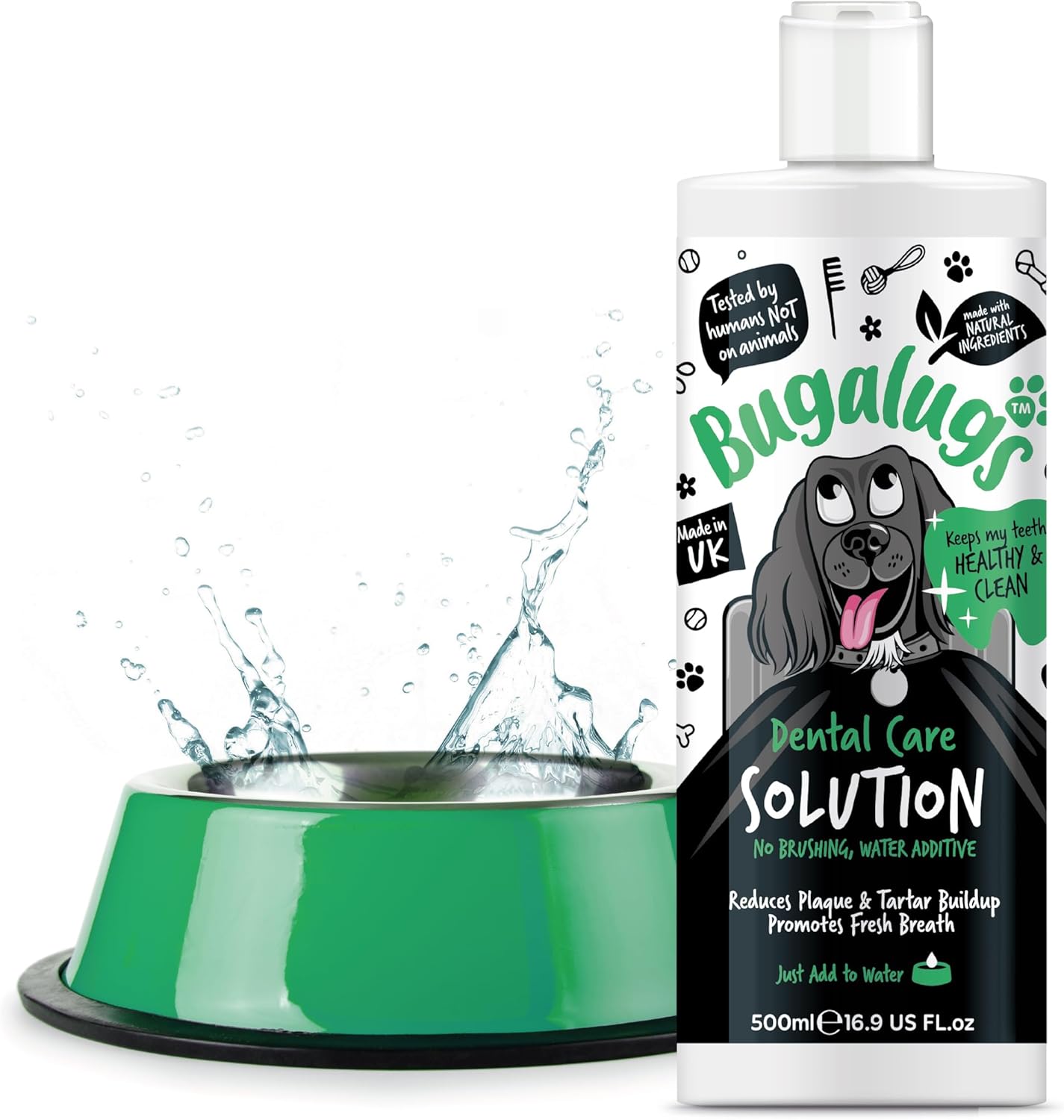
Support your dog’s oral hygiene with this quick and effective dental care water additive. Formulated to help reduce plaque + tartar buildup, whilst promoting fresh bread – just add to water!
Breeds that need extra dental care
Some dogs are more prone to dental issues than others — especially small breeds and flat-faced (brachycephalic) breeds, due to their jaw shape.
Breeds that often need extra brushing include:
- Chihuahuas
- Yorkshire Terriers
- Pomeranians
- Shih Tzus
- French Bulldogs
- Cavalier King Charles Spaniels
- Greyhounds and Whippets (prone to thin enamel)
If you have one of these breeds, brushing isn’t just recommended — it’s essential.
Signs your dog might already have dental disease
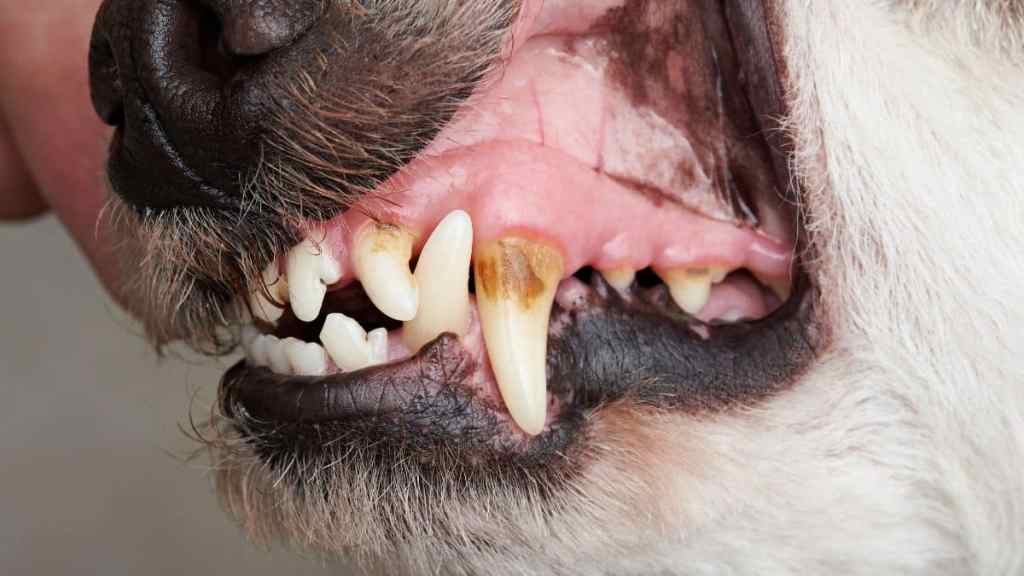
Spotting early signs means you can act before things get painful or costly.
Watch out for:
If you spot any of the above, book a vet check. Your dog may need a dental clean under anaesthetic or treatment for infection.
Can dental chews or toys replace brushing?
Short answer: no — but they can help as part of a wider dental care routine.
The pros of chews:
- Encourage chewing, which can help reduce soft plaque
- Can freshen breath (temporarily)
- Offer enrichment and satisfaction — choose options like the Bugalugs Dental Sticks, which are designed to support oral hygiene and freshen breath with dog-safe ingredients
But here’s what vets say:
- Not all dental chews are equal — look for VOHC (Veterinary Oral Health Council) approval
- Brushing is still the gold standard
- Some chews are high in calories or hard enough to damage teeth
- Toys and chews don’t reach under the gumline, where bacteria often hides
Quick Tip
Think of dental chews like mouthwash — helpful, but not a substitute for brushing.
Recap: Should you brush your dog’s teeth?
|
Question |
Vet-Approved Answer |
|---|---|
|
Is brushing necessary? |
Yes — it’s the best way to prevent disease |
|
How often should I brush? |
Ideally daily, but 3–4 times/week helps |
|
Can I use human toothpaste? |
No — it’s toxic to dogs |
|
Are dental chews enough? |
Helpful, but not a replacement |
|
Is it too late to start? |
Never — go slowly and positively |
Final Thoughts
Brushing your dog’s teeth might feel like a faff at first — but it’s one of the kindest things you can do for their long-term health. Just a few minutes a day can mean fewer vet bills, less pain, and a happier, healthier pup.
You don’t need to be perfect. You just need to start. Build it into your routine, make it positive, and be consistent. Whether you’ve got a Chihuahua with teeny teeth or a Labrador with a love for leftovers, every dog deserves a clean, pain-free mouth.
Small steps, soft bristles, and a bit of chicken-flavoured toothpaste go a long way. Your dog’s smile — and your vet — will thank you.