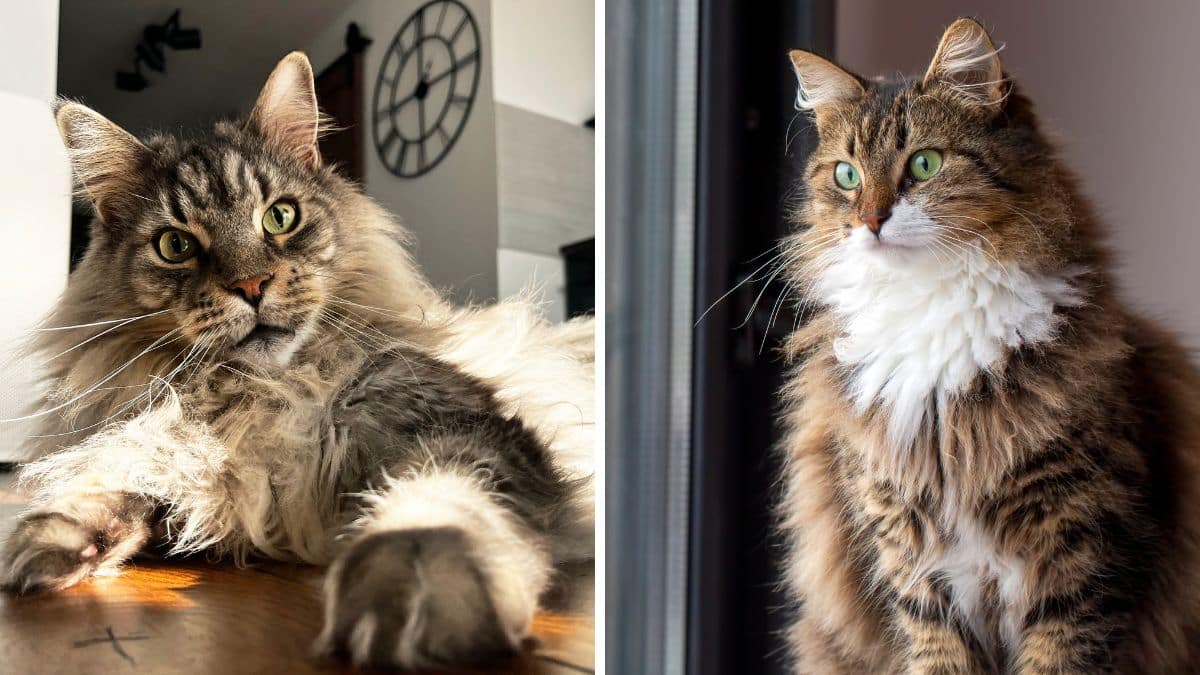
If you’ve ever been stopped mid-scroll by a photo of a gloriously fluffy feline and thought “Is that a Maine Coon or a Norwegian Forest Cat?” — you’re not alone.
These two stunning breeds are often confused for one another thanks to their luxurious coats, large builds, and wildcat charm. But look a little closer, and you’ll spot key differences in size, personality, and even paw shape.
In this guide, we break down how to tell them apart — and help you decide which gentle giant might be the best fit for your home.
So, what’s the difference between a Maine Coon and a Norwegian Forest Cat?
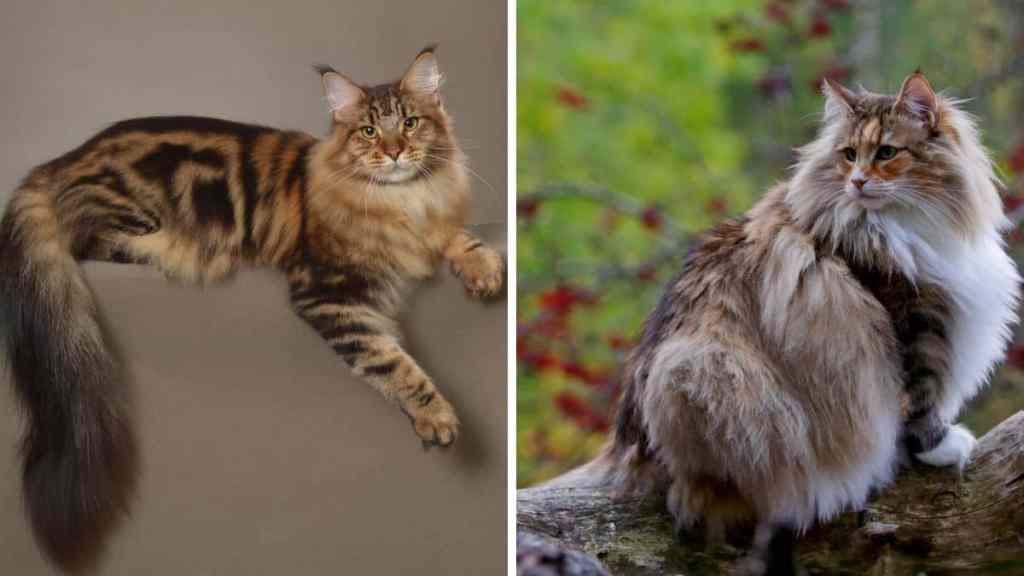
Maine Coons are typically the larger of the two, with their broad, rectangular bodies and thick, shaggy coats that give them a distinguished wild look. Their friendly and sociable nature makes them perfect for families, while their easy-going temperament makes them highly adaptable to various living environments.
On the other hand, Norwegian Forest Cats are a bit more compact but no less majestic, boasting a striking triangle-shaped face, almond eyes, and a dense, waterproof double coat that’s built for the Scandinavian cold. While their temperament can be a little more independent, they still form strong bonds with their owners and are known for being affectionate and loyal.
Both breeds are incredibly intelligent, and whether you’re drawn to the Maine Coon’s larger-than-life charm or the Norwegian Forest Cat’s dignified nature, these fluffy companions have so much to offer.
Let’s compare them side-by-side for a closer look.
Origins: Where Do These Fluff Monsters Come From?
🇺🇸 Maine Coon: The American Wildling
- Believed to originate in the US state of Maine (hence the name)
- Possibly descended from longhaired ship cats or even Marie Antoinette’s royal cats (yes, really!)
- Recognised as one of the oldest natural cat breeds in North America.
🇳🇴 Norwegian Forest Cat: The Nordic Adventurer
- Known as the “skogkatt” in Norway — literally “forest cat”
- Bred to survive cold Scandinavian winters, with a thick, water-repellent coat
- Has featured in Norse mythology — possibly the cats that pulled Freya’s chariot!
Size and Build: Big… or Bigger?
Both breeds are big, but Maine Coons take the title of gentle giant.
|
Feature 🐱 |
Maine Coon |
Norwegian Forest Cat |
|
Weight |
5-9kg (some males up to 11kg+) |
4-8kg |
|
Body Shape |
Long, rectangular |
Stocky, muscular, more compact |
|
Tail |
Long and plumed |
Long, bushy, often curved like a hook |
|
Ears |
Large with lynx-like tips |
Medium-large, with a slight outward tilt |
Coat and Grooming: Shaggy vs Silky
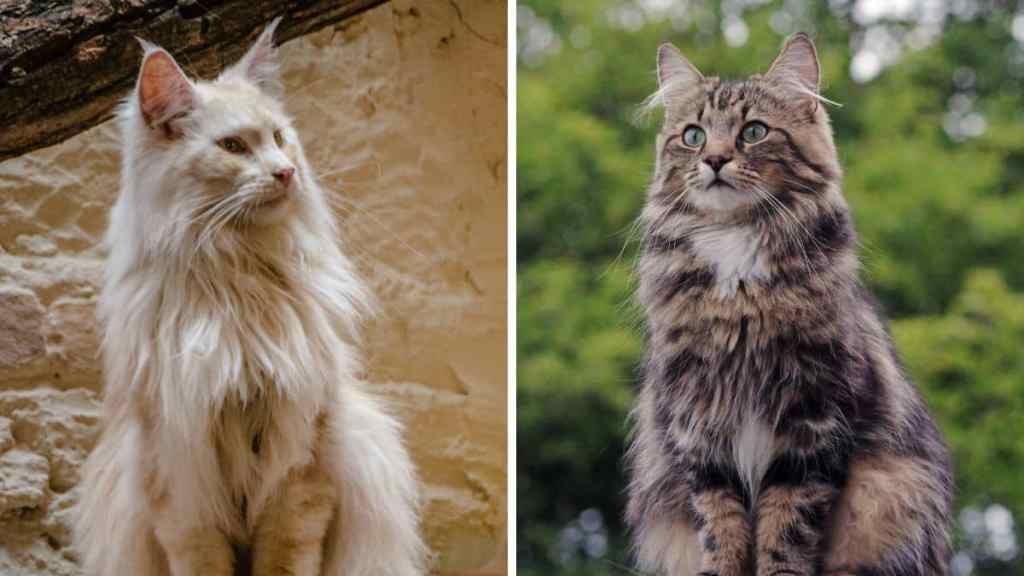
Maine Coon Coat
- Shaggy, uneven layers
- Slightly oily and water-resistant
- Thicker on the stomach and britches, shorter over shoulders
- Feels coarser to touch
Norwegian Forest Cat Coat
- Double coat: a dense woolly undercoat + glossy topcoat
- Smoother, silkier feel
- Very weatherproof — evolved for snowy forests
🧴 Grooming needs:
Both breeds require regular grooming to maintain their luxurious coats, but with slightly different needs.
- Maine Coons shed more evenly throughout the year, so brushing them once or twice a week will help keep their coat tangle-free and reduce hairballs. Due to their long, thick fur, you’ll need to pay extra attention to areas around the stomach, britches, and underarms where mats are more likely to form.
- Norwegian Forest Cats, on the other hand, have a thicker double coat that can molt more dramatically, especially during seasonal changes. During moulting periods, brushing two to three times a week is recommended to prevent tangles and matting. Their dense undercoat requires particular care, especially in the winter months when they grow a fuller coat.

Quick Tip
Regular grooming not only keeps your cat’s coat healthy but also provides an opportunity to check for any skin issues or parasites.
Face Shape and Features: The Telltale Signs
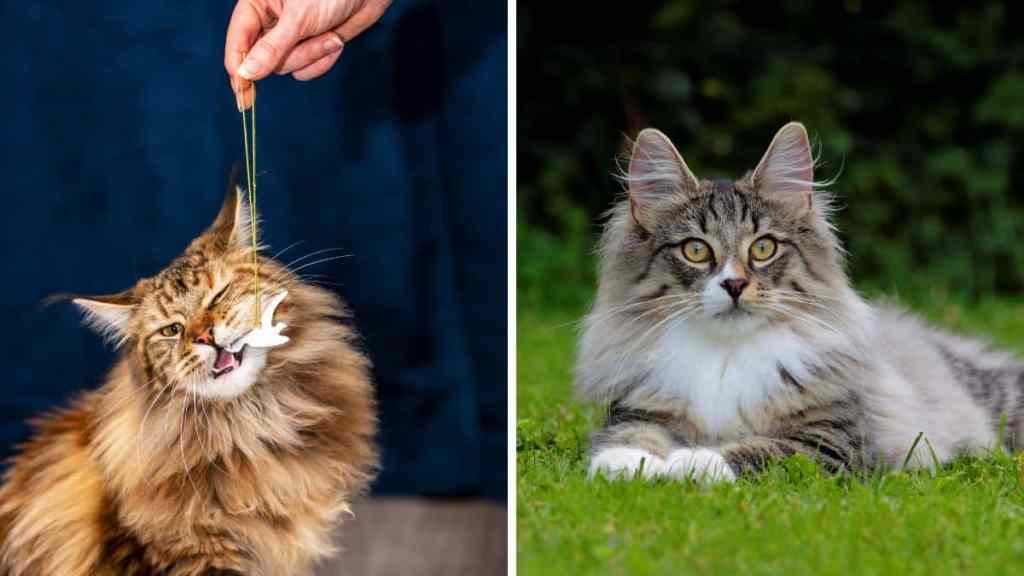
This is where it gets easier to tell them apart.
Maine Coone
- Head shape: Squared muzzle with prominent cheekbones
- Eyes: Round and expressive
- Ears: Large, upright, often with tufted tips
Norwegian Forest Cat
- Head shape: Triangle-shaped face with straight profile
- Eyes: Almond-shaped, slightly tilted
- Ears: Tilt slightly outward, following the triangular jawline
Personality: Similar — but Not Identical
While both the Maine Coon and the Norwegian Forest Cat share many traits, such as intelligence, affection, and a friendly nature, their personalities have key differences that can influence how they interact with their human companions and environment. Here’s how they stack up:
Maine Coon Temperament
- Gentle and social: Known for being friendly and sociable, Maine Coons are often described as “dog-like” in their desire for companionship and loyalty.
- Confident and curious: Maine Coons are generally self-assured and confident. They’re not shy around people or new situations, making them great for families and households with other pets.
- Water lovers: Many Maine Coons are fascinated by water and may play with taps, jump into the shower, or even follow you into the bath.
- Adaptable: This breed is laid-back and adaptable, adjusting well to various living situations, from large homes to smaller apartments.
- Great all-rounders: Thanks to their calm and playful nature, they get along well with children and other pets.
Norwegian Forest Cat Temperament
- Independent but affectionate: Norwegian Forest Cats are more reserved and enjoy their own space, but they are fiercely loyal and affectionate on their own terms.
- Playful and energetic: This breed loves to play, particularly in environments that offer vertical spaces like shelves, high cat trees, or windowsills.
- More reserved around strangers: Norwegian Forest Cats tend to be cautious around new people, preferring to take their time before they warm up.
- Climbing enthusiasts: They enjoy being up high, so you’ll often find them perched on top of furniture or surveying their surroundings from a high vantage point.
- Regal nature: Their independent spirit gives them a “noble” or “royal” feel, with affection often given when it suits them.
Exercise and Enrichment Needs
Both the Maine Coon and the Norwegian Forest Cat are active breeds, but with different preferences:
Maine Coon
Maine Coons are more grounded and follow their owners around. They enjoy:
- Interactive play (ground toys)
- Climbing (cat trees or shelves)
- Companionship (they love being with their humans)
Norwegian Forest Cat
They thrive on vertical spaces and love to climb. To keep them entertained:
- Tall scratching posts
- Wall-mounted cat trees
- Window perches
Health and Longevity

Maine Coon:
- Lifespan: 12–15 years
- Common health issues: Hypertrophic cardiomyopathy (HCM), hip dysplasia, spinal muscular atrophy (SMA)
Norwegian Forest Cat
- Lifespan: 14–16 years
- Common health issues: Glycogen storage disease, heart disease (HCM), kidney issues
Quick Tip
Both breeds should be health-screened by reputable breeders and regularly checked by a vet familiar with large-breed cats to ensure early detection of potential health concerns.
Which One Is Right for You?
Choose a Maine Coon if you’re looking for:
- A relaxed, dog-like companion
- A sociable, curious cat who loves everyone
- A cat that’s easygoing with kids and other pets
Choose a Norwegian Forest Cat if you prefer:
- A slightly more independent, outdoorsy vibe
- A cat with a serious love of climbing
- A mysterious but affectionate floof with Nordic roots
🐾 Whichever you choose, you’re in for years of cuddly companionship… and probably a lot of lint rolling.
Final Thoughts
Maine Coon vs Norwegian Forest Cat: can you tell them apart? Absolutely — once you know the key differences.
From face shape to personality quirks, these two magnificent moggies are more distinct than they first appear. Whether you love the Maine Coon’s chilled charm or the Norwegian’s noble independence, both are brilliant additions to a loving home.
Just make sure you’ve got enough space… and enough time for brushing.