
Dogs are smart, sensitive, and full of personality — but they’re not always great at telling us when something’s off. If your pup’s been acting strangely, chewing the furniture, or staring blankly at the wall, you might be asking yourself: is my dog bored?
The truth is, boredom in dogs is more common than you might think. And just like humans, bored dogs can become restless, destructive, or even anxious if their needs for stimulation aren’t met.
The good news? Boredom is totally fixable. And with the right mix of activity, enrichment and routine, you can help your dog feel more fulfilled, settled and content.
Quick Answer: Is my dog bored?
If your dog is showing signs like restlessness, destructive chewing, constant attention-seeking, or repetitive behaviours (like pacing or tail chasing), they’re likely bored. Mental and physical enrichment — through play, training, walks, and puzzle toys — can quickly improve your dog’s behaviour and wellbeing.
Why dogs get bored (even with a garden and toys)

Many owners assume a dog with access to toys or outdoor space won’t get bored — but boredom in dogs isn’t about what they have, it’s about what they do. Dogs need mental stimulation, physical activity, and social interaction to stay balanced.
A few key causes of boredom include:

Quick Tip
Think of your dog like a toddler — toys are great, but it’s the play, challenge and bonding that really matter.
7 signs your dog might be bored

Boredom in dogs doesn’t always show up as yawning or lying around. It can sneak in as restless energy, odd habits, or even mischief. Here are seven key signs to look for — and what they could really be telling you about your dog’s emotional and mental needs.
1. Destructive Chewing or Digging
Is your dog suddenly tearing up beds, gnawing on furniture, or digging craters in the garden? It’s not misbehaviour — it’s stress relief. Chewing and digging are instinctive ways for dogs to release frustration, burn off excess energy, and self-soothe when bored.
✅ Fix it: Offer safe, satisfying chew toys, rotate enrichment games to keep things interesting, and make sure your dog is getting a healthy mix of physical exercise and mental stimulation each day. Even 10 minutes of sniffy games or trick training can help redirect that energy in a positive way.
2. Restlessness or Pacing
A bored dog often struggles to settle. You might notice them pacing from room to room, constantly shifting positions, or lying down only to pop back up moments later. This aimless movement is a sign they’re craving stimulation and don’t know what to do with themselves.
✅ Fix it: Add structure to their routine with predictable activities — short, focused play sessions, slow sniff-led walks, or puzzle-style games that engage their brain. Even a 5-minute training refresher between naps can help them relax.
3. Excessive Barking or Whining
If your dog is barking at shadows or whining over nothing in particular, it may be boredom disguised as noise. Vocalising can become a default outlet when they’re under-stimulated — especially if it gets your attention or breaks the monotony.
✅ Fix it: Use interactive toys to give their brain something to focus on when you’re occupied. Introduce “quiet time” rewards when they stay calm, and consider dog-friendly audio — like ambient nature tracks or pet-focused TV — to soothe them when home feels too still.
4. Shadowing or Clinginess
If your dog insists on being your shadow — trailing behind you from room to room, or panicking when you’re briefly out of sight — it could be boredom mixed with attachment behaviours. Dogs crave stimulation and connection, and if they’re not getting enough engagement, they may cling to you as their sole source of interest.
✅ Fix it: Begin encouraging independence with short sessions of treat-based enrichment in a separate room. Build up alone time gradually, and avoid making a fuss when leaving or returning. Calm comings and goings help lower emotional spikes and teach your dog that time apart is no big deal.
5. Tail Chasing or Repetitive Behaviours
Repetitive behaviours like spinning, excessive licking, or tail chasing aren’t just quirky habits — they can be signs of boredom tipping into frustration. High-energy and working breeds are particularly prone to this when their mental needs go unmet.
✅ Fix it: Engage your dog’s brain with puzzle feeders, scent trails, or trick training. Even five minutes of learning something new can break the loop and provide healthy stimulation.
Quick Tip
If these behaviours become obsessive or escalate, consult your vet or a certified behaviourist to rule out anxiety or underlying health issues.
6. Overexcitement When Anything Happens
Does your dog leap into chaos mode at the sound of your keys, the doorbell, or a bird flapping past the window? Sudden outbursts over minor triggers often stem from built-up boredom and under-stimulation — especially in smart, energetic breeds.
✅ Fix it: Channel that pent-up energy with regular walks, varied play sessions, and mental tasks like scent work or training games. At home, practise calm routines — reward your dog for staying grounded during everyday moments like someone knocking or picking up your bag. Calm responses are teachable.
7. Stealing Objects for Attention
Sock thief? Remote chewer? Shoe bandit? If your dog keeps running off with forbidden objects, it may be less about mischief and more about creating drama to get your attention. Dogs are quick to learn that stealing things prompts a reaction — even if it’s a chase or a scolding.
✅ Fix it: Outwit the pattern by offering healthy alternatives. Provide chew-safe toys, rotate engaging enrichment (like a frozen Kong), and reward your dog when they choose calm behaviour. When safe, don’t react to the theft — quietly swap in a toy and move on. No attention means the “game” loses its thrill.
Simple Fixes to Beat Boredom and Boost Your Dog’s Day

Beating boredom doesn’t mean entertaining your dog 24/7 — it’s about giving them meaningful, enriching ways to use their body and brain. Dogs crave variety, challenge, and a sense of purpose. When their needs are met in small but intentional ways, even an ordinary day feels more fulfilling.
Here are some easy, low-effort ways to mix things up and keep your dog engaged — without needing hours of your time.
Rotate toys and activities
Keep things fresh by rotating your dog’s toys weekly. Even old favourites feel exciting when they’ve been “away” for a few days. Include a mix of chew toys, soft toys, and puzzles — a durable option like the KONG Classic is perfect for stuffing and chewing, especially when you need to keep them busy.
Add scent games
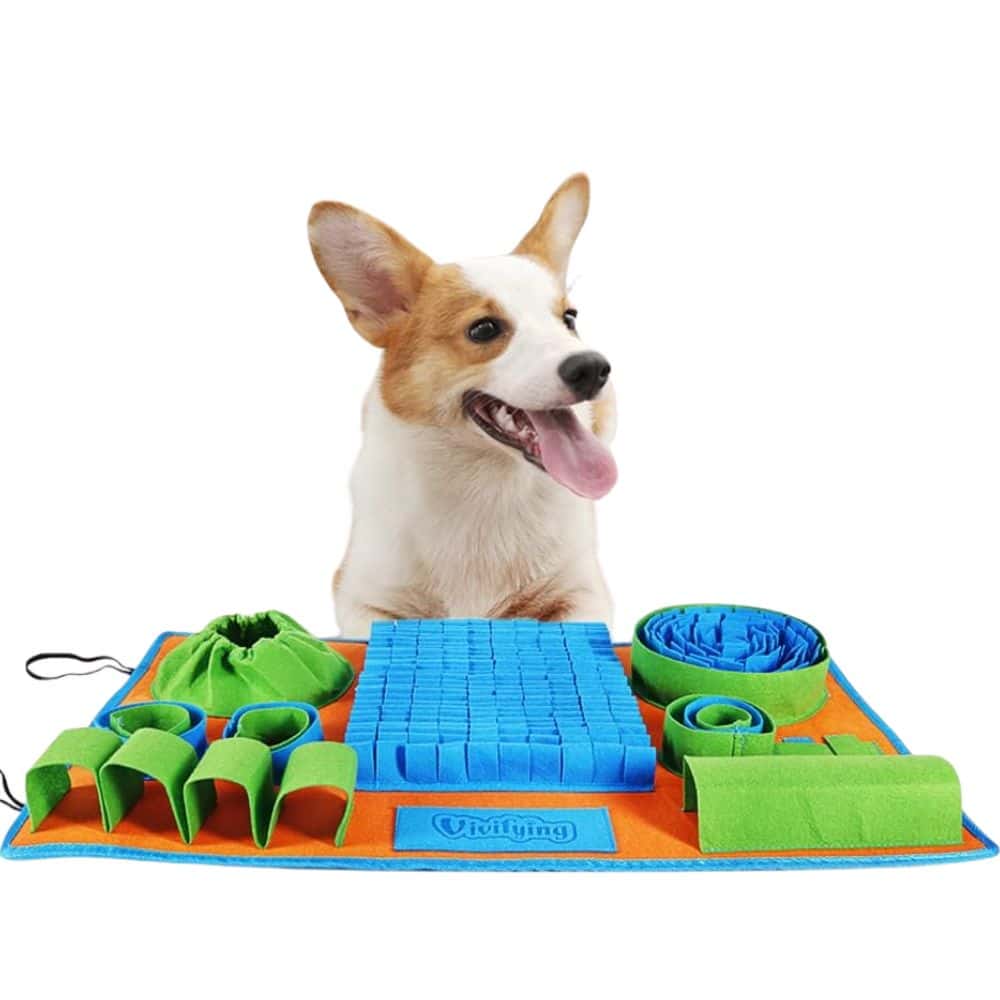
Dogs experience the world through smell. Hide treats around the house, create snuffle boxes with rolled-up towels, or scatter kibble in the garden for a DIY foraging game. You can also try a ready-made Snuffle Mat like this one from Amazon — it’s designed to mentally stimulate your dog and encourage natural foraging instincts indoors.
Try short training bursts
Training isn’t just for puppies. Short 5–10 minute sessions using positive reinforcement build focus and tire the brain. Teach tricks, recall, or just practise “wait” and “leave it”.
Walk for variety, not just distance
Mix up your routes, let your dog sniff, and occasionally swap in woodland walks or dog-friendly trails. Sniffing is enriching and just as tiring as physical activity.
Offer solo-play options
Use treat-dispensing toys, Lickimats, or frozen Kongs to help your dog stay busy while you’re working or out.
Quick Tip
Need an easy enrichment win? Stuff a Kong with wet food and freeze it — it’ll keep most dogs occupied for 20+ minutes.
When boredom becomes a behaviour issue
Not all mischief is just “bad behaviour” — sometimes it’s your dog’s way of coping with frustration or unmet needs. But if boredom tips into destructive or compulsive actions, it’s time to look deeper. Chronic under-stimulation can contribute to anxiety, reactivity, and stress-related habits that don’t go away on their own.
Speak to your vet or a behaviourist if you notice:

In these cases, enrichment alone may not be enough. A qualified trainer or behaviourist — ideally accredited by ABTC or APBC in the UK — can help create a structured, positive plan to support your dog’s emotional wellbeing alongside their daily needs.
Recap: 7 Clear Signs Your Dog Is Bored (and How to Fix Them)
|
Boredom Sign |
What It Means |
Simple Fix |
|---|---|---|
|
Destructive chewing/digging |
Frustration or excess energy |
Chew toys, enrichment, more physical activity |
|
Restlessness or pacing |
Lack of stimulation |
Structured routine and brain games |
|
Barking or whining |
Attention-seeking or frustration |
Soothing sounds, interactive toys, training |
|
Clinginess or shadowing |
Under-stimulated + dependent |
Solo enrichment, independence training |
|
Tail chasing or repetition |
Lack of mental engagement |
Scent games, trick training, puzzle toys |
|
Overexcitement |
Stimulation-starved |
Calming routines, consistent exercise |
|
Stealing objects |
Bored and making their own fun |
Ignore the drama, redirect with structured play |
Final Thoughts
Dogs don’t just need food, walks, and love — they need purpose. If your dog is bored, it’s not your fault — modern life can be repetitive for our canine companions. But even small changes in your routine can make a big difference to their happiness.
The key is balance. A bored dog isn’t a “bad dog” — they’re simply asking for more from their day. And you don’t need to be home 24/7 or spend loads of money. Just a bit of thought, time, and variety goes a long way.
Watch for the signs. Mix things up. Keep it playful. A well-stimulated dog is a happier, healthier, calmer dog — and that means a more peaceful home for both of you.