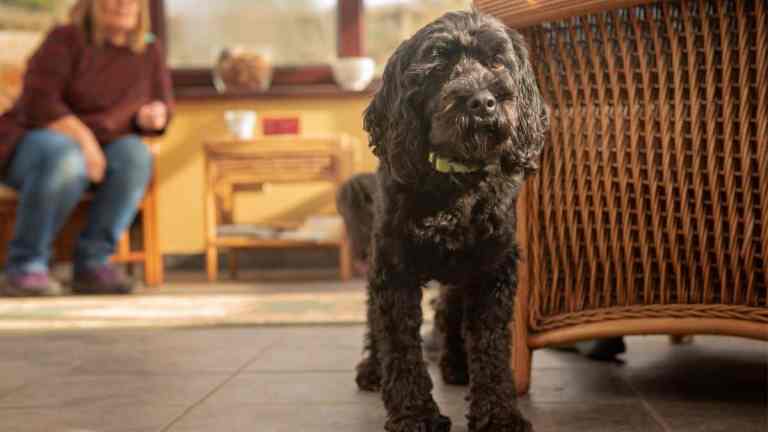
Dog agility training is more than just an exciting sport—it’s a fantastic way to improve your dog’s physical fitness, mental stimulation, and obedience skills. Whether you want to compete in agility competitions or simply create a fun backyard course, agility training can help build confidence and strengthen your bond with your dog.
In this guide, we’ll cover everything you need to know about starting dog agility training, including essential equipment, step-by-step training techniques, common challenges, and expert tips. By the end, you’ll have all the knowledge you need to transform your dog into an agility superstar!
What is Dog Agility Training?
Dog agility is a fast-paced sport where dogs navigate an obstacle course under the guidance of their handler. Courses typically include jumps, tunnels, weave poles, and contact obstacles like the A-frame and seesaw. The goal is to complete the course as quickly and accurately as possible.
Agility isn’t just for competition—any breed or size of dog can benefit from agility training. Even if you don’t plan to compete, it’s an excellent way to improve obedience and mental focus.

Quick Tip
If your dog loves running and problem-solving, agility training can be a fantastic way to keep them engaged and active!
Benefits of Dog Agility Training
1. Improves Physical Fitness
Agility training provides a full-body workout for your dog, enhancing their strength, coordination, and endurance.
2. Enhances Mental Stimulation
Navigating obstacles requires problem-solving skills and quick decision-making, keeping your dog’s brain sharp.
3. Strengthens the Dog-Owner Bond
Agility training requires clear communication and teamwork, helping build trust between you and your dog.
4. Reduces Behavioural Issues
Dogs with excess energy often engage in destructive behaviours. Agility training provides an outlet for pent-up energy, reducing issues like chewing and excessive barking.
Quick Fact
High-energy breeds like Border Collies, Jack Russell Terriers, and Australian Shepherds excel in agility training due to their intelligence and athleticism.
Is Your Dog Ready for Agility Training?
Before you begin agility training, consider whether your dog is physically and mentally prepared.
Health & Age Considerations
- Puppies under 12 months should avoid high-impact obstacles like jumps to protect their developing joints.
- Senior dogs may need modified training to avoid injury.
- Always consult a vet before starting agility training if your dog has existing health conditions.
Temperament & Behaviour
- Dogs should be obedient and responsive to basic commands like sit, stay, and come.
- Highly anxious or aggressive dogs may need confidence-building exercises before starting agility.
Quick Fact
If your dog is new to training, start with basic obedience commands before introducing agility equipment.
Essential Dog Agility Equipment
Here are the key obstacles used in dog agility courses:
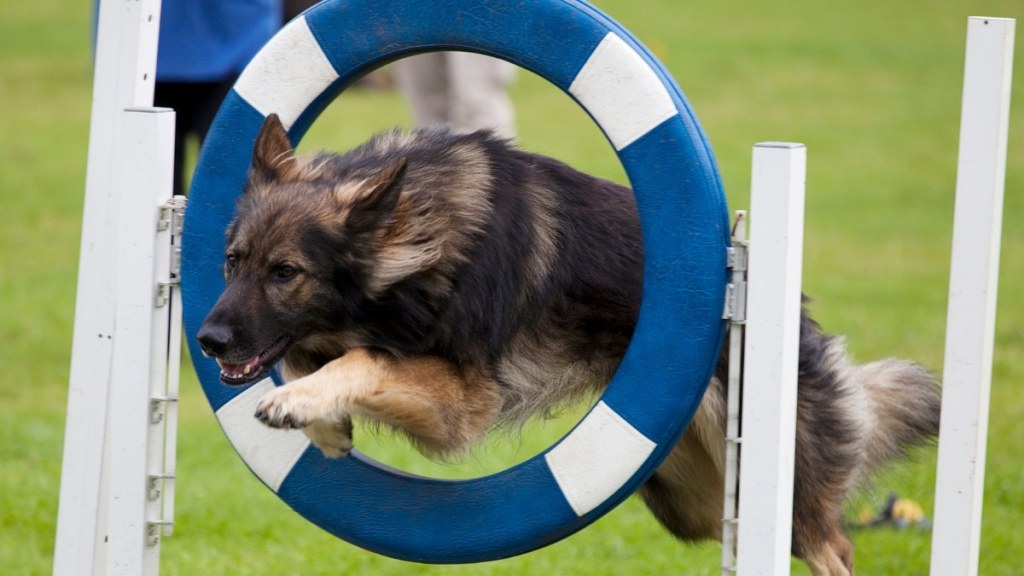
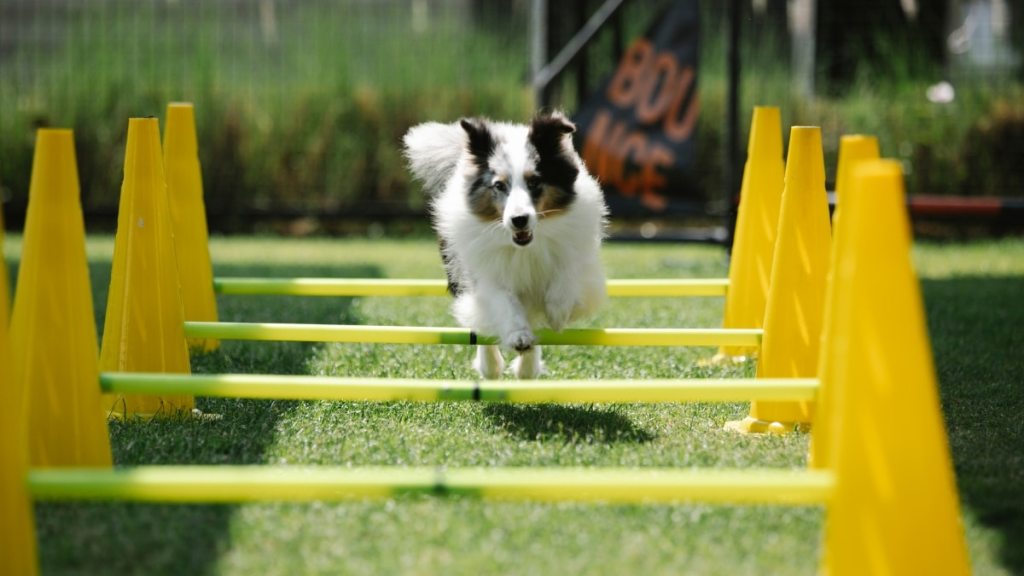
- Jumps – Adjustable bars that dogs leap over.
- Tunnels – Open-ended tunnels for dogs to run through.
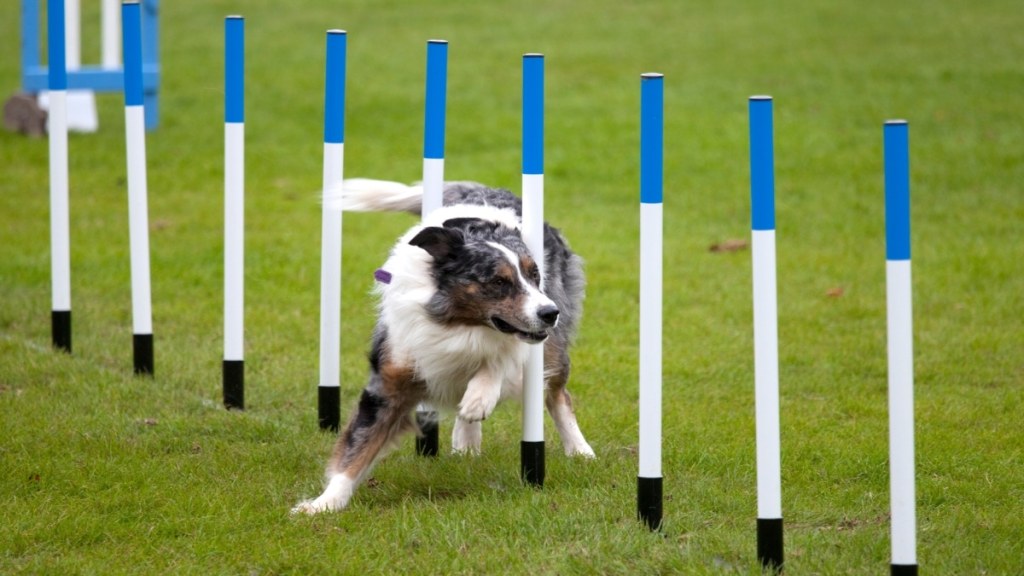
- Weave Poles – A set of upright poles that dogs must weave through.
- A-Frame – A steep, climbable obstacle that tests balance.
- Dog Walk – A narrow plank with ramps at both ends.
- Seesaw (Teeter-Totter) – A tilting plank that challenges coordination.
Quick Tip
If you’re training at home, you can create DIY obstacles using household items like broomsticks, cones, and cardboard boxes.
How to Get Started with Agility Training
Step 1: Build a Strong Obedience Foundation
Before tackling obstacles, ensure your dog responds reliably to:
- Sit & Stay – Helps control their movement between obstacles.
- Come – Essential for recall during off-leash agility work.
- Heel – Useful for guiding them between obstacles.
Step 2: Introduce Agility Equipment Slowly
Start with low-impact obstacles and use positive reinforcement:
- Begin with tunnels—place treats inside to encourage your dog to go through.
- Use weave poles spaced widely apart at first, then gradually narrow them.
- Adjust jump heights based on your dog’s size and fitness level.
Step 3: Teach Hand Signals and Verbal Cues
- Use consistent commands for each obstacle (e.g., “Tunnel!”, “Jump!”, “Weave!”).
- Combine hand gestures with voice cues for clearer guidance.
Quick Tip
Keep sessions short (10-15 minutes) to prevent fatigue and frustration.
Common Agility Training Challenges & How to Overcome Them
1. Fear of Obstacles
Some dogs may hesitate to approach new obstacles. Solve this by:
- Using high-value treats or toys to encourage interaction.
- Breaking the obstacle into smaller, manageable steps.
2. Losing Focus During Training
Easily distracted dogs may struggle with focus. Try:
- Training in a quiet environment before progressing to busier locations.
- Using a motivating reward system to keep their attention.
3. Jumping Off Contact Equipment Too Soon
Dogs must touch the contact zones on obstacles like the A-frame. Prevent early jumps by:
- Teaching the “Touch” command to reinforce correct landings.
- Using a pause table to instill patience.
Quick Tip
Avoid overloading your dog with too many obstacles at once—master one skill before adding complexity.
Competing in Dog Agility Trials
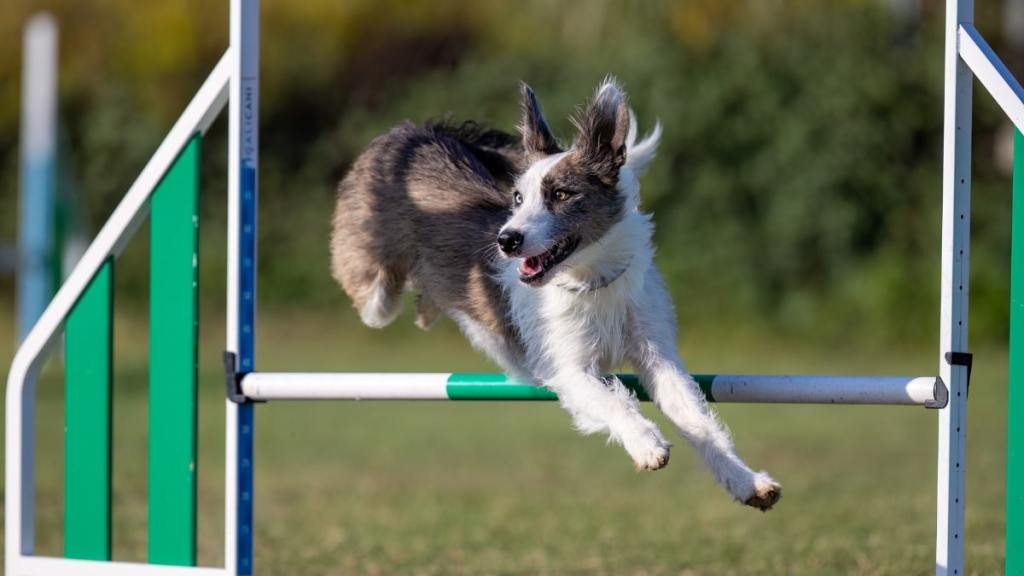
If you want to enter competitions, consider:
- Registering with a kennel club like The Kennel Club (UK) or AKC (USA).
- Practising full agility courses under timed conditions.
- Attending local agility events to familiarise your dog with competition settings.
Quick Tip
Beginners should start with low-stress, fun matches before entering professional trials.
Safety Tips for Agility Training
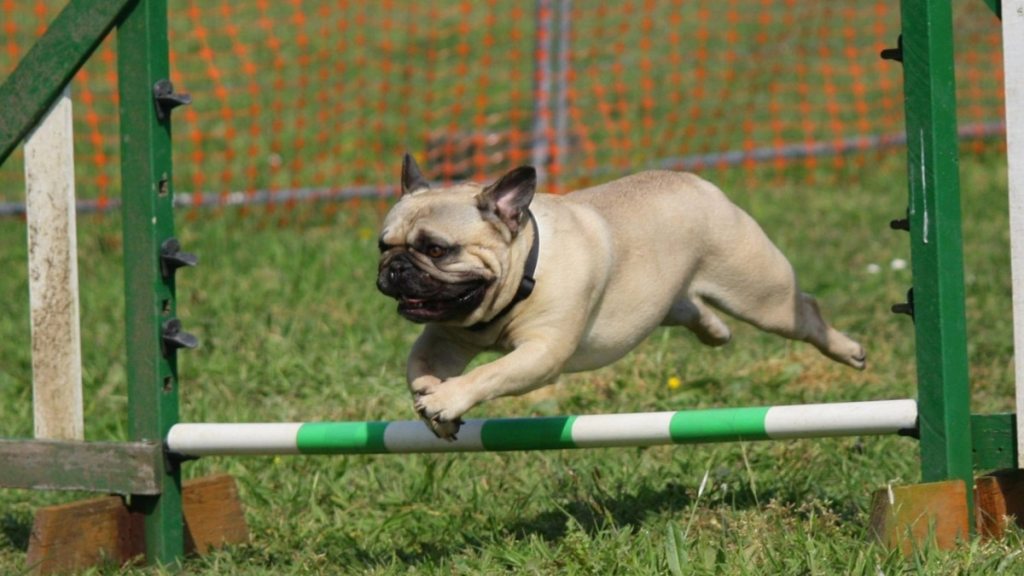
- Warm-Up & Cool-Down: Prevent injuries with light stretching and slow walks before/after training.
- Surface Matters: Avoid hard surfaces—train on grass, sand, or padded flooring.
- Monitor Your Dog’s Health: Watch for signs of fatigue or discomfort.
Quick Tip
Hydration is key—ensure your dog has access to fresh water before and after training.
Final Thoughts:
Dog agility training is an exciting, rewarding activity that offers physical, mental, and emotional benefits for both dogs and owners. Whether you’re training for competition or just for fun, consistency and positive reinforcement are key to success.
So grab some treats, set up an obstacle course, and watch your dog become an agility superstar! 🐶💨
📌 How has agility training helped your dog? Share your experiences in the comments!