Creating a home that’s both stylish and cat-friendly is entirely achievable. You don’t need to sacrifice your aesthetic or cover your lounge in beige carpet towers. With thoughtful choices and a few clever swaps, you can design a space that truly caters to your cat’s needs — without compromising your own sense of style.
In fact, the best cat homes often don’t look like “cat homes” at all. They feel intentional, calming, and well-balanced — because the essentials are built in, not bolted on. The key is blending functionality with form: choosing pieces that support your cat’s natural behaviours, while also fitting beautifully into your home’s layout and palette. From neutral-toned scratchers to sleek hidden litter trays, subtle changes can make a big difference.
Whether you live in a flat, a cosy terrace, or a modern home, this guide will show you how to create an enriching, feline-friendly environment that feels more interior design-inspo than cluttered pet aisle.
Quick Answer: Can I make My home cat-friendly without sacrificing style
Yes! You can create a cat-friendly home without the bulky towers and mismatched gear. Opt for neutral-toned, space-saving cat furniture, incorporate vertical space like climbing shelves, and disguise litter and scratch zones with clever design choices. Your home stays stylish — and your cat stays happy.
Understanding Your Cat’s Needs at Home
Cats aren’t fussy — they’re instinctual. Their behaviours are rooted in survival, comfort, and stimulation. So when they claw the sofa, hide under the bed, or dart across the hallway at 3am, they’re not misbehaving — they’re communicating needs.
To truly thrive indoors, every cat needs:
🪜 Vertical space
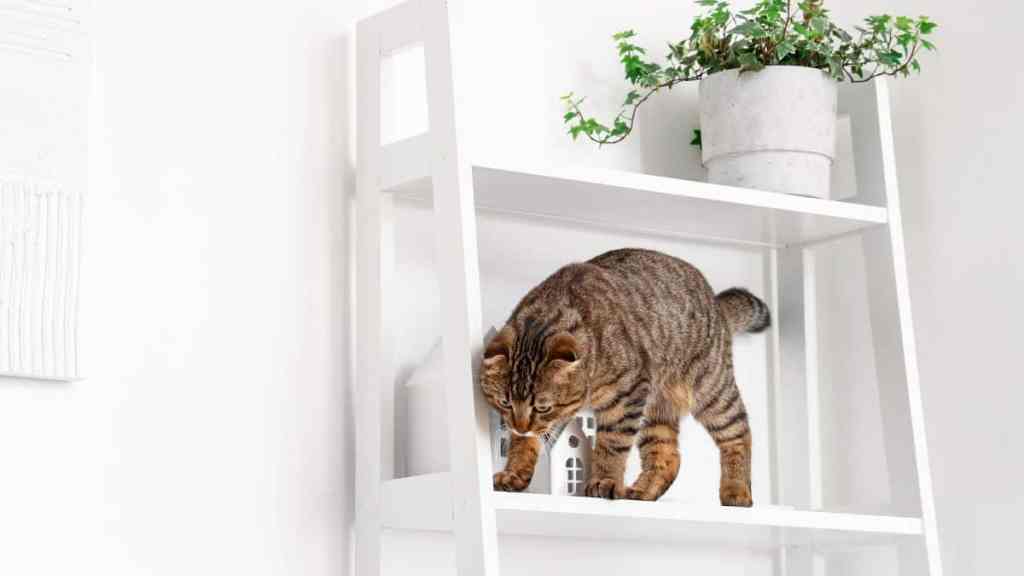
Cats feel safest when they can observe from above. Vertical territory — like cat shelves, window hammocks, or tall cat trees — lets them climb, perch, and survey their domain. This is especially important in multi-pet households, small flats, or homes without outdoor access.
🪵 Scratching zones
Scratching isn’t just about keeping claws sharp — it’s how cats mark territory (visually and through scent), stretch their bodies, and relieve stress. Offering varied scratching options, like vertical posts and horizontal pads, protects your furniture while fulfilling this natural need.
🛏️ Private hideaways
Cats love cosy, enclosed spaces where they feel hidden and safe. Hooded beds, cardboard hideouts, or covered nooks provide comfort and reduce anxiety — especially important for nervous or rescue cats.
🎯 Daily enrichment
Indoor cats need play and stimulation to stay happy and healthy. Without it, boredom can lead to over-grooming, nighttime zoomies, or destructive behaviour. Rotate toys, offer puzzle feeders, and schedule interactive play sessions (even just 10 minutes a day makes a difference).

Quick Tip
Behaviour problems like furniture scratching or hiding are often environmental, not behavioural. Meeting your cat’s basic needs is the first (and most important) step toward a happier, better-behaved cat.
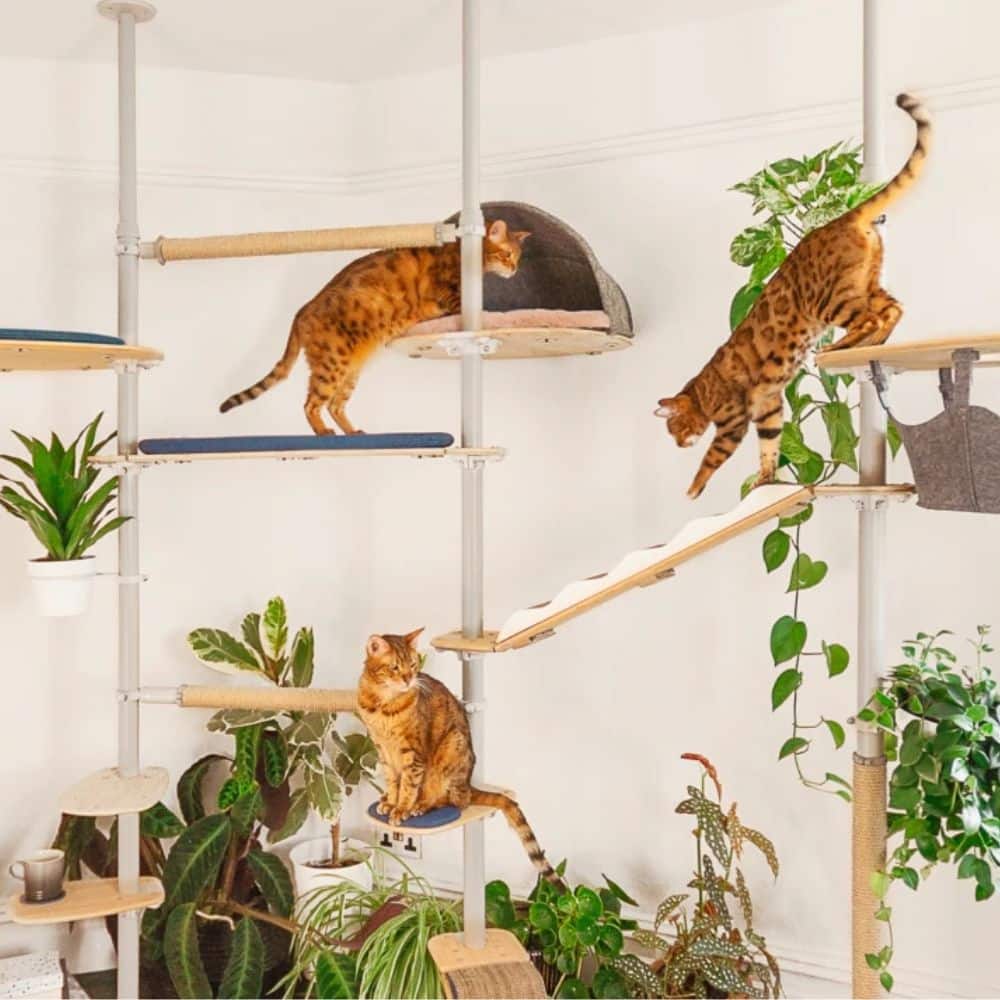
Vertical Spaces That Blend In
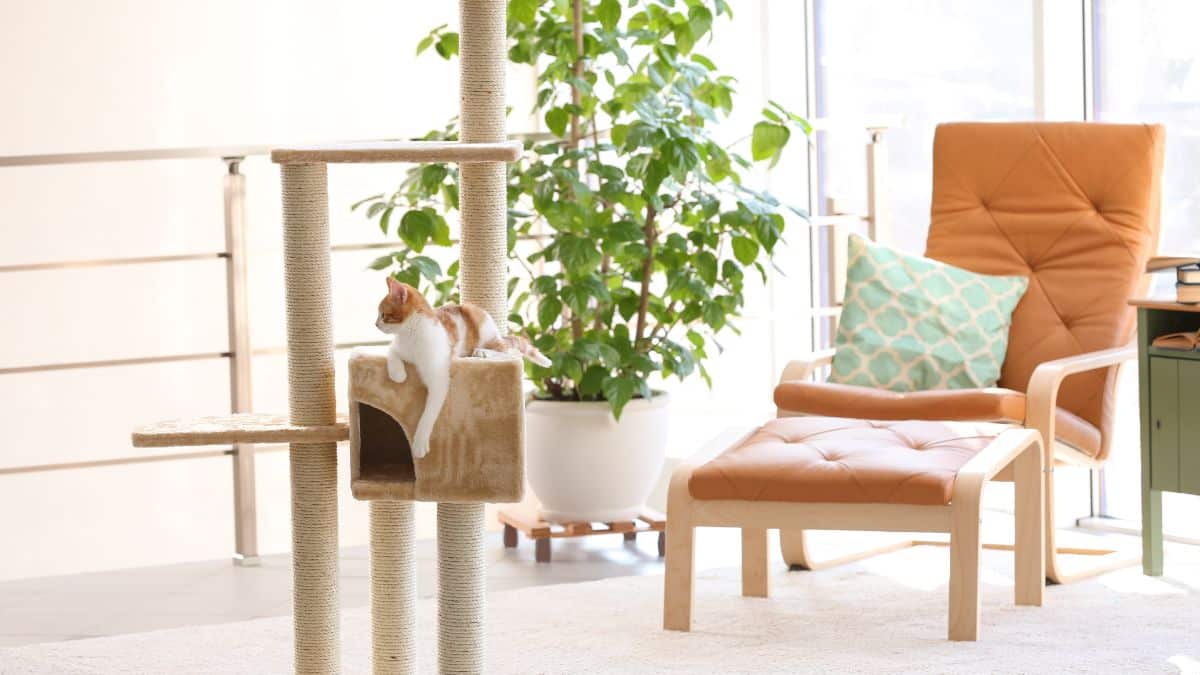
Cats crave height — it’s how they feel safe, survey their surroundings, and claim territory. But that doesn’t mean you need to bring a towering beige monstrosity into your living room. Instead, there are plenty of vertical solutions that meet your cat’s needs and respect your aesthetic.
Quick Tip
Confident cats are often elevated cats. Even a single high perch can help reduce anxiety, especially in multi-pet homes or busy households.
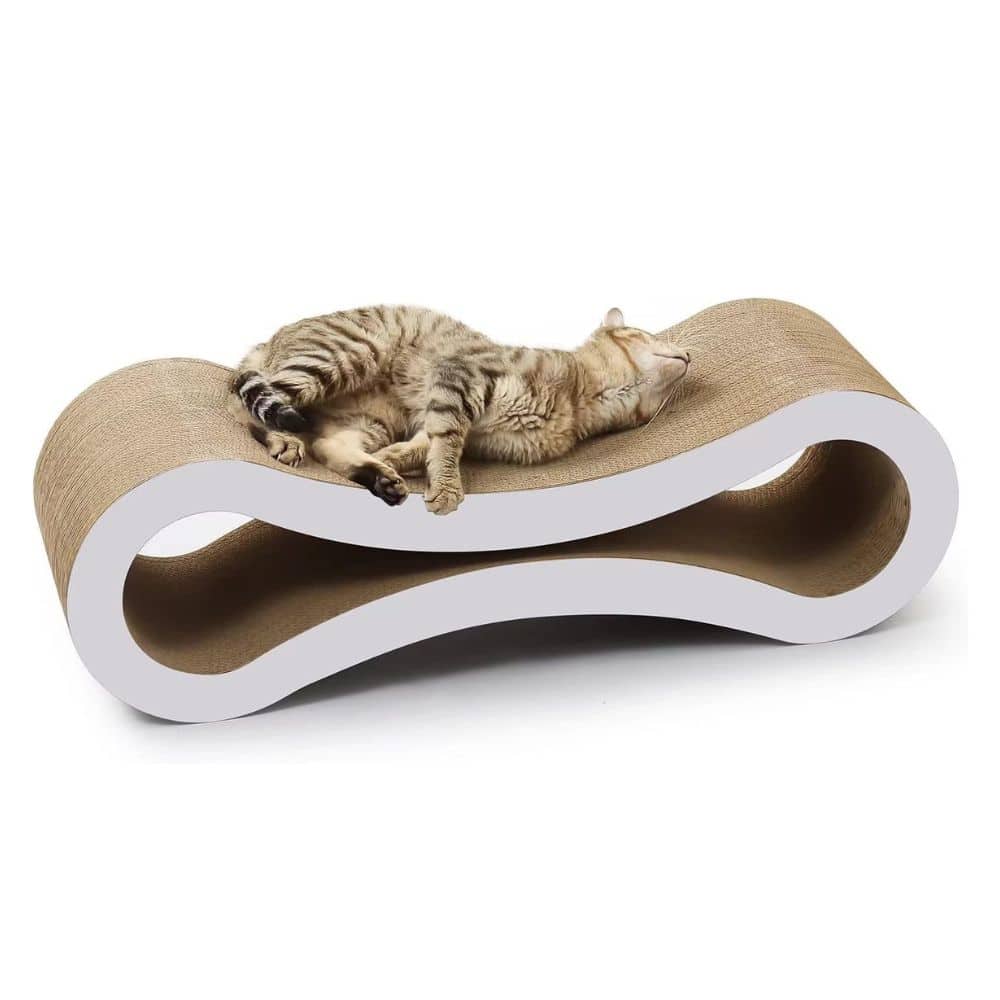
Discreet Scratching Solutions
Scratching is essential for cats — but that doesn’t mean your living room needs to look like a pet aisle. With a few thoughtful swaps, you can satisfy your cat’s instincts and keep your home looking chic.
Quick Tip
Put scratchers where your cat naturally hangs out — near sofas, windows, or their favourite nap spots. If it’s convenient, they’ll use it.
Hidden Litter Setups That Actually Work
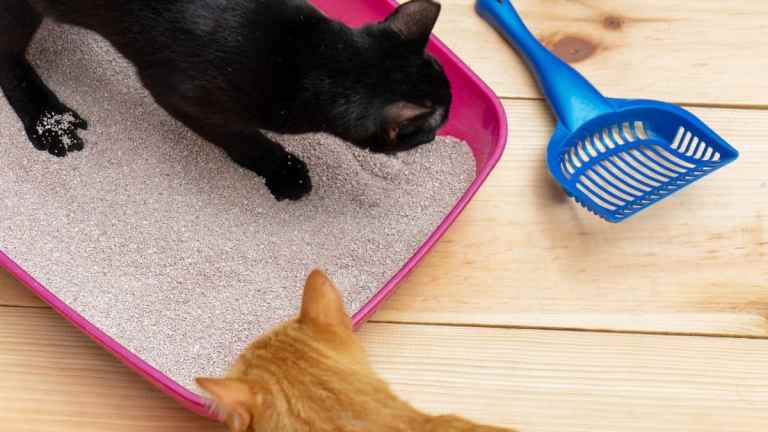
Let’s face it — even the most stylish homes need a litter tray. But that doesn’t mean it has to be on show. With a little creativity, you can make your cat’s toilet area practically disappear.

Quick Tip
A covered tray may look tidier, but not all cats tolerate them. Prioritise your cat’s comfort over aesthetics — a happy cat is much easier on your home long term.
Stylish Cat Beds and Hideaways
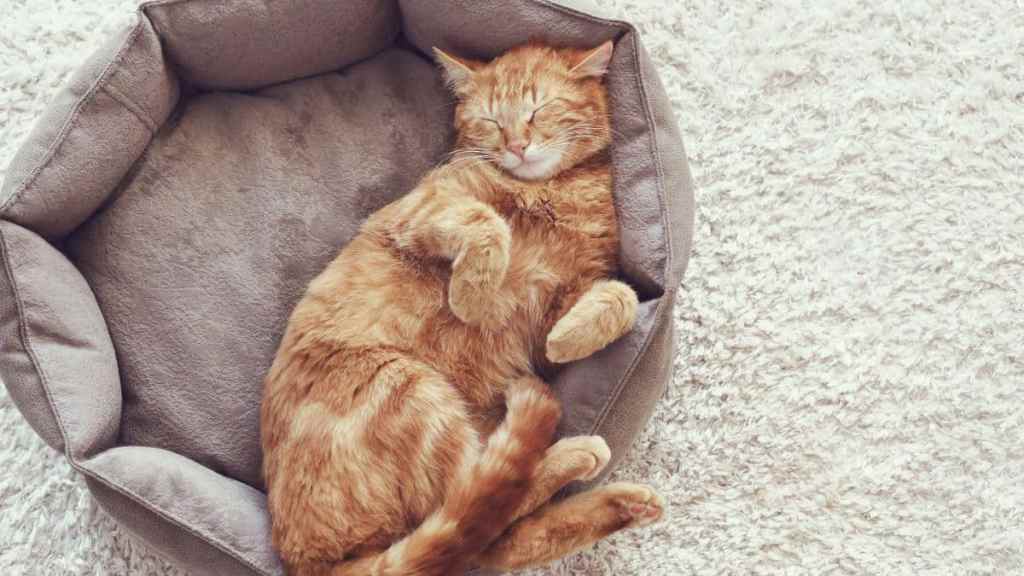
Cosy doesn’t have to mean cluttered. Cats love snuggly spots, but with a few smart choices, their beds and dens can add to your home’s aesthetic — not ruin it.
Quick Tip
Cats gravitate toward warm, calm spots. Place beds near radiators, tucked under furniture, or beside a window for a peaceful, inviting nap zone.
Enrichment Without the Clutter

Play is essential for your cat’s wellbeing — but a trail of mismatched toys doesn’t exactly scream “stylish home.” The trick? Keep enrichment accessible and aesthetic.
Quick Tip
Cats often enjoy play in short bursts. Schedule a few minutes of active play each day — wand toys, feathers, or puzzle feeders — to keep them mentally and physically content.
Final Thoughts
Creating a cat-friendly home doesn’t mean living in a jungle of scratching posts and litter trays. With the right design choices, your space can stay calm, beautiful, and uniquely yours — while meeting all of your cat’s needs.
The trick is to think like a cat while styling like a human. Every piece you choose — from the perch by the window to the scratching mat in the hallway — can serve a purpose without disrupting your home’s aesthetic. A neutral-toned litter box tucked under a console table, a few floating shelves beside your bookcase, or a hideaway bed that blends into your living room décor can all be part of a cohesive, functional space that suits both you and your feline.
Many cat owners worry that “catifying” their home means compromising their taste. But in reality, thoughtful design can enhance both form and function. By choosing pieces that blend into your surroundings, and positioning them with intention, your home stays tidy and your cat stays enriched.
Focus on vertical territory, discreet essentials, and multi-functional furniture that feels like part of your home, not a warehouse aisle. You don’t need to buy everything at once — start with a few quality basics, observe what your cat loves most, and build from there.
Most importantly, let your cat show you what they enjoy. A cat who feels safe, stimulated, and respected will repay you with trust, affection, and fewer shredded curtains. Because a well-designed home isn’t just about looking good — it’s about everyone who lives there feeling good too 🐾