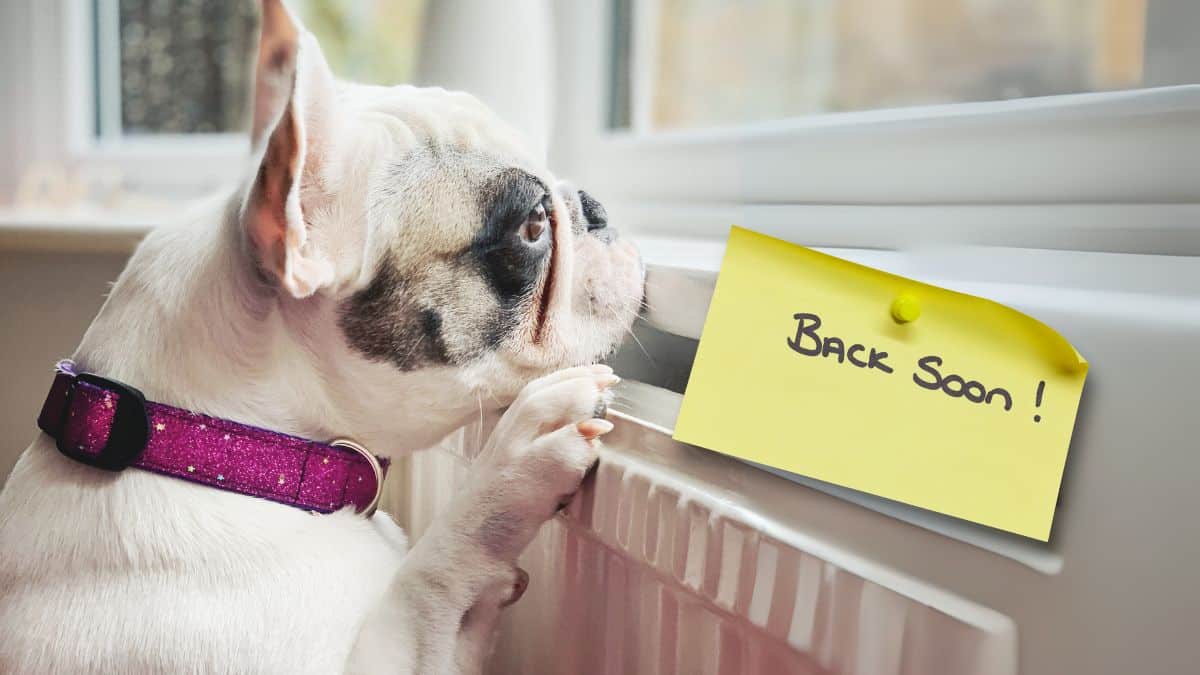
If you own a French Bulldog, you already know they’re not exactly the independent type. These stocky little shadows want to be with you all the time; in the kitchen, on the sofa, even in the bathroom. But life doesn’t always allow for that level of attachment. Work, school runs, errands, holidays… at some point, your Frenchie’s going to have to cope without you.
So, can French Bulldogs be left alone? And if not, how do you help them adjust?
This guide is for UK dog owners who love their Frenchie but also need a life outside the house. We’ll unpack why French Bulldogs struggle with solo time, how long they can realistically be left alone, and most importantly, what you can do to build their confidence, without guilt or drama. From separation anxiety to crate training, enrichment toys to emergency back-up plans, we’ll cover everything you need to know to make alone time easier for both of you.
Can French Bulldogs Be Left Alone?

Technically, yes — but it takes work.
French Bulldogs can be left alone, but they’re not naturally suited to it. This is a breed known for its clinginess. Bred as companion dogs, they thrive on human interaction and can become distressed when left solo for too long. In the UK, where many households work 9–5 jobs or have busy family routines, this creates a real challenge. Leaving your Frenchie home alone without preparation can lead to:
How long is too long?
Frenchies aren’t a “leave them all day” kind of breed. If you work full-time or have regular long absences, you’ll need a plan, whether that’s a dog walker, family help, or building up alone time slowly with training.

Quick Tip
Even if your Frenchie seems fine when you leave, consider using a pet cam to check in. Many owners are surprised at how anxious their dog actually is once the door shuts.
Why Are Frenchies So Prone to Separation Anxiety?
French Bulldogs aren’t just needy, they’re wired for closeness. Unlike independent breeds, Frenchies were specifically bred to be companion animals. That means they bond hard and fast, and struggle when their humans aren’t nearby.
A few reasons why separation anxiety is so common in the breed:
- Velcro dogs by nature: Frenchies love to follow their humans from room to room. Being alone doesn’t come naturally.
- Not very independent thinkers: They often lack the confidence to self-soothe or entertain themselves for long stretches.
- They thrive on routine: Sudden changes — like a new job, baby, or back-to-office shift — can trigger distress.
- Over-reliance on humans for stimulation: Without people around, boredom sets in fast… and bored Frenchies get noisy or destructive.
Some Frenchies will only show mild signs, like sulking or whining. Others may bark non-stop or panic the moment the door closes. It’s not disobedience, it’s genuine fear and confusion.
Quick Tip
Frenchies that are never taught to be alone are far more likely to develop separation anxiety. Start early, and go slow — even 5-minute departures help build tolerance.
How Long Can You Leave a French Bulldog Alone?

There’s no universal number, but as a general rule: Most adult French Bulldogs shouldn’t be left alone for more than 4–6 hours at a time.
That said, several factors affect how long your individual Frenchie can cope:
- Age: Puppies and seniors need more regular attention — both for toilet breaks and emotional reassurance.
- Training: A well-adjusted Frenchie trained to handle alone time will fare better than one that’s never been left.
- Energy levels: A tired dog is a calm dog. Dogs with unspent energy are more likely to feel frustrated or restless when alone.
- Daily routine: Frenchies who are used to short periods of alone time tend to adapt better over time.
Quick Tip
If you work full time, try breaking up their day with a dog walker, doggy daycare, or a midday visitor — even 15 minutes can make a huge difference.
Signs of Separation Anxiety in French Bulldogs

Not every Frenchie who dislikes being alone has full-blown separation anxiety, but there are clear warning signs to look out for.
Common symptoms include:
These behaviours usually kick in within the first 30 minutes of being left alone – a key indicator it’s emotional distress, not boredom.
Crate Training & Safe Zones

One of the best ways to help your French Bulldog feel secure when left alone is to create a dedicated safe zone and for many dogs, that means crate training. Done right, a crate isn’t a cage or punishment. It’s a den. A cosy, calm space where your Frenchie can relax, chew, snooze, and feel safe.
Why Crate Training Works:
Tips for Effective Crate Use:
- Make it a vibe: Use soft bedding, a blanket with your scent, and a favourite chew toy.
- Start slow: Let them explore it freely. Feed meals inside, toss in treats — never force them in.
- Don’t only use it when you’re leaving: Otherwise, they’ll associate it with being abandoned.
- Close the door gradually: Begin with a few seconds, then minutes, while you’re still nearby.
- Avoid punishment: The crate should never be used for time-outs or as a consequence.
Alternatives if Your Frenchie Hates the Crate:
Some dogs genuinely dislike crates — and that’s okay. Instead, try:
- A puppy pen with a bed, toys, and water
- A baby-gated room like the kitchen or utility room
- A designated corner with familiar smells and a routine
The key is consistency. Your dog needs to know: “When I’m in this space, I’m safe — and you’ll be back.”
Quick Tip
Practice leaving while your Frenchie is calm and chewing in their crate or safe zone, not when they’re already anxious or pacing.
How to Train Your Frenchie to Be Alone
Training your French Bulldog to tolerate alone time is one of the most important skills you can teach them, and it needs to be done gradually. No dramatic exits, no rushing the process, and absolutely no punishment.
The goal isn’t to make them love being alone – it’s to help them cope with it confidently and calmly.
Step-by-Step Alone Time Training
- Start with short absences. Begin by leaving the room for 30 seconds. No fuss when you go, no celebration when you return.
- Increase duration slowly. Over days or weeks, extend the time. 5 mins → 10 mins → 20 mins → up to an hour. Go at your dog’s pace.
- Pair departures with rewards. Give a high-value chew (like a stuffed Kong or yak bar) just before you leave. They’ll start to associate your absence with something positive.
- Avoid rituals that trigger anxiety. Grabbing keys, putting on shoes, saying “be good!” — these can signal abandonment. Practice them without actually leaving to break the association.
- Keep greetings and goodbyes low-key. Ignore your Frenchie for a few minutes after arriving home to reduce anticipation and build resilience.
- Encourage independence at home. Don’t let them follow you constantly. Practice calm time in separate rooms during the day to build confidence.
- Make alone time predictable. Dogs thrive on routine. Create a leaving schedule if you can — even 10-minute “mock departures” daily can help.
Quick Tip
If your Frenchie panics when you leave, you’ve gone too fast. Go back a step and shorten the time again. Small wins matter.
Daily Tools & Products That Help
Let’s be honest: you can’t be home 24/7 and even the clingiest Frenchie needs to learn how to cope without you. But there are clever ways to ease the stress and boredom they feel while you’re gone. These aren’t gimmicks. When used alongside training, they help your Frenchie stay calm, distracted, and (crucially) not tearing up your sofa.
Keep Their Brain Busy
The goal? Occupy your Frenchie’s mind so they don’t fixate on the fact you’re not there. Try mixing and matching:
Quick Tip
Rotate enrichment toys daily to keep them exciting — a toy they’ve not seen in a few days becomes instantly more interesting.
Create a Calmer Environment
Your absence will feel less intense if the environment feels stable and soothing.
Use Tech to Stay Connected
You don’t need to feel helpless once you leave the house. These tools offer peace of mind for you and structure for them:
Should You Get a Second Dog?
It’s a tempting thought: if your Frenchie hates being alone, wouldn’t a second dog solve the problem? Sometimes yes, but often no. Getting a second dog is a big decision, and it won’t magically fix separation anxiety. Here’s what to consider before adding another pup to the mix:
✅ Pros:
- Companionship: Some Frenchies genuinely benefit from having another calm, well-adjusted dog around.
- Play & stimulation: A second dog can provide built-in play sessions, reducing boredom.
- Confidence boost: A more independent dog can model good behaviour and help your Frenchie feel less anxious.
❌ Cons:
- Double the work: Two dogs means more training, more mess, and higher costs including food, vet bills, grooming, insurance.
- Behaviour mismatch: If your Frenchie is reactive or possessive, a second dog can add stress rather than relieve it.
- Co-dependency: Instead of becoming more independent, your Frenchie might just transfer their attachment to the new dog.
If your Frenchie has severe separation anxiety, deal with that first before introducing another dog. Two anxious dogs = double trouble.
Quick Tip
Adding another dog should be about expanding your family — not just solving a behaviour problem. It works for some households, but it’s rarely the silver bullet.
When to Seek Professional Help

Sometimes, despite your best efforts, your Frenchie’s separation anxiety doesn’t improve, or even gets worse. That’s when it’s time to bring in the pros. You’re not failing your dog by asking for help. In fact, early intervention is often the most effective way to break the anxiety cycle.
Signs it’s time to get expert support:
🩺 Who to contact in the UK:
- Qualified behaviourists – Look for APBC or IMDT-accredited professionals. These experts use science-backed, force-free methods.
- Your vet – Some cases may benefit from calming supplements or medication, especially if the anxiety is extreme.
- Positive reinforcement trainers – Ideal for tackling the day-to-day behaviours alongside enrichment and crate work.
🚨 What to avoid:
- Quick-fix gadgets like anti-bark collars or spray deterrents
- Punishment-based training methods
- Leaving your Frenchie to “cry it out” – it often makes things worse
Quick Tip
French Bulldogs are sensitive souls — they don’t just “get over it.” But with tailored support, they can learn to feel calm and confident even when you’re not around.
FAQs: Leaving a French Bulldog Alone
Final Thoughts
French Bulldogs can be left alone — but it takes planning, patience, and the right tools.
They’re not a hands-off breed. These dogs were bred to be constant companions, which means solo time doesn’t come naturally. But that doesn’t mean it’s impossible. With gentle training, smart enrichment, and a routine that builds their confidence, your Frenchie can absolutely learn to cope when you’re not around.
Start small. Be consistent. And remember: it’s not about perfection — it’s about progress. Even the clingiest Frenchie can learn to feel secure in their own company with the right support. If you stay calm, clear, and compassionate, you’ll set them up for success — and enjoy your own freedom without the guilt.