Wondering whether your two cats are soulmates or simply housemates? It’s a common question in multi-cat households. Understanding the difference between truly bonded cats and those who merely tolerate each other helps you support their emotional wellbeing — and prevent unnecessary stress.
Cats may not always wear their hearts on their sleeves (or paws), but their relationships with each other can be surprisingly deep. This article breaks down the key signs of a bonded pair vs casual companionship, and how to support both.
They may share a food bowl, a nap spot, or even the litter tray — but does that mean they’re bonded? Not always. Bonded cats form a deep emotional connection and rely on each other for comfort, while others simply coexist. Knowing the difference helps you meet their individual needs and avoid disrupting hard-won harmony.
What does it mean when cats are bonded?
Bonded cats form a strong social attachment to one another. It’s most commonly seen in:
These cats are emotionally connected. They rely on each other for reassurance and comfort — particularly during stressful times like vet visits, rehoming, or loud noises like fireworks.
Signs your cats are bonded

Cats don’t always show affection the same way humans or dogs do. But bonded cats will often display these behaviours:
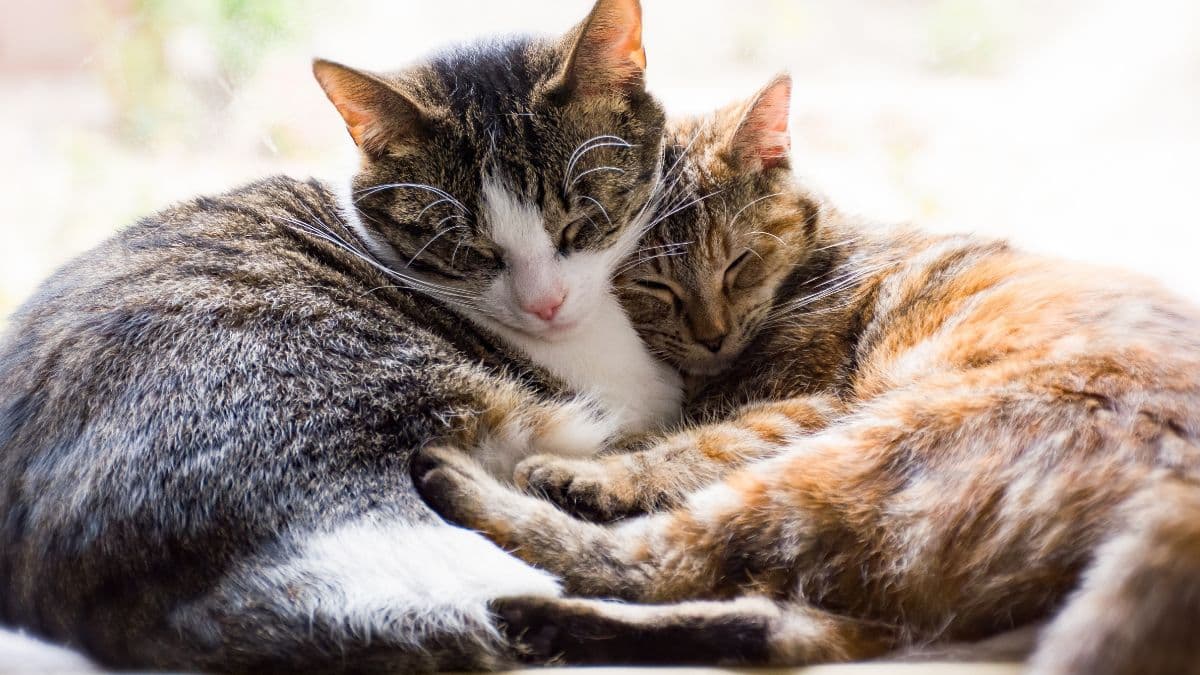
1. Sleeping curled up together
If your cats regularly snooze in close contact, especially with their bodies intertwined, that’s a strong sign of emotional connection.
2. Mutual grooming (allogrooming)
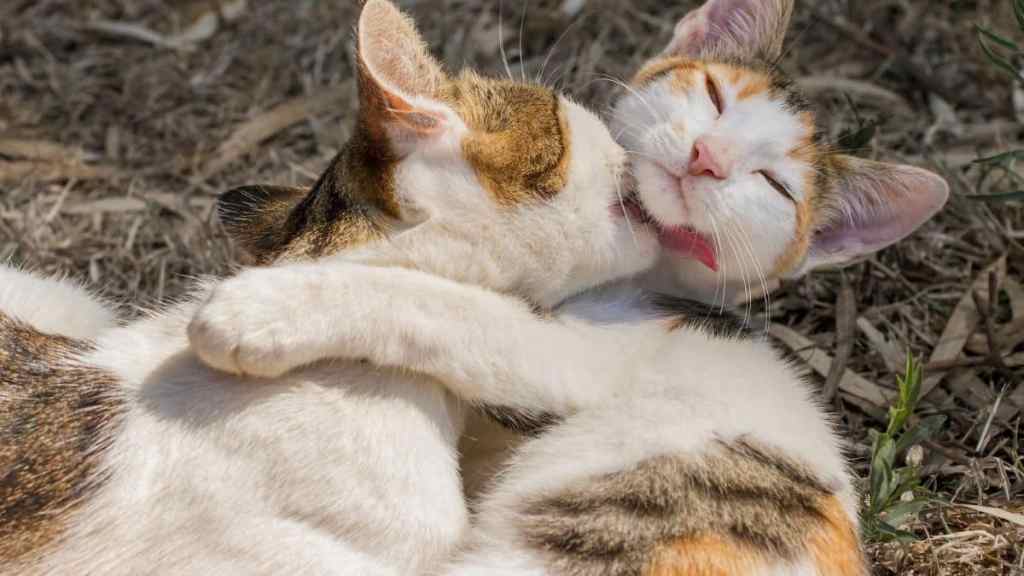
One cat licking the other’s face, ears, or neck is a common sign of affection and trust.
3. Playing together without aggression
Bonded cats play in a gentle, balanced way. If there’s no hissing, swatting, or bullying, and they take turns pouncing and chasing, it’s likely a bond.
4. Scent swapping and rubbing
Cats in a bonded pair will rub against each other often, sharing scent as a way of reinforcing social ties.
5. Following each other around
If one cat leaves the room and the other follows shortly after, or they wait for each other before exploring new spaces, that’s companionship in action.
What if they’re just housemates?
Not all cats become best friends — and that’s okay. Some simply share the same space while maintaining a polite but distant relationship.
Here’s what you might see if your cats are just friends:
Some cats just aren’t naturally social, and forcing a bond can backfire. It’s best to let them set their own pace.
Can bonded cats be separated?
Separating bonded cats can lead to:
- Excessive vocalisation or searching behaviour
- Loss of appetite or interest in toys
- Withdrawal, hiding, or depression
If separation must happen due to medical or behavioural needs, do it gradually and with lots of support, including pheromone diffusers, enrichment and reassurance.

Quick Tip
If you’re adopting or rehoming cats, avoid separating a known bonded pair unless absolutely necessary. Cats can experience grief, depression, or even illness from the sudden loss of their companion.
Are bonded cats always the same age or sex?

Not at all. While many bonded cats are littermates, close relationships can also form between unrelated cats. Sometimes a confident adult will take a shy kitten under their wing, or a neutered male and female will become close companions.
What matters more than age or sex is personality compatibility. Two laid-back cats with similar energy levels are more likely to form a bond than two dominant or territorial individuals.
Supporting bonded cats in the home
If you’re lucky enough to have a bonded pair, here’s how to keep them happy:
Bonded cats may become anxious if one goes missing, even for a short time. Try to avoid separating them unnecessarily.
Encouraging friendship in non-bonded cats

If your cats aren’t bonded but you’d like to improve harmony, focus on:
- Positive associations – feed treats when they’re together
- Vertical space – more shelves and perches reduce conflict
- Calm introductions – if they’re new to each other, take it slow
- Pheromone diffusers – Feliway can help reduce stress and tension
Quick Tip
Respect their boundaries. Some cats never become close but still coexist peacefully, which is a win in itself.
What about bonded pairs and grief?
When one cat from a bonded pair passes away, the surviving cat may go through a grieving process. You might notice:
- Searching the house or calling out
- Loss of appetite or energy
- Sleeping in unusual spots or hiding
Offer extra comfort, stick to routines, and consider adopting another companion only if your cat seems to want company. Every cat grieves differently.
Final Thoughts
Bonded cats are more than just housemates — they’re emotional partners. Whether your cats are cuddle bugs or polite cohabitants, understanding their relationship helps you meet their needs and build a more harmonious home.
Not all cats will bond — and that’s okay. But when they do, it’s a beautiful thing to nurture. Be observant, be patient, and let your cats show you what kind of relationship they truly have.